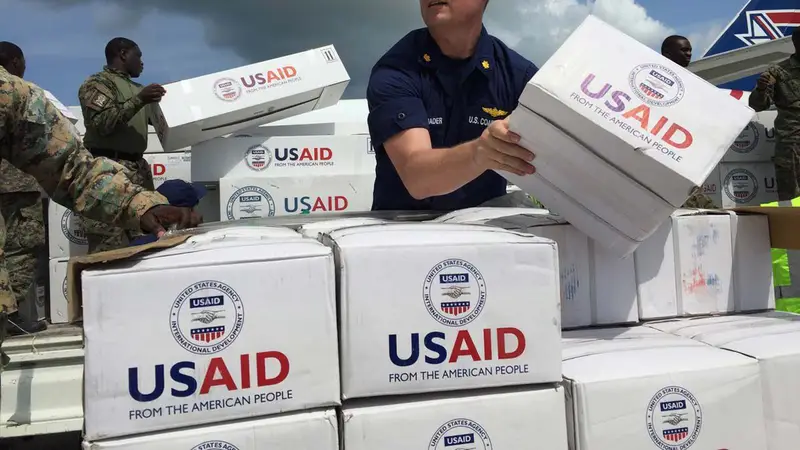
A year after the United States froze foreign aid in January 2025, HIV treatment for most of the roughly 20 million people PEPFAR supported in 55 countries, mainly in sub-Saharan Africa, is still running.
The outreach that sat around it is not. At least 1,700 HIV sites have closed. Prevention spending fell 51%. PrEP dropped 21% in Global Fund countries and by as much as 72% at clinics studied in Uganda and Zimbabwe. Testing there fell by up to 64%.
PEPFAR-supported treatment fell by about 2 million people, roughly 10%. Part of that is a change in how patients are counted, not a mass loss of drugs.
The breaks with the old trend were in Uganda, Zambia, South Africa and Kenya. Children lost ground faster: 77,163 fewer were on PEPFAR-supported treatment, about 31,000 of them in South Africa and 6,000 each in Kenya and Zimbabwe.
Confirmed deaths tied to the closed clinics are documented in Kenya, not as a national surge.
AFP verified at least 24 deaths of HIV-positive sex workers who had been stable on treatment. Judy, 36, died on 7 August 2026 after visits that brought her drugs to Mathare stopped.
Beatrice, 43, died on 24 August 2025; her sister Rosemary a year later. Kenya’s own 2026 estimates put AIDS deaths at 19,434, down 0.3% over five years, and new infections down about 56%, to about 14,000.
Where the clinics closed
In Kenya, Bar Hostess Empowerment and Support Programme’s two USAID centres had reached 14,500 sex workers.
One closed in September 2025. The Roysambu centre was due to close a year later. About 12,000 clients dropped off its books, including 2,300 with HIV. All 25 USAID-funded sex-worker clinics in western Kenya closed.
Sex Workers Outreach Programme recorded a 48% rise in new infections among Nairobi sex workers in the first half of 2026 against the same period in 2024.
PEPFAR-supported treatment in Kenya fell by about 12,000 people. A Sh5.24 billion emergency fund kept some drugs and salaries moving. It did not restore the outreach.
South Africa funds about 90% of its own antiretrovirals. PEPFAR was 17% of a response covering 7.2 to 8 million people with HIV.
Twelve key-population clinics closed and more than 60,000 patients moved to state facilities. People on treatment rose only 40,000, to 6.18 million. The net loss of PEPFAR-linked treatment was about 95,000.
HIV-related deaths from mid-2024 to mid-2025 were estimated at 53,000, not a clear rise. No equivalent list of confirmed sex-worker deaths has been published.
The deals that replaced the grants
By September 2026, 35 countries had signed new US health memorandums, 24 of them in Africa, including Kenya, Nigeria, Ethiopia, Uganda, Tanzania, Congo, Rwanda and Mozambique. Zambia was finalising a deal. Ghana, Zimbabwe and Namibia refused, mainly over patient data and specimens.
Thirty-four deals total about $24.2 billion for 2026–2030, roughly 40% from recipient governments. The US share is about $14 billion.
Nigeria’s package is about $5.1 billion, with $2.1 billion from the US.
Kenya gets up to $1.6 billion in US funds and adds $850 million. Ethiopia’s deal is $1.47 billion, $1.02 billion of it American.
Uganda is promised nearly $2.3 billion from the US. Congo’s partnership is $1.2 billion, $900 million American.
Zambia expects $1.5 billion from the US and is putting in $2.1 billion. Eswatini signed $248 million health deal with the US specifically to sustain the fight against HIV/AIDs. Congo, Guinea and Rwanda signed beside minerals agreements.
The memorandums took effect on 1 October 2026. Grant money was not yet flowing. The deals cover HIV, tuberculosis, malaria and maternal health. They do not reopen the NGO clinics the stop-work order closed.