

Egypt’s Foreign Reserves Surge to Record $57.2 Billion in August
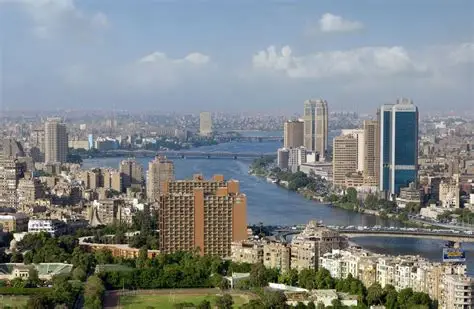
Egypt’s net foreign exchange reserves jumped to an all-time high of $57.22 billion in August 2026, up from $56.30 billion recorded in July, strengthening the nation’s external liquidity position. According to the latest official statistical disclosure, the record accumulation reflects sustained foreign capital inflows, expanded regional investment commitments, and enhanced sovereign debt refinancing initiatives across major international financial markets. Historical data spanning 1992 through 2026 indicates that Egyptian reserves averaged $25.96 billion. The latest figure marks a dramatic recovery from the record low of $10.09 billion registered in June 1992. The ongoing reserve expansion follows crucial structural reforms, including the central bank’s currency floatation, significant IMF extended fund facility disbursements, and landmark multi-billion-dollar foreign direct investment deals like the Ras El-Hekma development project. This record reserve level significantly boosts Egypt’s capacity to meet upcoming external debt obligations, cover essential import bills, and maintain exchange rate stability amid broader global economic uncertainties.
Egypt Inflation Rebounds to 14.9% as Food Price Pressures Resume
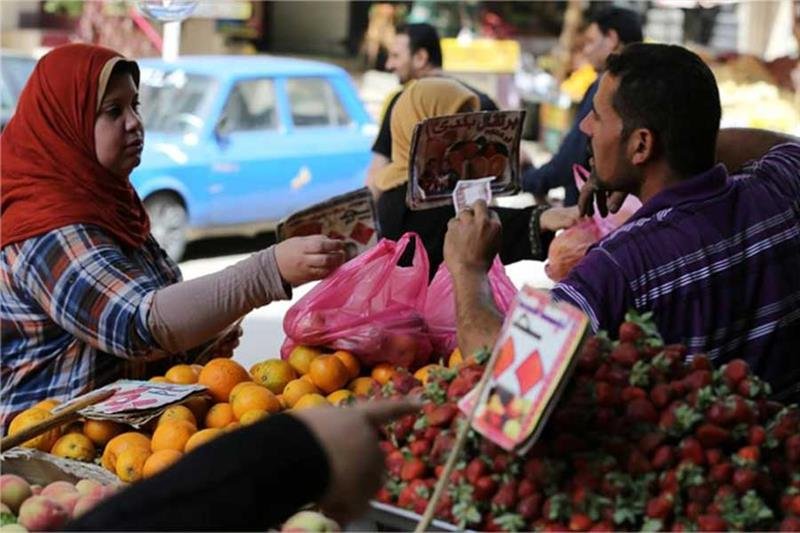
Egypt’s annual urban consumer price inflation accelerated to 14.9% in July from 14.3% in June, marking the first pickup in headline price growth in four months. Data released on Monday by state statistics agency CAPMAS showed the uptick was primarily driven by food and beverage prices, which surged to 8.0% year-on-year from 5.4% in June. On a monthly basis, consumer prices were flat at 0.0% after contracting 0.4% in June. Transport inflation edged up to 24.5%, while clothing and footwear costs reached 13.7%. The price rebound aligns with structural reforms under Egypt’s $8 billion International Monetary Fund loan program, which mandates rolling back energy subsidies and adjusting administered prices to reduce fiscal deficits. Headline inflation remains well below its record high of 38% recorded in September 2023.
Magnitude 5.6 Earthquake Strikes Eastern Egypt Near Suez
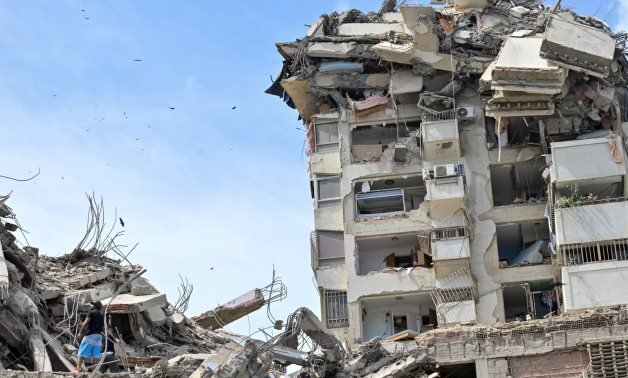
A 5.6-magnitude earthquake struck 38 kilometers north of Suez early Monday, sending tremors across Cairo, the Nile Delta, and neighboring regions in the Middle East. Egypt’s National Research Institute of Astronomy and Geophysics reported the quake occurred shortly after 3:00 a.m. local time at a depth of 10 kilometers. Emergency authorities confirmed no immediate casualties or structural damage. In response to the early-morning tremors, Health Minister Khaled Abdel Ghaffar placed nationwide ambulance units on maximum alert, while the Egyptian Red Crescent mobilized emergency teams across affected governorates. The seismic event was felt beyond Egyptian borders, with residents reporting light-to-moderate shaking in parts of southern Israel, Jordan, and Palestine. The Euro-Mediterranean Seismological Centre registered thousands of public reports. International monitoring agencies recorded varying initial measurements. The German Research Centre for Geosciences logged the magnitude at 5.4, while the U.S. Geological Survey registered a shallow 5.0-magnitude tremor. While moderate earthquakes occur periodically along the Gulf of Suez and Red Sea rift zones, major seismic events in Egypt remain relatively uncommon compared to other Mediterranean regions. Egypt’s most destructive modern quake occurred in October 1992, when a 5.8-magnitude tremor near Dahshur killed over 500 people and damaged thousands of buildings in greater Cairo.
IMF Unlocks $1.8 Billion for Egypt as Economic Reviews Conclude
Egypt has secured immediate access to about $1.8 billion in fresh funding following the completion of two key financial program reviews. The International Monetary Fund said in a statement on Thursday that its Executive Board concluded the seventh review under the Extended Fund Facility and the second review under the Resilience and Sustainability Facility. The approval allows Cairo to draw roughly $1.5 billion under its primary loan arrangement alongside $272 million in sustainability financing, pushing total disbursements under the current package to $7.3 billion. Egypt originally secured a $3 billion loan in December 2022, which was expanded to $8 billion in March 2024 to combat severe foreign currency shortages and surging inflation. The Fund credited exchange rate flexibility, fuel price adjustments, and fiscal discipline for bolstering macroeconomic stability, enabling the economy to withstand regional conflict spillovers better than previous external shocks. Data from the Washington base lender indicates Egypt’s real gross domestic product grew 5.0% in the third quarter of fiscal year 2025/26, with full-year economic expansion projected at 4.6%. Headline inflation eased to 14.3% in June 2026, supported by rebounding remittances and tourism receipts, though prices are projected to rise temporarily to 16.7% in late 2026 due to energy adjustments. The primary fiscal surplus is projected to expand to 5.0% of GDP in FY2026/27, up from 4.8% in FY2025/26, alongside a 1.2 percentage point increase in tax revenues. Despite performance gains, the multilateral lender cautioned that elevated public debt, heavy financing requirements, and slow state-asset divestments continue to constrain fiscal space and private sector growth.
Egypt Clears $6.1 Billion Legacy Oil and Gas Debt to Hit Zero Arrears

Egypt has fully settled its outstanding arrears to foreign oil and gas partners, eliminating a multi-year financial bottleneck to mark a structural turning point for its domestic energy sector. Petroleum Minister Karim Badawi announced the strategic milestone Wednesday, confirming legacy dues plummeted to zero from a peak of $6.1 billion in June 2024, beating initial fiscal cleanup targets. The aggressive payoff follows a prolonged foreign currency shortage that forced Cairo to delay payments to global majors, a crisis that stifled upstream exploration and caused severe domestic natural gas output declines. Government data tracks a rapid de-leveraging timeline. Unpaid invoices dropped to $1.3 billion in March, shrank to $714 million in April, and touched $440 million in May before the final settlement. By eliminating this steep risk premium, Egypt aims to restore international investor confidence, accelerate delayed deepwater Mediterranean drilling blueprints, and speed up project development timelines across multiple key concession blocks. Operational momentum is already responding to the fiscal reset. Partners like Agiba Petroleum recently struck the Bostan South-1X well, unlocking 70 million barrels of oil equivalent in the Western Desert. Simultaneously, the ministry is updating its broader energy strategy. The state plans to lift the renewable share in its domestic mix to 48% by 2028, maximizing higher-margin natural gas volumes for export. This financial clearance solidifies Cairo’s position as the primary East Mediterranean energy hub, directly supporting cross-border infrastructure plays like Cyprus’s offshore Kronos field, which plans to export gas via Egyptian LNG facilities by 2028.
Egypt Accelerates Privatization Push With Four Planned State IPOs

Egypt expects to list up to four state-owned companies on the Egyptian Exchange (EGX) within the next 12 months, Investment and Foreign Trade Minister Mohamed Farid Saleh announced in London. The planned public offerings form part of a broader capital market revival, with the government projecting an additional four to five private sector stock listings over the same 12-month period. However, the minister did not disclose the identity of the four targeted state entities – to protect market sensitivities. To bolster market depth, the government intends to slash corporate bureaucracy, aiming to simplify company registration, streamline domestic capital raising, and ease mergers and acquisitions (M&A) processes for non-listed firms. The privatization push aligns with structural benchmarks tied to Egypt’s $8 billion IMF program, designed to curb public sector dominance, transition toward a floating exchange rate, and stimulate private sector investment. Recent regulatory interventions support this timeline. The EGX launched a futures market in March 2026 and approved the temporary listing of 12 state entities in April to accelerate transaction execution mechanics. Cairo aims to secure between $3 billion and $4 billion from state asset sales and IPOs by the end of December 2026 to boost foreign reserves and improve liquidity. Minister Saleh noted that foreign direct investment flows for the current fiscal year are projected to expand by 10% to 15% from the $12.2 billion recorded in the previous period.
19.00%: Egypt Central Bank Holds Interest Rates Steady Amid Middle East Tensions
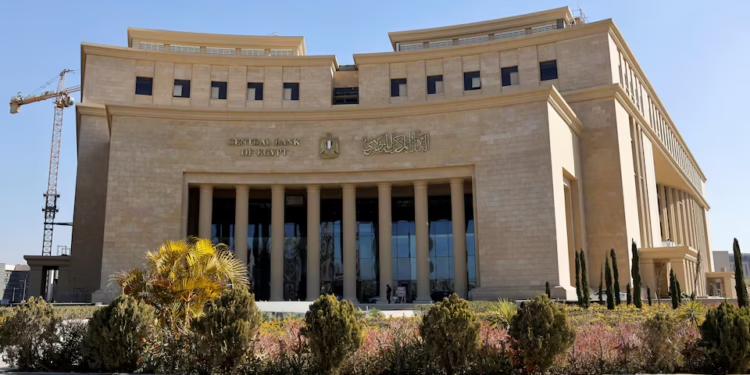
The Central Bank of Egypt maintained its benchmark interest rates on Thursday, extending a cautious pause in monetary policy as regional conflicts and sticky energy costs threaten to re-ignite consumer price pressures. The Monetary Policy Committee kept the overnight deposit rate at 19.00% and the overnight lending rate at 20.00%. The main operation rate also remained unchanged at 19.50%, matching consensus market expectations. Egyptian policymakers face severe external uncertainties linked to Middle East geopolitical tensions, which have volatilely impacted global commodity markets and disrupted trade supply chains through crucial regional waterways like the Strait of Hormuz. “Annual headline inflation is expected to accelerate through the third quarter of 2026, partially due to unfavorable base effects, as well as supply-side pressures from the current conflict,” the committee stated in its policy release. This rate freeze marks the bank’s second consecutive hold this year. The decision comes despite a recent marginal dip in annual headline inflation, which eased slightly to 14.9% in April from 15.2% in March. However, core inflation remains high at 13.8%. The central bank explicitly warned that domestic fiscal consolidation measures and exchange-rate fluctuations are expected to keep near-term consumer prices elevated, delaying previous timelines for inflation stabilization. Consequently, the bank conceded that consumer prices will likely exceed its long-term target of 7% by the final quarter of 2026, forcing a prolonged delay in achieving its price stability mandate until late 2027. The aggressive defensive posture coincides with slowing domestic momentum. Egypt recently trimmed its financial year 2025/26 gross domestic product growth forecast down to 4.9% from 5.1%, citing weaker external demand and regional instability.
Middle East conflict day 31: Egypt president warns oil could top $200/b
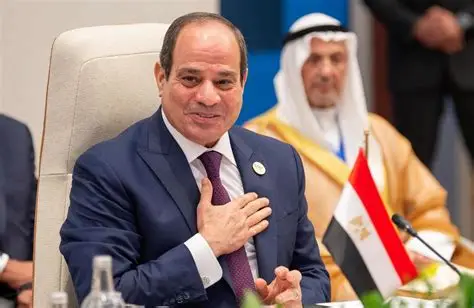
Egyptian President Abdel Fattah al-Sisi issued a chilling warning on Monday, stating that global oil prices exceeding $200 per barrel (pb) are no longer a “theoretical fear” but a looming reality. Speaking at the Egypt Energy Show (EGYPES 2026), Sisi appealed directly to U.S. President Donald Trump to halt the war, which entered its 31st day today. He noted that only the U.S. President has the influence to stop the escalating conflict with Iran. The Egyptian leader warned that the disruption of the Strait of Hormuz is pushing the global economy toward a breaking point, with current projections of a price surge being “not exaggerated.” As of today, Monday, March 30, Brent crude is already trading at $116.42 per barrel, while West Texas Intermediate (WTI) has climbed to $101.15, reflecting the deep anxiety in global markets. The conflict officially began on February 28, 2024, with the launch of the joint U.S.-Israeli air strikes (Operation Epic Fury). President Sisi’s warning comes as the situation enters its fifth week of active combat. For African nations, these figures represent a “double tragedy” as soaring energy costs and disrupted supply chains threaten to reverse years of hard-won economic stabilization. In Nigeria, the crisis presents a stark paradox; while the NGX has seen interest in domestic energy firms, the average citizen is grappling with petrol prices that have hit a record N1,400 per liter in Lagos and Abuja. Further east, the impact is even more immediate. Kenya and Ethiopia are facing a “hidden tax” on all imported goods as shipping lines reroute around the Cape of Good Hope to avoid the conflict zone. This 4,000-mile detour adds roughly $1 million in costs per trip, driving up the price of everything from electronics to the essential fertilizers needed for the 2026 harvest season.
