

Nigeria’s Naira Gains Against Dollar, Official Rate Drops Below N1,360/$
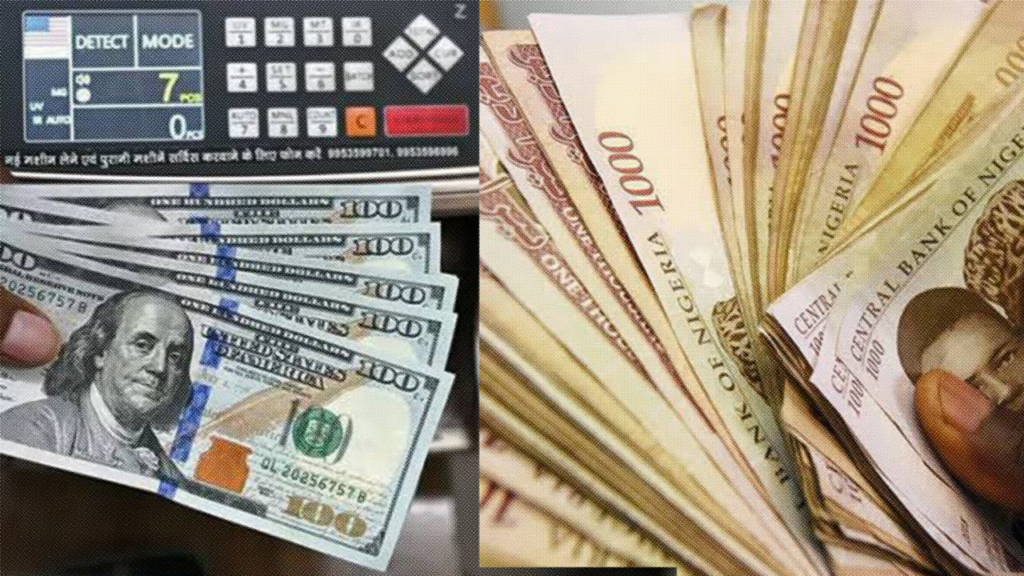
Nigeria’s naira strengthened against the U.S. dollar in official trading on Thursday, reaching its highest level in over a week as foreign exchange market volatility continued to ease. According to official exchange rate data published by the Central Bank of Nigeria (CBN), the weighted average Nigerian Foreign Exchange Market (NFEM) rate appreciated to N1,357.65 per dollar on Thursday. The local currency gained N2.93 from N1,360.58 recorded on Wednesday, marking a steady recovery from N1,365.69 posted on August 7 amid tight trading ranges across regional dealer desks. Intraday trading metrics showed narrower price dispersion, with the day’s highest executed rate standing at N1,359.50 while the lowest trade executed at N1,356.00 per dollar. The sustained stabilization follows the apex bank’s recent policy measures designed to boost official market liquidity, streamline clearing operations, and absorb excess system liquidity through targeted yield adjustments. Broader macroeconomic indicators show gross foreign exchange reserves consolidating above key thresholds, providing the central bank a crucial buffer to defend the currency against external shocks and portfolio outflows.
Naira Rallies to N1,360/$ as Nigeria’s FX Liquidity Boosts Official Market
The Nigerian naira strengthened against the U.S. dollar on Monday, extending recent gains as increased foreign exchange liquidity and robust external reserves continued to support the local currency. According to official data published by the Central Bank of Nigeria, the spot rate at the Nigerian Foreign Exchange Market appreciated by 0.41% from Friday’s close of N1,365.69 per dollar to settle at N1,360.14 per dollar. Trading dynamics at the official window reflected broad-based strength, with the intraday high rate improving to N1,364.25 per dollar while the intraday low rate touched N1,358.50 per dollar. The latest gain builds on a sustained firming trend from late July, when the currency traded near N1,368.22 per dollar, underscoring reduced volatility across the official market. Market sentiment has been buoyed by Nigeria’s growing foreign exchange buffers, which reached a 17-year high above $52 billion following surging domestic portfolio inflows and strategic apex bank policy interventions. Analysts attribute the exchange rate stability to elevated domestic yields, attractive carry trade opportunities, and steady crude oil production, which continue to temper systemic foreign currency demand.
Nigerian Naira Holds Firm at N1,365 as FX Liquidity Surges
The Nigerian Naira ended the trading week on a strong footing, stabilizing at N1,365 per US Dollar despite widespread foreign exchange volatility across emerging markets. On Thursday, the spot exchange rate closed at N1,365.10 per dollar as daily market turnover surged to a weekly peak of $878.55 million. Friday’s trading session saw the currency move to close at N1,365.69 per dollar, reflecting balanced order flow as market liquidity normalized. Official data from the FMDQ Exchange revealed that market liquidity surged mid-week, driven by heightened interbank trading. Daily FX turnover reached a peak of $878.55 million on Thursday, up significantly from earlier sessions, underscoring resilient local supply and strong institutional participation in the official window. This liquidity cushion follows record market activity in the first half of 2026, during which secondary market turnover on the FMDQ platform exceeded N362 trillion. Offshore interest remains supported by attractive yields on Open Market Operation bills, while national gross foreign reserves hover near $52 billion, insulating the local currency against external shocks.
Nigerian Naira Holds Stable at N1,362/$ Across Official Windows
LAGOS – The Nigerian Naira opened trading at N1,362.76 against the United States dollar on Monday, maintaining narrow consolidation across official foreign exchange transaction windows. Data from the Central Bank of Nigeria (CBN) and the Nigerian Foreign Exchange Market (NFEM) shows that the local currency closed last week Friday trading at N1362.86/$. Spot transactions fluctuated between N1,359 and N1,365 per dollar over recent sessions. Daily turnover figures across official trading channels averaged over $150 million, supported by sustained commercial bank order fills and international money transfer operator inflows. In the parallel market (Black Market), foreign exchange dealers quoted buying and selling bands between N1,385 and N1,410 per dollar, keeping the local currency’s retail spread remarkably tight. Last week, monetary authorities sustained aggressive liquidity operations, maintaining the benchmark Monetary Policy Rate (MPR) at 26.5% to rein in systemic liquidity and combat persistent inflationary pressures. The CBN recent policy framework has narrowed the premium between official and unofficial rates, signaling enhanced price discovery despite ongoing foreign currency demand pressures from corporate importers and debt servicing.
Naira maintains stability near N1,389/USD as market convergence persists
LAGOS — The Nigerian Naira showed signs of relative stability in the mid-week trading session, maintaining a tight spread between official and parallel market rates as of Wednesday, April 8, 2026. At the Nigerian Autonomous Foreign Exchange Market (NAFEM), the Naira closed at N1,389.00 per U.S dollar, a marginal movement from Tuesday’s mean of N1,386 Market turnover recorded at the close of the previous business day stood at $48.66 million, reflecting steady, albeit cautious, liquidity levels in the interbank space. The parallel market saw the Naira trading at an average of ₦1,381.43 in Lagos by mid-day. This brings the unofficial rate very close to the official one, nearly wiping out the profit gap for currency speculators. Analysts attribute this stability to recent central bank policies and efforts to tighten the supply of Naira in the market. Against other major benchmarks Currency Rate (N per unit) British Pound (GBP) N1,829.15 Euro (EUR) N1,598.69 Ghanian Cedi (GHS) N125.49 South African Rand (ZAR) N81.70 Market participants remain focused on upcoming inflation data and global oil price volatility, which continue to act as the primary drivers for the local currency’s valuation.