

Nigeria’s Inflation Eases to 14.06% in October as Monthly Food Prices Contract
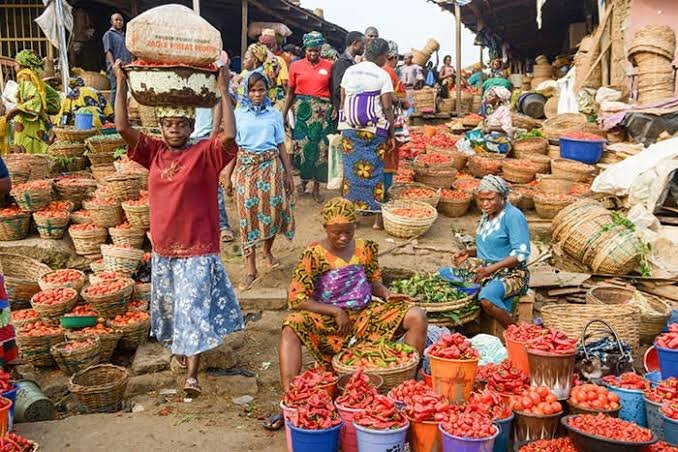
Nigeria’s annual headline inflation slowed to 14.06% in October 2026, down from 14.63% in September, extending the country’s disinflation trend for a fifth consecutive month. Data released on Monday by the National Bureau of Statistics (NBS) showed the headline index fell 0.57 percentage points year-on-year, standing 4.91 percentage points below October 2025’s 18.97 percent rate. Despite the annual slowdown, monthly price pressures accelerated, with month-on-month headline inflation rising to 0.43% in October compared to 0.06% recorded in September. Food inflation moderated to 19.13% year-on-year from 19.59% in September, while month-on-month food prices contracted by 0.75%, signaling welcome seasonal harvest relief across key agricultural markets. Core inflation, which excludes volatile agricultural produce and energy costs, also declined to 10.78% annually from 12.95% in September, contracting 0.53% on a monthly basis. The sustained disinflation reflects improved foreign exchange stability and domestic fuel refining capacity, which have cushioned Africa’s largest economy against external supply shocks. Cooling consumer prices also validate the Central Bank of Nigeria’s September decision to slash its benchmark Monetary Policy Rate by 350 basis points to 23%, its steepest cut since 2007. With the Monetary Policy Committee scheduled to meet next week on November 24, October’s softer inflation print gives policymakers additional room to balance price stability with credit expansion. Across states, Lagos recorded 31.43% annual food inflation, the second highest nationwide, though monthly food prices in the commercial hub dropped sharply by 5.93%.
Nigeria attracts $6.44 billion capital inflow in Q4 2025, portfolio investment leads

LAGOS — Nigeria’s total capital importation rose to $6.44 billion in the fourth quarter of 2025, representing a 26.6% increase compared to the $5.09 billion recorded in the corresponding period of 2024. Data released by the National Bureau of Statistics (NBS) on Wednesday shows that the country also recorded a 7.13% growth in capital inflows on a quarter-on-quarter basis, up from the $6.01 billion reported in Q3 2025. “In comparison to the preceding quarter, capital importation increased by 7.13% from $6,014.77 million in Q3 2025.” NBS noted. Portfolio Investment remained the primary driver of foreign capital into the economy, accounting for $5.49 billion or 85.14% of the total. Within this segment, money market instruments led with $3.08 billion, followed by bonds at $1.97 billion. Other Investment stood at $599.65 million (9.31%), while Foreign Direct Investment (FDI) contributed $357.80 million (5.55%). Portfolio Investment Capital inflow Amount Money market instruments $3.08 billion Bonds $1.97 billion Foreign Direct Investment (FDI) $357.80 million Other Investment $599.65 million Total $5.49 billion Source: NBS The banking sector emerged as the largest recipient of these inflows, attracting $3.85 billion, which represents 59.75% of the total capital imported. The financing and production sectors followed, receiving $1.94 billion and $308.93 million, respectively. Analysis by country of origin indicates that the United Kingdom was the leading source of capital for Nigeria during the quarter, with $3.73 billion (57.94%). The United States followed with $837.91 million (13%), while South Africa ranked as the third-largest contributor. Lagos State remained the top destination for capital investment in Nigeria, followed by the Federal Capital Territory (FCT). Together, both locations continued to account for the vast majority of the country’s total foreign capital entry.