
Dangote Refinery Surpasses Capacity to Process 700,000 bpd in Test
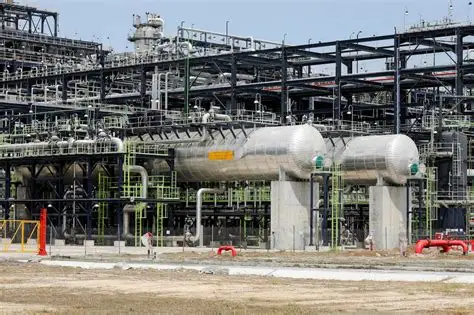
LAGOS—Nigeria’s Dangote Petroleum Refinery has surpassed its installed nameplate capacity to process 700,000 barrels per day (bpd) during a performance test by process licensors, the company announced Thursday. The operational milestone at the $20 billion Lekki facility exceeds its original 650,000 bpd design limit, demonstrating the single-train refinery’s optimal engineering capacity to handle additional feedstock. Management immediately leveraged the breakthrough to announce an aggressive expansion timeline. The firm plans a “ruthless replication” to double its capacity to 1.4 million bpd within the next 30 months. The output boost comes amid major shifts in regional trade. Recent Kpler data showed the refinery’s seaborne exports surged to 353,000 bpd in April, with half supplying fuel-starved African nations. Geopolitical tensions in the Middle East have accelerated this transition. African buyers are increasingly abandoning traditional European imports, turning to the Nigerian hub to secure long-term domestic energy supplies. The scale-up also repositions global aviation markets. S&P Global Commodities data ranked Dangote as the world’s largest jet fuel exporter in April, easing local foreign exchange pressures.
Nigeria To Launch 2026 Oil Licensing Round In Q3 To Boost Production
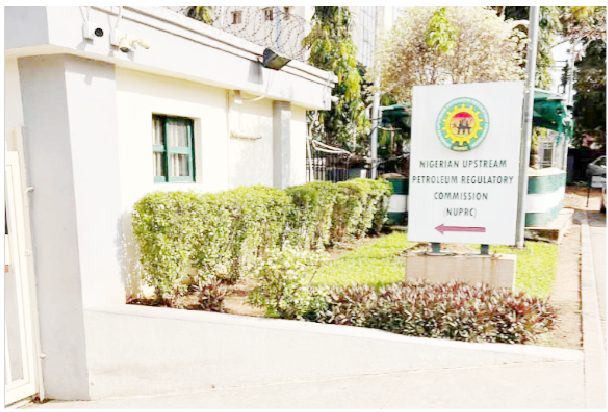
LAGOS – Nigeria will launch its 2026 oil licensing round in the third quarter after securing ministerial approval, the Nigerian Upstream Petroleum Regulatory Commission (NUPRC) announced Wednesday to sustain critical foreign investor interest. The upcoming bid round aims to attract over $10 billion in fresh upstream investments. This capital influx is vital for the country to elevate its crude oil production toward 2.2 million barrels per day. This rapid timeline overlaps with the ongoing 2025 licensing round. The commercial bid stage for the 2025 round is scheduled for July 2026, creating a continuous cycle of asset opportunities. Commission Chief Executive Oritsemeyiwa Eyesan termed the Q3 launch a make-or-break point. The regulator expects the back-to-back licensing rounds to aggressively reverse historical investment lulls across Nigeria’s energy sector. The announcement came during a visit by Meren Energy, formerly Africa Oil, to Abuja. Meren has invested $11 billion in local fields like Agbami and Egina over two decades. Meren executives credited recent Petroleum Industry Act reforms for their expanding asset appetite. The firm also confirmed it remains a key domestic supplier, recently selling crude to the new Dangote Refinery.
Nigeria: CBN Hikes Interest Rates to Raise N1.46 Trillion Amid Surging Demand
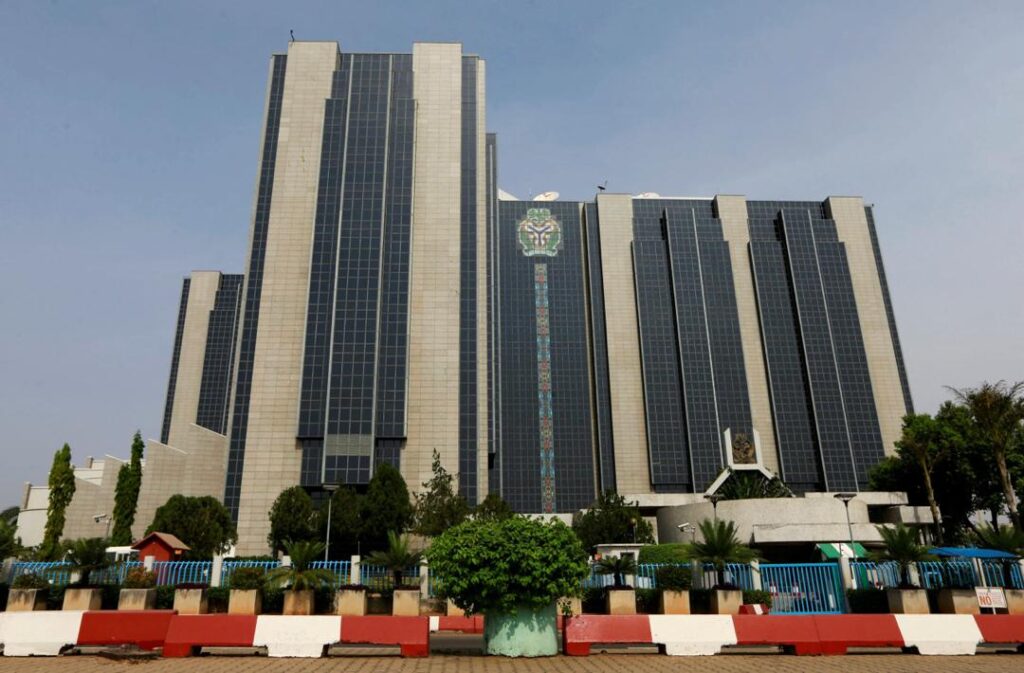
LAGOS – Nigeria’s central bank raised N1.457 trillion at its latest treasury bills auction, aggressively hiking yields across all tenors despite receiving overwhelming investor subscriptions that more than doubled its initial target. The Central Bank of Nigeria (CBN) capitalized on robust market liquidity, drawing N2.160 trillion in total bids against an initial N1.00 trillion offer size during Monday’s primary market auction. Result of the Auction published by CBN showed yields on the benchmark 364-day paper jumped 20 basis points to clear at 16.35%, reflecting aggressive central bank efforts to mop up banking system liquidity and defend the volatile naira. The 91-day and 182-day stop rates also increased, clearing at 16.05% and 16.19% respectively, as institutional investors successfully demanded higher premiums to lock in short-term capital. Investor demand was heavily skewed toward long-dated debt, with the one-year paper attracting N1.946 trillion in subscriptions, representing roughly 90% of total market interest during the session. The aggressive rate hikes signal a sharp reversal from May’s brief easing trend, re-aligning the CBN with a hawkish monetary stance to combat persistent domestic inflationary pressures. The central bank’s monetary policy committee previously raised its benchmark interest rate to a record 26.5% to curb persistent inflation and stabilize the macroeconomic environment
FDI $135m, FPI $9.8b: Nigeria records $10 billion foreign capital inflow in Q1
LAGOS – Nigeria’s total capital importation surged to $10.37 billion in the first quarter of 2026, marking an 83.83% year-on-year increase from the $5.64 billion recorded in Q1 2025. The National Bureau of Statistics (NBS) revealed that Foreign Portfolio Investment (FPI) dominated the inflows, accounting for 95.09% at $9.86 billion, with money market instruments taking a major share of $6.50 billion. Conversely, Foreign Direct Investment (FDI) remained low, capturing just 1.30% of the total inflows at $135.08 million, while Other Investment brought in $374.48 million, primarily driven by loans. The banking and financing sectors absorbed the vast majority of the capital, together securing over 96% of the total inflows, driven largely by UK and US investors. This dramatic tilt toward portfolio capital matches recent actions by the Central Bank of Nigeria, which maintained its benchmark interest rate at a high 26.5% to attract external liquidity buffers. Nigeria’s external reserves jumped by approximately $1.22 billion in May 2026, closing the month at a robust $49.58 billion, according to the latest data released by the Central Bank of Nigeria (CBN). The significant accumulation marks a major milestone in the apex bank’s ongoing defense of the local currency, boosting investor confidence and pushing liquid foreign assets closer to a historic $50 billion threshold. Economic analysts trace this momentum back to late 2025 reforms. The CBN’s strategic interventions have successfully choked off currency speculation and consolidated foreign exchange liquidity into the official banking ecosystem.
Digital Gold Rush: Retail Participation Overwhelms Nigerian Capital Market Infrastructure
LAGOS — Nigeria’s retail stock investors are overwhelming stockbrokers as participation reaches peak levels. This digital surge has placed unprecedented strain on the critical infrastructure relied upon for account opening and trade execution, digital brokerage Bamboo said. The retail investment boom coincided with an extraordinary market rally, with the Nigerian Exchange (NGX) benchmark All-Share Index maintaining a strong year-to-date return of 58.53%. This has triggered massive volumes from individual investors. Official data from the Nigerian Exchange reveals that domestic retail transaction values recorded a sharp 52.42% monthly surge. Volumes skyrocketed to N548.5 billion as individual investors aggressively leveraged digital access. However, the rapid influx has exposed massive technical bottlenecks. The massive volume of new retail investors seeking dividends has completely overwhelmed the manual clearing networks and legacy infrastructure utilized by capital market registrars. Furthermore, digital transaction networks face severe pressure. Intermittent disruptions to the Nigeria Inter-Bank Settlement System (NIBSS) payment infrastructure have heavily delayed wallet deposits and withdrawals across major financial technology platforms. In response, major digital brokerages like Bamboo are forced to aggressively scale up internal capacities, overhaul settlement channels, and deploy external registrar tracking tools to help users locate missing dividends. “Participation in the Nigerian capital markets has grown at record-breaking speeds,” stated Richmond Bassey and Yanmo Omorogbe, co-founders of Bamboo, in an official statement addressing the platform’s infrastructural strain. The fintech founders confirmed they have doubled customer support teams and migrated to new payment processors, cautioning active users that virtual account details have been updated to preserve platform redundancy. This retail surge aligns with broader capital market expansion, with Securities and Exchange Commission (SEC) Director-General Dr. Emomotimi Agama recently noting that market capitalization expansion has reached unprecedented historical highs. “In February 2026 alone, market capitalisation expanded by N17.6 trillion, representing the highest monthly gain ever recorded in the history of our market,” Agama stated during a capital market address. In late 2025, Nigeria boosted its overall capital market activity and liquidity following its transitioning from T+3 to T+2 (Trade day plus three/ two trading days) settlement circle, thereby cutting stock transactions delays by 24hours and aligning with international best practices. As market regulators prepare to unveil the updated Capital Market Master Plan 2.0, fintech platforms and traditional market infrastructure providers face intense pressure to rapidly digitize and expand capacity.
Braking is Not an Option: Ogho Okiti Urges Nigeria to Accelerate Economic Reforms
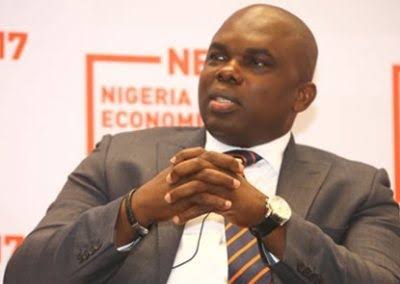
LAGOS— Despite political pressure from the?upcoming 2027 Nigerian general election, Economist and CEO of ThinkBusiness Africa, Dr. Ogho Okiti, has cautioned against reversing the federal government’s current macroeconomic reforms, asserting that Nigeria’s path to sustained economic growth lies in deepening, not abandoning, the current trajectory. Discussing with WebTV Nigeria on the Q1 2026 GDP report, which showed a growth of 3.89%, the strongest first-quarter performance in a decade-Dr. Okiti emphasized that the economy has seen a “nearly double” rate of growth compared to 2023, and these results validate the profound structural reforms undertaken over the last three years by the Bola Tinubu led administration. Key to this growth, Okiti noted, are the administration’s most significant policy actions: the removal of fuel subsidies and the liberalization/unification of the exchange rate. He categorized these as the most consequential economic reforms in Nigeria’s history, directly responsible for the current upward momentum in the GDP trajectory. “This is not the time to reverse any reform. This is the time to do more reforms because there are still structural weaknesses,” Dr. Okiti stated during a recent interview. He identified four critical structural bottlenecks: unreliable power infrastructure, an excessively large informal sector, significant skills gaps, and systemic income inequality. These factors hinder the translation of macro gains into micro-level benefits. Dr. Okiti emphasized the need to decentralize economic decision-making. He criticized the reliance on a “one-man” governance style, suggesting that faster, local-level decision-making is essential to catalyze true socio-economic development. Looking toward 2027, the economist maintains a positive outlook. He believes recent policies have built resilience, pointing to the lack of fuel supply disruptions despite price spikes as a sign of progress.
NIGERIA’S FISCAL TRANSITION: Growth, Debt and the Revenue Reform Test
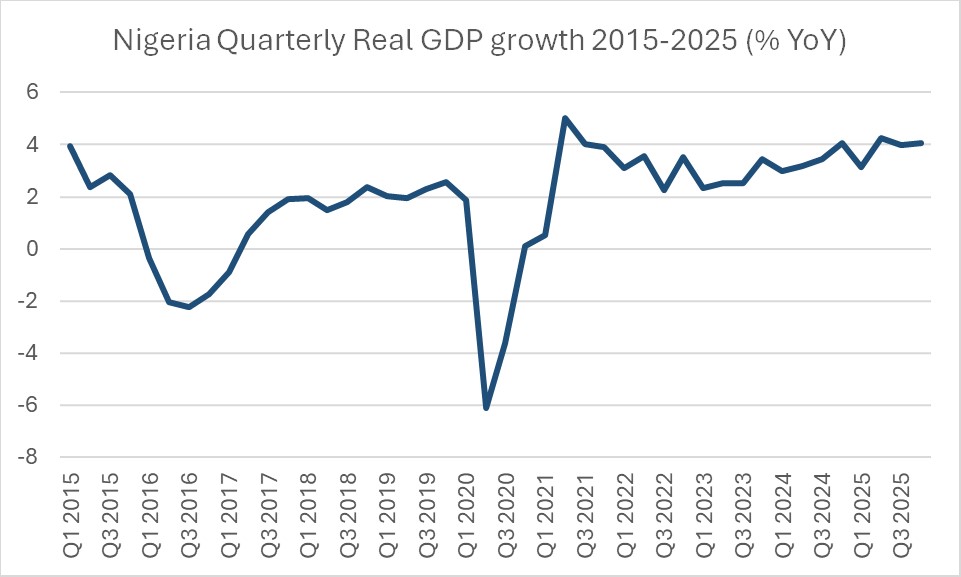
Nigeria’s economic growth trajectory has strengthened significantly since the commencement of major macroeconomic reforms in 2023. Real GDP growth accelerated from 2.31% in Q1 2023 to 2.98% in Q1 2024, 3.13% in Q1 2025, and 3.89% in Q1 2026. The IMF projects full-year growth of approximately 4.4% in 2026, positioning Nigeria among the faster-growing large economies in Africa. Figure 1: Nigeria Quarterly Real GDP Growth (2015–2026) Source: National Bureau of Statistics, 2026 The significance of this trend becomes clearer when viewed against Nigeria’s pre-reform performance. Between 2015 and 2022, the economy expanded at an average rate of roughly 2% annually, barely keeping pace with population growth. Investment levels remained subdued; foreign exchange shortages constrained productive activity, and significant distortions reduced the economy’s capacity to attract capital and support expansion. The acceleration observed since 2023 did not occur in isolation. It has been driven by a combination of reforms that addressed longstanding structural constraints, including exchange-rate liberalisation, subsidy removal, improved fiscal transparency, monetary tightening, and measures aimed at restoring confidence in the foreign exchange market. These reforms were initially accompanied by significant adjustment costs. However, they also removed distortions that had constrained investment, reduced productivity, and weakened economic competitiveness for more than a decade. The result has been a visible improvement in macroeconomic activity. Oil production has recovered from historic lows, services activity has expanded, foreign exchange liquidity has improved, and private-sector confidence has gradually strengthened. While no single reform can fully explain Nigeria’s growth recovery, the evidence increasingly suggests that the acceleration in economic activity is a direct consequence of the broader reform programme initiated in 2023. The more important policy question today is no longer whether reforms have generated growth. The question is whether that growth can now be translated into stronger fiscal capacity, reduction in poverty, and creation of jobs for millions of Nigerians. This is where the next phase of reform begins. Despite stronger economic activity, government revenues continue to lag expenditure requirements. Consequently, fiscal conditions remain considerably tighter than macroeconomic indicators alone would suggest. Key Takeaway The Nigerian economy is growing at roughly twice its pre-reform trajectory. The challenge facing policymakers is no longer restoring growth momentum but ensuring that growth translates into sustainable public revenues and fiscal strength, reduction in poverty, and the creation of jobs in millions. Nigeria’s public debt stock stood at approximately ₦159 trillion at the end of 2025. Viewed solely in naira terms, this appears to represent a dramatic increase over a relatively short period. However, naira-denominated debt figures provide only a partial picture of what has occurred. A closer examination shows that a substantial portion of the increase reflects accounting recognition and currency revaluation rather than equivalent levels of new borrowing. Figure 2: Nigeria Total Public Debt Trend (2023–2025) in Naira and Dollar Terms Two developments are particularly important. First, approximately ₦30 trillion in Ways and Means advances previously extended by the Central Bank of Nigeria were formally recognised and securitised. These obligations already existed within the public sector balance sheet but had not previously been fully reflected within conventional debt reporting frameworks. Their inclusion improved transparency and strengthened fiscal reporting standards, but it should not be interpreted as fresh borrowing undertaken during the period. Second, exchange-rate reforms significantly altered the naira valuation of Nigeria’s external debt obligations. As the naira adjusted to market realities, the domestic currency value of existing foreign-currency debt increased substantially. Although the underlying dollar obligations remained broadly unchanged, their reported naira equivalent expanded considerably. Consequently, a large share of the increase in reported public debt reflects valuation effects rather than new debt accumulation. This distinction becomes evident when debt is viewed in both naira and US dollar terms. While naira-denominated debt appears to have expanded sharply, the increase in dollar-denominated debt has been significantly more moderate. In fact, the dollar series suggests a far less dramatic debt trajectory than commonly portrayed in public discourse. This does not imply that debt-related concerns are misplaced. Public debt has increased; fiscal deficits remain elevated, and refinancing pressures continue to warrant careful monitoring. However, the evidence does not support the simplistic conclusion that Nigeria accumulated the entirety of the reported increase through new borrowing over the past three years. The more accurate interpretation is that reported debt growth reflects a combination of new borrowing, enhanced fiscal transparency, and exchange-rate revaluation. For investors and policymakers, the critical issue is therefore not the headline debt number itself, but whether economic growth and revenue mobilisation can expand rapidly enough to support debt-service obligations over time. Key Takeaway The popular narrative that Nigeria’s debt simply tripled within three years because of borrowing overlooks two major factors: the formal recognition of previously existing obligations and the exchange-rate revaluation of external debt. The more relevant fiscal question is not how large the debt stock appears in naira terms, but whether revenues and growth are expanding sufficiently to sustain it. Figure 3: Sources of Increase in Public Debt Stock. Driver Approximate Contribution Ways & Means Recognition ₦30 trillion Exchange Rate Revaluation Approx ₦40 trillion Net New Borrowing Residual Balance CLOSING NOTE Nigeria’s fiscal debate is often framed as a choice between optimism and concern. The evidence suggests that both perspectives capture part of reality. Growth is strengthening. Investment conditions are improving. Reform momentum remains significant. At the same time, debt service obligations are rising, fiscal space remains constrained, and revenue mobilisation has yet to fully catch up with the scale of the economy. The defining question for the next phase of Nigeria’s economic story is therefore not whether growth will occur. It is whether that growth can be successfully converted into fiscal capacity, reduction in poverty, and the creation of jobs in millions. The answer will determine not only the trajectory of public finances, but also the country’s ability to sustain investment, accelerate development spending, and fully realise the gains from one of the most consequential reform programmes in its recent history.
Nigeria Economic Reforms Deliver Market Stability But Fail To Relieve Public, Report Finds
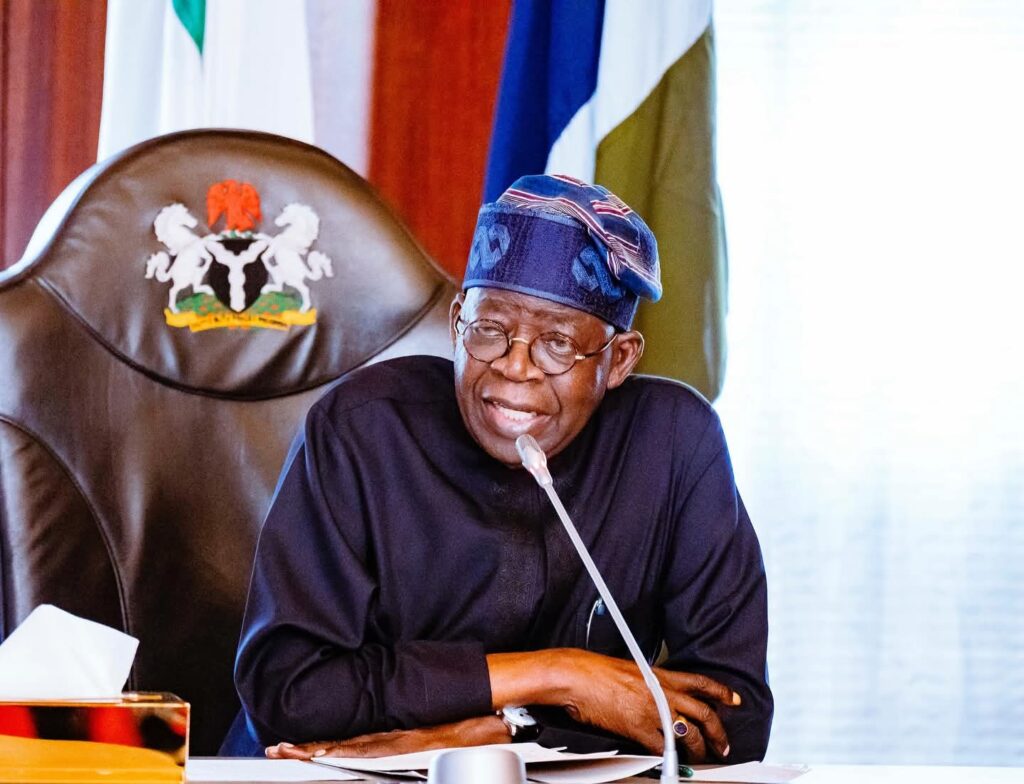
LAGOS – President Bola Tinubu’s first three years in office successfully averted a major macroeconomic meltdown through bold structural reforms, yet these policy victories have failed to yield meaningful welfare improvements for ordinary Nigerians. The Centre for the Promotion of Private Enterprise (CPPE) disclosed this in an economic assessment brief released Sunday. The report evaluated the administration’s performance between May 2023 and May 2026. According to CPPE, the administration’s aggressive monetary and fiscal interventions pulled the country back from the brink of total collapse, significantly boosting foreign investor confidence and stabilizing institutional markets. Data shows Nigeria’s external reserves climbed near the $50 billion mark, while the unification of foreign exchange windows helped stabilize the volatile Naira around N1,400 per dollar at the official window. Furthermore, domestic refining capacity improvements, largely led by the Dangote Refinery, drastically slashed foreign exchange demand for imported fuel, helping Nigeria maintain consecutive trade surpluses into the first half of 2026. National Bureau of Statistics data also shows real Gross Domestic Product grew by 3.89% year-on-year in the first quarter of 2026, up from 3.13% recorded in 2025. However, the think tank stressed that these positive macroeconomic indicators have not translated into prosperity for citizens, as severe inflation continues to decimate household incomes and consumer purchasing power. The CPPE revealed that the aggressive economic adjustment process bloated Nigeria’s public debt profile to a historic N159.3 trillion, heavily driven by currency depreciation and the securitization of Central Bank overdrafts. Additionally, critical production sectors remain severely constrained, with data showing a sharp 15.30% contraction in the electricity and gas sectors during the first quarter of 2026, crippling local manufacturing. “The administration faces the task of turning reform gains into job creation, increased incomes, reduced poverty levels, and improved quality of life for Nigerians,” stated CPPE Chief Executive Officer, Dr. Muda Yusuf. Yusuf added that persistent rural insecurity remains a massive structural bottleneck, crippling agricultural hubs, driving food scarcity, and keeping structural inflation painfully high for the vulnerable population. To bridge this severe welfare gap, the CPPE urged the federal government to urgently transition its policy focus away from mere economic stabilization toward inclusive, productivity-driven shared prosperity. The body recommended enforcing concessional tariffs on industrial inputs, tackling public sector fiscal leakages, and prioritizing the safety of farming communities to permanently bring down food costs.
Nigeria’s Fiscal Deficit Narrows sharply to N330 Billion in Q3 2025 Amid Revenue Reforms

LAGOS— Nigeria’s fiscal deficit narrowed significantly to N330 billion in the third quarter of 2025, driven by improved revenue performance, tighter expenditure management, and easing fiscal pressures compared to last year. Central Bank of Nigeria data highlights a remarkable macroeconomic turnaround, anchored by a robust $4.6 billion Balance of Payments surplus and gross external reserves climbing past the $42 billion threshold. The fiscal consolidation reflects aggressive non-oil tax collections and a 44% surge in refined petroleum product exports, which injected $2.29 billion into the economy during the review period. However, structural vulnerabilities persist as full-year fiscal assessments reveal the federal government faced a staggering N30 trillion revenue shortfall against its initial budgetary targets for the 2025 fiscal cycle. Aggressive spending under the current administration kept broader borrowing high, pushing Nigeria’s total public debt to N153.29 trillion, according to recent updates from the Debt Management Office. Crucially, debt servicing consumed N10.81 trillion in the first nine months of 2025, swallowing roughly 47.8 percent of the government’s N22.59 trillion retained revenue and capping deficit reduction velocity. Looking forward into 2026, the fiscal landscape remains heavily pressured with the government projecting an expanded budget deficit of N23.85 trillion amid escalating recurring expenditures and high borrowing costs.
Zero Tariff: Nigerian Agribusiness Taps China Market with 747-Ton Bone Pellet Shipment to Dalian

A 747-ton batch of Nigerian cattle bone pellets recently arrived at Dalian Port, China, signaling a major breakthrough for local agribusiness under Beijing’s newly expanded trade frameworks. The bulk cargo cleared customs at the major northeastern Chinese logistics hub as one of the earliest processed agricultural derivative shipments from West Africa to benefit from fresh, duty-free market access. This arrival follows the official launch of China’s comprehensive zero-tariff policy on May 1, 2026, which granted unilateral duty-free access to 53 African nations, including Nigeria, covering 100% of tariff lines. However, the non-oil shipment represents a structural departure from traditional bilateral trade dynamics, which have long been dominated by raw Nigerian crude oil exports counterbalanced by inflows of finished Chinese manufactured goods. Cattle bone pellets serve as high-value industrial inputs in China’s domestic manufacturing sectors, where specialized chemical and biomedical factories process the raw material into pharmaceutical gelatins, collagen casings, and premium bone china. The zero-tariff treatment eliminates previous import duties ranging from 8% to 30%, drastically lowering entry barriers for African agro-processors trying to compete inside the world’s largest consumer trading market. “Exporting raw commodities keeps Africa trapped in low-value trade,” said international trade specialist Mr. Tesman Irabor. “China could import raw materials, process them, and re-export finished goods—even back to Africa.” He told ThinkBusiness Africa on Tuesday. Irabor noted that the current zero-tariff window provides an unprecedented structural opportunity for continental agribusinesses to aggressively scale up local factory operations and transition toward value-added export processing. Chinese demand for agricultural imports remains strong, with bilateral trade between China and Africa growing 23.7% year-on-year during the first quarter of 2026, outperforming general global trade averages. While the zero-tariff policy eliminates financial duties, Nigerian exporters face stringent biosecurity and quarantine standards enforced by the General Administration of Customs of China regarding moisture, pests, and chemical residues. Industry experts are urging public-private collaboration to set up digital traceability tools and robust food processing facilities, ensuring local products consistently satisfy rigid international health and safety protocols. Proponents also highlight the need to balance aggressive commodity exporting with domestic supplies, warning that uncontrolled agro-industrial outflows could trigger localized food shortages and price spikes within domestic markets. “The zero tariff policy is not just a trade incentive—it is a structural opportunity for Africa to industrialize its agriculture, deepen value chains, and access a massive, stable market. “But the real winners will be agribusinesses that move beyond raw commodity exports into value addition, quality assurance, and strategic market positioning.” Mr. Irabor said. By integrating regional supply lines through the African Continental Free Trade Area, Nigerian firms can source raw agricultural materials regionally, process them locally, and ship finished products toward East Asian ports.