Building Generational Wealth in Africa: The Legacy Haus Story

Olufunke Olumide is the Managing Partner of The Legacy Haus, a first-of-its-kind multifamily office focused on Africa. The Legacy Haus helps African families build wealth that lasts for generations and preserve their legacies. They go beyond just managing money by offering a wide range of services, including legal and financial advice, as well as help with personal affairs. Their goal is to change the way Africans think about wealth by helping them not only build it but also pass it down to future generations while keeping the family’s values strong. Olumide has over ten years of experience in advising businesses and families on how to structure themselves and manage their wealth. She is an expert in helping families transfer wealth and businesses to the next generation while making sure everything is run well and ethically. One of her biggest accomplishments is creating a system to smoothly transfer wealth and family traditions to future generations. She has also been instrumental in growing The Legacy Haus’s client base across three continents in just a year and a half. The Legacy Haus wants to be a major player in the African family office industry, and they have a plan to get there. They aim to capture a significant portion of the Nigerian market by 2026. To do this, they plan to expand to more cities and offer services to not just the super-wealthy but also to those who are on their way to becoming very wealthy. They want to partner with these families to help them achieve their financial goals and build a lasting legacy. The Legacy Haus is different because they act as a central control center for everything a family needs, from planning their children’s education to managing their investments and even paying their bills. They focus on more than just finances; they consider the whole picture to make sure families’ wealth lasts for generations. This is a unique area of the professional services world, and The Legacy Haus stands out by offering a wide range of services across many different industries. They combine long-term planning with everyday support to handle every aspect of their clients’ lives. One of the challenges The Legacy Haus faces is that many people in Africa, especially Nigeria, are not familiar with the concept of a family office. They need to educate the market about the benefits of using a family office. Another challenge is finding highly skilled people to work for them because they need expertise in many different areas. There is also some mistrust of financial advisors in Nigeria, so some people are hesitant to use their services. Despite these challenges, The Legacy Haus is seeing a growing interest in their services, especially among younger families. More and more families are realizing the value of getting help with everything from managing their money to planning for their children’s education. This trend is good for The Legacy Haus because it allows them to grow their business and continue helping families build wealth that lasts for generations. The future looks bright for the family office industry in Nigeria. In the next few years, there will likely be a bigger demand for financial planning services as the economy becomes more uncertain. Family offices will also start to use more technology to improve how they deliver their services. In the medium term, family offices are expected to offer more specialized services, and there will likely be more competition in the market. But the number of wealthy families is also expected to grow, so there will be plenty of business to go around. In the long run, the family office industry is expected to become more established, with clearer rules and higher standards. Family offices may also start working together more across borders and there will likely be a bigger focus on investing in ways that are good for the environment and society. Overall, the family office industry in Nigeria is on the rise, and The Legacy Haus is well-positioned to be a leader in this growing market. So, who is Olufunke Olumide, the woman behind the vision? A 33-year-old lawyer, wife, and mother of two. When she’s not strategizing on how to build wealth, you might find her engrossed in singing melodious songs just for fun, and exploring her passion for interior design and fitting. Olumide’s dedication to her family reflects the core value of The Legacy Haus: a commitment to building long-term relationships with their clients, becoming trusted advisors who are there to guide you through every chapter of your success story.

What’s required is more than a Supreme Court judgement – Ogho Okiti

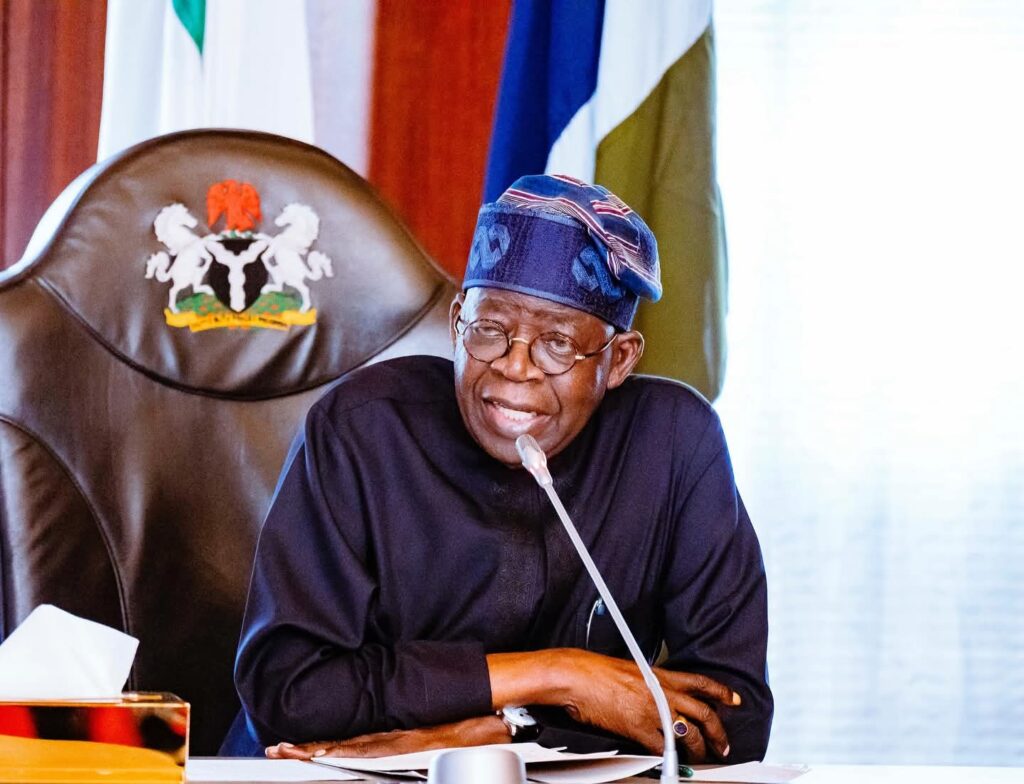
Given the unprecedented fiscal changes and proposals since President Bola Ahmed Tinubu became Nigeria’s 16th President on May 29th, 2023, it appears he is poised to be the most consequential “fiscal” president since independence. However, our generation’s worst cost of living crisis is preventing Nigerians from paying the required attention.  In the last three weeks, three elements have come to light. First was the announcement of a new Federal Ministry of Livestock Development. The second is the bill seeking to create an additional 74 seats for women in the Senate and in the House of Representatives, a near 20% expansion of both houses. The third is the Supreme Court Judgment of July 11th that directed that the local government’s share of federal allocations be paid directly into their accounts.  The third is my focus, and there are many dimensions to this judgment. First, since the return to democratic rule in 1999, Nigeria’s supreme court has delivered three important judgements on local governments. In 2004, in a judgement between the federal government and Lagos State, then led by Asiwaju Bola Ahmed Tinubu, the court ruled in favour of the State that the federal government had no right to withhold the State’s allocation. The federal government had withheld the State’s local government allocation because it created additional local government development councils.  In 2022, under President Muhammadu Buhari, the court ruled against his executive order that empowered the accountant general of the Federation to bypass the State government and disburse federal allocations directly to local governments. The third was the ruling of July 2024. This time the Supreme Court ruled in favour of the federal government and ruled that federal allocation can be directly paid into local government coffers.  I am not a lawyer, but the Supreme Court is contradicting itself, especially given that the Constitution has not changed. Nonetheless, it arrived at two important judgements. The first, and I quote …. “It is the position of this court that the federation can pay local government allocation directly to the local government or through the States. In this case, since paying them through the States has not worked, justice demands that federation account should henceforth be paid directly to the local government.” The second ruling of the Supreme Court outlaws the existence of caretaker committees and prevents State governors from removing local government chairpersons. In response, about 13 States have announced local government elections since the ruling. At this point, it is important to ask, what are the problems the President is trying to solve?  So, there is no doubt that the president is attempting to solve genuine local government problems, but these problems are best resolved through legislation and political negotiations, and not the Supreme Court.  Since the ruling, there is now an ongoing legislation for an independent local government electoral commission. The bill has now passed a second reading. It sounds good, except that it gives the president a role in this.  Who is going to tell our legislators that the President of the Federal Republic of Nigeria is already too powerful? Why not allow representations of political parties on the electoral body based on some predetermined criteria? Why not constitute the body based on some residency? Why should the body have another parallel electoral database? What is independence when the chairperson and six commissioners are appointed by the president and confirmed by the Senate, especially given that Presidents have removed agency heads that have fixed terms even before their terms are over? And what is independent about its own budget that is approved by the Senate?  In conclusion, the Supreme Court judgement exposes the most fundamental of Nigeria’s political elite problems since 1999 – the power grab. The tendency to continue to aggregate further and further / more and more powers, depending on which side we are on, is responsible for where we are today. The governors, since 1999 have learnt and graduated on how to aggregate local government powers to themselves. Now, the federal government, through the Supreme Court, has aggregated more powers to the President, rather than provide holistic and practical solutions to the inadequate representation of the people.  If the president is genuinely seeking to make the local government independent, or even the States independent for that matter, he should facilitate the legislation that allows it to generate its resources, and not wait for monthly federal allocations. That is the way to ensure true fiscal federalism. 

Nigeria got US $19 billion from the World Bank since 2019

ThinkBusiness Africa investigations show that the World Bank has approved support for programmes and projects in Nigeria totalling an estimated US $19 billion since 2019. These are principal amounts approved by the World Bank, either as loans from the International Bank for Reconstruction and Development (IBRD) arm or credit grants from the International Development Association (IDA).  However, these data masks the difference between the principal amount approved by the Bank and the amount disbursed under the different programmes. The difference is largely accounted for by the inability of the government of Nigeria or the State government to meet the conditions for full disbursements, and predetermined timelines for disbursements.  Analysis of the loans and grants shows that the World Bank has supported different categories of projects, including for stabilization and stimulus; renewable energy; gender and girls’ education; business reforms; safety net for the vulnerable in the society; water supply; digital identification; power sector reforms and recovery; and rural access in that period.  Indeed, for the 10-year period between 2015 and 2024, the World Bank has given Nigeria a total of US $21 billion in combined IBRD loans of about US $3 billion and IDA credits of US $18 billion. This is about 75% of the total amount the World Bank has given Nigeria since the first loan in 1947.  Starting from the first loan to the country in 1947, the World Bank has given a total of about US $39 billion in loans and credit. The original principal value of IBRD loans was US $9,442 million and of IDA credits at US $29,168. The data thus showing that Nigeria has received more credits than loans, a reflection of the country’s low-income status. It also shows that 75% of the total amount in the last 10 years compared to decades before then, showing the extreme weak economic conditions of the last decade. Project Title Commitment Amount in US $M Start Date Nigeria Rural Access and Agricultural Marketing Project 510 2020 Ogun State Economic Transformation Project 250 2020 Innovation Development and Effectiveness in the Acq. of Skills (IDEAS)  200 2020 Nigeria Improved Child Survival Program for Human Capital MPA 650 2020 Nigeria Digital Identification for Development Project 430 2020 Sustainable Procurement, Env. and Soc. Standards Enhancement  (SPESSE) 800 2020 Additional Financing for MCRP 1760 2020 Power Sector Recovery Performance Based Operation 750 2020 Adolescent Girls Initiative for Learning and Empowerment 500 2020 Nigeria COVID-19 Preparedness and Response Project 514.3 2020 Edo Basic Education Sector and Skills Transformation Operation 750 2020 Nigeria SFTAS Additional Financing for Covid-19 Response PforR 750 2020 Community Action (for) Resilience and Economic Stimulus Program 750 2020 Nigeria Distribution Sector Recovery Program 1200 2021 Nigeria Sustainable Urban + Rural Water Supply, Sanitation and Hygiene 700 2021 COVID-19 Preparedness and Response Project Additional Financing 400 2021 Agro-Climatic Resilience in Semi-Arid Landscapes (ACReSAL) 700 2021 National Social Safety Net Program-Scale Up 800 2021 Better Education Service Delivery for All Operation Add. financing 123.8 2021 Livestock Productivity and Resilience Support Project 500 2022 Modernizing Financial and Data Management Systems in Borno State 350 2022 Nigeria: State Action on Business Enabling Reforms (SABER) Program 750 2022 M&E Support for NFWP 234 2022 Umbrella Organization to Support Nigeria for Women Projects 390 2022 Nigeria – AF Power Sector Recovery Performance Based Operation 750 2023 Nigeria for Women Program Scale Up Project 500 2023 Additional Financing for Adolescent Girls Initiative for Learning and Emp. 700 2023 Nigeria Distributed Access through Renewable Energy Scale-up Project 750 2023 NG Accelerating Resource Mobilization Reforms PforR 750 2024 Reforms for Economic Stabilization to Enable Transformation (RESET) DPF 1500 2024

Calling All Africa Enthusiasts! Immerse Yourself in the AfroFlavour Food Festival!

Calling all foodies, music lovers, fashionistas, and art admirers! The AfroFlavour Food Festival is coming to Baltimore, Maryland on Saturday, August 3rd, 2024, and it promises to be an explosion of African culture! This vibrant event is your gateway to a sensory adventure. Tantalize your taste buds with a journey through the rich and diverse flavours of African cuisine. From savoury Nigerian jollof rice to spongy Ethiopian injera, there will be something to delight every palate. But the AfroFlavour Food Festival offers more than just culinary delights. Immerse yourself in the sights and sounds of Africa with: Aspiring food entrepreneurs won’t want to miss the African Food Business Conference. This informative session features three industry experts tackling topics like: Calling all vendors! Showcase your delicious African food and drinks at the festival. The AfroFlavour team is searching for a curated selection of vendors offering a variety of options, including vegetarian, vegan, halal, kosher, and more. The party doesn’t stop after the festival! End the day with a bang at the AfroVibes After Party. Dress up as your favourite African hero or superhero and celebrate the rich tapestry of African culture under the disco ball. Don’t miss your chance to: The AfroFlavour Food Festival promises an amazing summer day out! Mark your calendars for August 3rd, grab your tickets for just $50, and get ready to celebrate the beauty and flavour of Africa! Event Details:

Acuity Partners: A Private Client Services and Business Advisory Law Firm Making Strides in Nigeria

Imagine a law firm that looks beyond legalese, a firm that understands your family’s legacy is as important as your business’s bottom line. That’s the vision behind Acuity Partners, a Lagos-based firm led by the dynamic Olanrewaju Olumide. Olumide, a lawyer by training with a keen eye for business, launched Acuity Partners in 2018. He saw a gap in the legal market – a need for legal services that catered to both individuals and the families behind their businesses. This holistic approach has made Acuity Partners a go-to for high net-worth individuals (HNIs), entrepreneurs, and established businesses alike. One of Acuity Partners’ biggest wins? Beating the odds. They started small, a remote team weathering the pandemic storm. But their resilience paid off. Today, they have a thriving office in Victoria Island and a prestigious clientele spanning finance, manufacturing, and real estate. The future of African business, according to Olumide, lies in private wealth management. Acuity Partners is ready. They’re expanding their reach, constantly seeking new clients to join their growing community. Imagine a partner who understands the intricacies of wealth management, who can help you navigate the ever-changing financial landscape and ensure your family’s legacy is protected for generations to come. That’s the kind of trusted advisor you’ll find at Acuity Partners. Domination, yes, but with a client-centric approach. Acuity Partners plans to grow their team and explore new office locations, all to serve you better. They’re even in talks to form strategic partnerships with international law practices and service providers, understanding that your needs may extend beyond Nigerian borders. Perhaps you’re looking to invest overseas or navigate complex international legal issues. Acuity Partners is building a network to ensure they can address your needs with the same expertise they provide locally. Here’s what truly sets Acuity Partners apart: their advisors aren’t just legal eagles. They’re well-rounded professionals with critical thinking skills, business savvy, and a deep understanding of human nature. They don’t just explain the law; they craft unique, out-of-the-box solutions tailored to your specific situation. Plus, project executives ensure seamless execution, taking the burden off your shoulders. Imagine a legal team that not only understands the law but can anticipate your needs and proactively address them. That’s the kind of proactive, client-focused service you can expect at Acuity Partners. Finding the right talent for this unique approach is a challenge, Olumide admits. They seek individuals who are more than just legal minds – they value critical thinking, business acumen, and emotional intelligence. After all, exceptional legal advice is just one piece of the puzzle; understanding your situation and goals is what leads to success. The Nigerian legal industry is in flux. Mergers with foreign partners are on the rise, and the rigid, traditional style is giving way to a more flexible, startup-friendly approach. Law firms are embracing social media and relaxed practices. Acuity Partners, built on adaptability, is perfectly positioned to thrive in this evolving landscape. The legal industry is competitive, especially for new firms like Acuity Partners. Established players have a head start in terms of experience, reputation, and resources. But Acuity Partners has a secret weapon: their niche expertise. By focusing on a specific area, they effectively halve the competition they face. Excellence, innovation, and a strong belief in their vision for the future are the other pillars of their strategy. So, who is Olanrewaju Olumide, the man behind the vision? A 32-year-old lawyer, husband, and father of two. When he’s not strategizing legal solutions, you might find him engrossed in a book, hitting the tennis courts, or cycling through the Lagos streets. Olumide’s dedication to his family reflects the core value of Acuity Partners: a commitment to building long-term relationships with their clients, becoming trusted advisors who are there to guide you through every chapter of your success story. Acuity Partners isn’t just another law firm. It’s a team of passionate professionals dedicated to your success story. Whether you’re a seasoned entrepreneur or just starting your journey, Acuity Partners is there to guide you every step of the way, ensuring your legacy thrives for generations to come.

Cardoso’s banking consolidation to drive NGX’s N3 trillion expansion

20 years after the first banking consolidation that led to significant expansion of the capital market, the Yemi Cardoso led Central Bank of Nigeria (CBN) is set to drive the next wave of growth on the NGX. Already, two of the largest banks in the country have provided signs of what is to come in the next 18 months as all the banks seek to meet the new minimum capital requirements by March 2026.  As shown in Table 1, the CBN is raising the minimum capital requirements by 1000% in some instances and provided three options for the banks to meet the new requirements or upgrade or downgrade their authorisations. They could inject fresh equity capital through private placements, rights issues, or offer for subscription; through mergers and acquisition; and or upgrade or downgrade of licenses. Virtually all analysts spoken to by ThinkBusiness Africa reckon that the banks will prefer the first option provided in the CBN memo. Fidelity Bank was the first to approach the market since the directive in March 2024. On Thursday, 20th of June, Fidelity Bank opened its latest public offering to the Nigerian investing public. The bank seeks to raise N127 billion through the offering of 10 billion shares of 50 kobo each at N9.75 per share and 3.2 billion ordinary shares of 50 kobo at N9.75 per share. The bank’s market capitalization at offer price was N312 billion and upon completion, the bank will have a market capitalisation of N409 billion. The expectation is that the bank will return to the market ahead of the March 2026. The directives, as contained in the CBN directive of 28 March 2024, as shown in table 1, will mean an incredible expansion of the NGX All share index (ASI). Indeed, following Fidelity, Access Bank has followed up with plans to raise N351 billion by way of rights issue of 17.772 billion ordinary shares of 50 kobo at N19.75 per share.  Table 1. Minimum Capital Requirements for Nigerian Banks Effective March 2026 Type of Bank Authorisation Minimum Capital Commercial International N500 National N200 Regional N50 Merchant National N50 Non – Interest National N20 Regional N10 Analysts spoken to by ThinkBusiness Africa reckon the most attractive option for most of the banks is to raise additional capital required through rights issues or offer for subscription. Most of the banks have developed and built different cultures that make mergers and acquisitions unlikely. They have also developed massive presence on the stock market that makes it very feasible to raise additional capital through the capital market.  Unlike in 2004 /05, the total number of banks are small. In 2005, the number of banks were reduced from 89 to 25 after the consolidation exercise was completed. More importantly, most of the banks today have a track record of raising capital in the market, already established, pay dividends, and have significant headroom for going it alone. Mergers and acquisitions are not attractive options compared to 2005.  Indeed, with two of the biggest banks raising an estimated N500 billion in two months, the NGX ASI could expand by as much N2 – N3 trillion on the back of the consolidation exercise by the governor of the CBN, Yemi Cardoso.  Fig. 1. All Share Index of the NGX 2004 – 2014.  There are many aspects of the consolidation exercise that should excite, not only the investing public, but the public in general. The first and obvious one is that the banks will become stronger, with small ratios of non-performing loans (NPL) compared to when the exercise started. Second, it demonstrates the enormous capacity of Nigeria’s capital market to raise an estimated N3 trillion in less than 24 months. Third, the Cardoso initiative is providing a great avenue for savings and investments in the country. Fourth, the exercise provides an avenue for the mop of liquidity in the Nigerian economy for savings and investments, rather than consumption.  Fifth, the consolidation exercise will also support the macroeconomic stability efforts of the CBN since it provides another avenue for the liquidity, rather than the demand for US dollar.

From TV Producer to Public Relations Powerhouse: The Rise of Worktainment Limited

Worktainment Limited is a public relations (PR) agency founded in 2017 by Obinna Inogbo, a seasoned professional with a unique background. Prior to venturing into PR, Mr. Inogbo spent eight years honing his skills as a TV producer and screenwriter. This experience proved invaluable, fostering strong relationships with public figures across various industries. The seed of Worktainment was planted when Mr. Inogbo recognized the potential to leverage his existing skills for independent ventures. Initially, the company encompassed TV production, screenwriting, and talent management. However, after two years, a strategic shift was made. Research led Obinna Inogbo to discover the world of PR, a field that mirrored the services they were already unknowingly providing. This revelation led to formal training and certification as a PR professional from the Nigerian Institute of Public Relations. Worktainment’s success hinges on the transformative power of PR. A prime example is their work with Kawai Technologies, a first-time retainer client that secured a coveted spot on the Financial Times’ list of Africa’s Fastest Growing Companies for two consecutive years (2022 and 2023). This accomplishment has been instrumental in attracting new clients seeking similar global recognition. The future of Worktainment is ambitious. The short-term goal is to secure three solid retainer clients by the end of 2024. Long-term aspirations include a six-person team by 2027, the company’s tenth year. Beyond financial success, Worktainment seeks industry respect and influence. Their back-to-back nominations (2022 and 2023) for Best Innovation in PR at the prestigious Lagos PR Industry and Gala Awards stand as a testament to their achievements. The ultimate vision lies in a future where Worktainment graces the Nigerian Stock Exchange sometime between the company’s eleventh and twentieth year. The Nigerian PR industry can be broadly categorized into “agency-side” and “client-side” entities. The agency side comprises PR agencies, consultancies, and individual practitioners offering reputation management, communication strategies, relationship building, and business forecasting services to clients for a fee. Client-side PR professionals are employed by non-PR organizations to manage these aspects internally. The industry is regulated by the Nigerian Institute of Public Relations (NIPR), where Mr. Inogbo holds an Associate Membership. Lagos, the company’s base, houses the largest chapter of the NIPR, boasting nearly 60% of the nation’s PR practitioners. Worktainment’s client roster includes names like Kawai Technologies, Reddington Hospital, Coral Pay, Banke Kuku Textiles, and Caverton Offshore Support Group. Growth for Worktainment, and the industry at large, faces several challenges. Some clients struggle to grasp the value of PR, viewing it as an unnecessary expense. Others lack patience, expecting immediate returns on their PR investments. Perhaps the most significant hurdle is overcoming the misconception that PR is a cost center rather than a strategic investment. The industry is undergoing a shift towards smaller, more nimble PR firms with less than ten staff members. This trend aligns with the dominance of Small and Medium Enterprises (SMEs) within the Nigerian business landscape. Larger PR agencies typically cater to conglomerates, a smaller market segment compared to SMEs. The future of the PR industry holds promise. Immediate trends suggest a growing comfort level with smaller PR firms, driven by budget constraints. In the medium term, clients are expected to exhibit greater patience as they recognize the long-term benefits of PR investments. The long-term vision is an educational system that integrates PR principles into primary and secondary education, reflecting the growing importance of personal branding in the social media age. Competition within the Nigerian PR industry is fierce. Lagos alone boasts an estimated 6,000 registered PR professionals vying for clients across the nation. Fees range from N300,000 to over N5 million per month, with experienced professionals commanding higher rates. Worktainment tackles competition with confidence. Having survived the critical first five years, they are poised for success in the crucial years that follow. This longevity serves as a powerful testament to their effectiveness and strategic direction. On a personal note, Mr. Obinna Inogbo holds a degree in Politics and International Relations from the University of Reading in England. He possesses a keen interest in both Nigerian and Western pop culture.

Ndiame Diop becomes Nigeria’s World Bank Country Director after Shuham Chaudri

Ndiame Diop resumed office yesterday as the new World Bank country director after Shubham Chaudri, the man that occupied the office since 2019 left last month. This is the second time in under a year that the Bretton Woods institution are changing their leadership in Nigeria. The International Monetary Fund (IMF) replaced Ari Aisen as its country representative in October 2023 with Christian Ebeke. It is also the first time that the two positions are occupied by Africans. Ndiame Diop, the new country director for the World Bank is a Senegalese national while Christian Ebeke is a Cameroonian. Shubham Chaudri before he left was perhaps the most visible World Bank country director, at least since the Victoria Kwakwa. Under his leadership, the World Bank portfolio in Nigeria expanded significantly, with about 30 projects and programmes approved under his leadership. Some of the programmes / projects include the recent combined US $2.25 billion for reforms for economic stabilization to enable transformation (RESET) development policy financing programme (DPF) for US $1.5 billion, and the US $750 million for the Nigeria accelerating resource mobilization reforms (ARMOR) programme for results (PforR). Indeed, under Chaudri leadership in Nigeria, the World Bank approved an estimated US $19 billion for about 30 projects in the country between 2019 and 2024. Nonetheless, Nigerians will not easily forget the US $1.5 billion that was not approved for the Nigerian government as budget support in 2020, following the Bank’s policy credibility concerns. At the time, sources close to the Bank said, ““There is skepticism about the commitment to structural reform. They are trying to ensure the reforms started are followed through and the commitment is credible. Therefore, unless the i’s are dotted and the t’s are crossed, the fund will not be released.” At the time, the focus of the credibility concerns by the Bank were the multiple exchange rates, and fuel subsidy. The reason the government was able to access the funds four years after is because it has now adopted a single exchange rate market and removed fuel subsidies June 2023.  Diop arrives in Nigeria with similar credentials to Chaudri. According to the statement released by the Bank, he “served as the World Bank country director for Brunei, Malaysia, Philippines, and Thailand, based in Manila. In this position, he more tripled the Bank’s financing to the Philippines to scale up the Bank’s support to key economic reforms (policy based budget support programme) and the nation’s endeavour to bridge disparities in various sectors, including nutrition, stunting, healthcare, social protection delivery, education, agriculture, and digital connection.

Interest rate decisions cannot be arbitrary … Let’s focus on stability first

Later this month, the monetary policy committee (MPC) of the Central Bank of Nigeria (CBN) will meet to determine interest rates – unchanged, raise, or reduce. The committee at the 295th meeting of the MPC held on 20th and 21st of May 2024 raised the monetary policy rate by 150 basis points to 26.25% from 24.75%. See fig. 1.  Fig. 1. The Dynamics of the Monetary Policy Rates of the Central Bank of Nigeria 2014 – 2024.  Following recent ferocious argument about lowering interest rates, the 296th meeting on the 22nd and 23rd of July now has greater significance. Yes, the recent argument that the CBN should lower its interest rates is not new. The argument is as old in Nigeria and elsewhere as the notion of interest rate itself. It is an enduring argument that will continue to be made. In Nigeria, the main proponents have always been the Nigerian Association of Chambers and Commerce, Industry, Mines, and Agriculture (NACCIMA), the Lagos Chambers of Commerce and Industry (LCCI), and the Manufacturers Association of Nigeria (MAN), all for obvious reasons. However, the latest argument was forcefully made by Aliko Dangote, an industrialist and Africa’s richest man. He said at the opening session of a three-day national manufacturing policy summit organized by MAN in Abuja, “nobody can create jobs with an interest rate of 30%. No growth will happen. No power, no prosperity. No affordable financing, no growth, no development. What these arguments stresses is that monetary policy does not work in Nigeria like it does in other countries. Essentially, that the increases in interest rates do not lead to a reduction in consumption and investments. According to these arguments, price increases are caused by supply constraints because of large informal markets, and lower interest rates is required to deal with unemployment and poverty in the country.  I understand these sentiments, but while monetary policy does not work perfectly, it does work. Before the MPC can start to lower interest rates, I expect that it will look out for when current trajectory of inflation peaks. The current trajectory started in May 2022 on the back of the Russian / Ukraine war that started in February 2022. Before that could peak, the removal of fuel subsidy and exchange rate reforms of June 2023 led to another spike from July 2023. Between May 2022 and May 2023, inflation increased from 17.7% to 22.4%, and between June 2023 and May 2024, inflation increased from 22.8% to 33.95%.  Contrary to what many people may think, all central banks, including CBN prefers a trajectory of low interest rates, but the conditions and macroeconomic environment must be right for doing so. Any arbitrary, forceful, or pressurized lowering of interest rates will only jeopardise the growth and jobs we seek. Any arbitrary reduction in interest rates that fails to take into consideration prevailing macroeconomic conditions will only lead to further instability, jeopardise future growth and jobs. Fig. 2. The Policy Rates for Nigeria, South Africa, Ghana, Kenya, US, and the UK 2014 – 2024. As fig. 2 shows, the global economy started to see increases in interest rate in early 2022, all responding to different levels of inflation in their economies. In these other economies, just as in Nigeria, the risk of inflation remains elevated. Indeed, I shared most recently in the 2024 board retreat of Vitafoam Plc, all macroeconomic risks are currently elevated. Exchange rate, growth, income, and interest rates risks are all elevated. In such prevailing circumstances, there is not a magic wand, and the arbitrary reduction of interest rates will certainly make the situation worse. The elevated risks for interest rates come from rising inflation, rising government debts and deficits, and the weak Naira. Between April 2023 and April 2024, money supply increased by 173%, energy prices by 122%, exchange rate by 81.32%. These are not circumstances that dictate a reduction in interest rates.  Interest rate decisions are considered based on macroeconomic conditions and environment. This includes balancing consumption, savings, and investments. That is often fairly understood. What is often not obvious is that all global economies compete for the pool of capital available. So, in addition to using the changes in interest rates to check inflation, central bankers are also mindful of capital flight. For instance, fig. 2 and 3 show the dynamics of the policy rates and inflation in six countries, including Nigeria. The other countries are Ghana, Kenya, South Africa, UK, and US. For four of those countries – Kenya, South Africa, UK, and US, the rate of inflation is less than 10%. Only Nigeria and Ghana have inflation currently above 20%. Ghana has inflation at 23% while Nigeria’s inflation is at 33%. But what is even more important is that the recent inflation trajectory has peaked in all the countries except for Nigeria. Despite that, interest rates trajectory has not started to come down because the central bankers are careful not to reduce interest rates too early.  Fig. 3. Inflation dynamics for Nigeria, South Africa, Ghana, Kenya, US, and UK 2020 – 2024 Also, for all the countries considered, Nigeria has the highest gap of negative real interest rates – that is the gap between interest rates, which is the reward for savings, and inflation, which is the costs of savings. Any arbitrary reduction in interest rates will expand the gap between the reward and costs of savings, declining savings further, and worsen Nigeria’s capital flight. Indeed, Nigeria is the only country currently with a negative real interest rate. And as the graph in fig. 4 shows, it is the rate raises by the CBN in the last three meetings that have closed that gap. There is no greater evidence than this that the CBN is not as hawkish as some would like us to believe. Fig. 4. Nigeria’s inflation and the dynamics of the CBN’s monetary policy rate 2020 – 2024. Finally, the same argument that higher interest rates do not generate growth and jobs works in the other

ESRI User Conference West Africa to Take Place in Abuja on 10 – 11 September 2024, at NAF Conference Centre

The NAF Conference Centre in Abuja, Nigeria, is preparing to transform into a hub of geospatial intelligence. The ESRI User Conference West Africa, hosted by leading geospatial applications firm Sambus Geospatial, convenes on September 10th – 11th, 2024. This premier event promises to be a catalyst for innovation and collaboration, uniting GIS professionals, academics, and industry leaders from across West Africa. To register for the Esri User Conference West Africa 2024, please click the link:  https://africabusinessconvention.com/event/esri-user-conference-west-africa-2024/ The conference highlights the growing importance of Geographic Information Systems (GIS) in West Africa. GIS technology allows for the visualization, analysis, and management of geographic data, playing a crucial role in various sectors. From infrastructure development and environmental management to disaster response and urban planning, GIS empowers informed decision-making. Sambus Geospatial boasts a rich 33-year history as a pioneer in the field. The company established itself as a leader in introducing and implementing GIS solutions across West Africa. Today, the legacy of offering a comprehensive suite of services, including ESRI software installation and support, project development, and capacity building programs is even more heightened. The ESRI User Conference itself reflects the expanding use of ESRI’s ArcGIS platform, the industry leader in GIS software. Attendees can explore cutting-edge mapping technologies through interactive displays, gain hands-on experience with the newest ArcGIS Pro functionalities in workshops, and learn from renowned speakers showcasing real-world applications of GIS across diverse sectors. A key feature of the conference is its focus on collaboration. Dedicated networking sessions will allow attendees to connect with fellow professionals, forge valuable partnerships, and share best practices. This exchange of knowledge and expertise is crucial for fostering a vibrant GIS community in West Africa. The conference arrives at a pivotal moment for geospatial technology in the region. Several milestones have shaped its evolution. The increased availability of high-resolution satellite imagery in the late 20th and early 21st centuries provided a wealth of data for GIS analysis. The proliferation of smartphones and tablets with GPS capabilities has democratized GIS data collection and analysis, making it more accessible. Finally, the emergence of open-source GIS software like QGIS has expanded access to this technology and fostered innovation. The ESRI User Conference West Africa serves as a springboard for the future of geospatial technology in West Africa. By bringing together key players, showcasing advancements, and fostering collaboration, the event empowers participants to leverage the power of GIS to tackle the region’s most pressing challenges and build a brighter future. Sambus Geospatial, through its leadership in hosting this conference, demonstrates its ongoing commitment to empowering West Africa with the tools and knowledge needed to thrive in the geospatial revolution. Adding to the excitement, the conference will also feature a dedicated exhibition space. Here, leading geospatial companies will showcase their latest products and services, offering attendees a glimpse into the future of the field. From cutting-edge software solutions to innovative data collection tools, these exhibits promise to awe attendees and spark new ideas for utilizing GIS technology across West Africa.