
IMF Reports Positive Progress on Senegal Debt Talks, Backs Nigeria Policy Moves
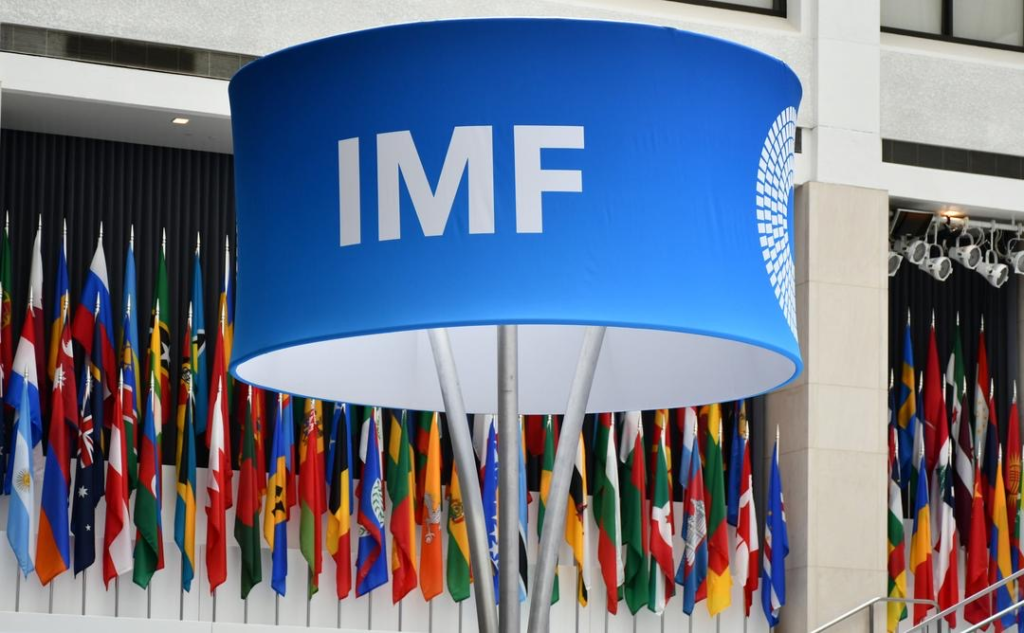
IMF African Department officials said discussions on Senegal’s debt treatment are advancing constructively and described Nigeria’s recent monetary policy adjustment as appropriate, while warning that broad fuel subsidies remain costly and poorly targeted. Speaking at the Bangkok press briefing on the October Regional Economic Outlook Update earlier this week, Zeine Zeidane, Director of the African Department, told reporters, “We are in a very good place. We have reached a Staff-Level Agreement.” He added that Senegal’s authorities have hired financial advisers and expressed interest in treatment under the Common Framework. “Yesterday was the first meeting of the GSDR, the Global Sovereign Debt Roundtable, with the main bilateral official creditors of Senegal who were in the room. The discussion was positive.” Financing assurances from the official creditor committee would open the way for Board approval of the programme. Zeidane noted that existing GSDR tools and templates could help speed subsequent bilateral negotiations, though no fixed timeline is guaranteed. On Nigeria, Deputy Director Montfort Mlachila linked the upgraded growth outlook of 4.2% in 2026 and 4.% in 2027 to stronger oil receipts, improved reserves and liquidity, with services as the principal driver and inflation falling sharply from high levels. Zeidane addressed the Central Bank’s move to lower the policy rate from 26.5% to 23%. “They decided to normalize somewhat of the monetary policy to go to something to lower that real interest rate, which is appropriate, in our view. This is the right thing to do. And it’s not easing yet, because the stance itself remains at tightest.” He reiterated that energy subsidies typically benefit wealthier households. An illustrative scenario in the report shows generalized fuel-price smoothing can cost about 4% of GDP, while transfers delivering the same benefit to the poorest 40% of the population cost at most 0.5 %. “Resilience is not immunity,” Zeidane said earlier in his opening remarks. “The region’s resilience is real, and it reflects difficult reforms and remarkable adaptation.” He urged governments to protect the vulnerable without sacrificing future growth-enhancing investment. Meanwhile, Ghana’s first-half growth near 6.2 %, inflation within the target band and solid fiscal performance support the 5.7 percent projection for 2026, Mlachila said, with gold prices providing an additional cushion despite the country’s net-importer status. Zeidane confirmed strong performance under Ghana’s Policy Coordination Instrument so far and a recent sovereign upgrade, placing the country in a better position to weather commodity-price risks. Ongoing disruptions linked to the Middle East conflict have kept oil prices elevated, amplifying the divergence between exporters and importers already visible across the region. The IMF continues to offer financing, advice and capacity development tailored to individual country circumstances.
Senegal’s RGS Seeks €530 Million for Gas Pipeline Expansion
Senegal’s state-owned gas infrastructure operator, Réseau Gazier du Sénégal, is seeking equity and debt partners to raise €530 million for a major domestic pipeline network expansion by 2029. The funding push was officially launched during the African Energy Week conference in Cape Town. The capital will fund three segments, including an €180 million blue line and a €130 million orange corridor designed to supply multiple power plants and industrial sites. To attract private investors, RGS is offering 15-year renewable concessions, guaranteed cost-reflective tariffs, and a targeted 20% internal rate of return on equity. This midstream push aligns with wider national strategies to monetize offshore gas reserves from the Grand Tortue Ahmeyim project and recent upstream exploration block bids. Expanding domestic gas networks helps Senegal lower costly heavy fuel oil imports, reduce thermal power generation expenses, and accelerate nationwide industrialization.
Senegal’s Economy Expands by 3.1% in Second Quarter of 2026
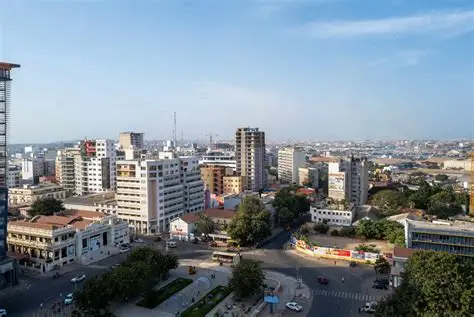
Senegal’s economy grew 3.1% year-on-year in the second quarter of 2026, easing from 4.3% in the first quarter, the National Agency for Statistics and Demography said. Services led the expansion, rising 6.0%. Industry grew 5.1% and the primary sector 1.5%. Net taxes on products jumped 18.1%. Stripping out hydrocarbons, growth was stronger: non-oil GDP rose 6.4%. On the demand side, investment did most of the work. Gross fixed capital formation increased 8.0% and final consumption 5.5%. Trade pulled in the other direction—exports of goods and services fell 2.7% while imports rose 4.8%. Quarter on quarter, seasonally adjusted output was almost flat, up just 0.1%. The figures come as West African governments try to rein in deficits without choking off growth.
African Banks Avoid Losses in Senegal’s Debt Shake-Up
Sub-Saharan African commercial banks are largely shielded from the immediate fallout of Senegal’s looming foreign-currency debt restructuring due to their minimal exposure to the nation’s international liabilities. S&P Global Ratings reported Thursday that regional commercial lenders hold little of Senegal’s external commercial debt, limiting the threat of systemic contagion across the West African banking sector. The ratings agency noted that Senegal’s regional bank exposure remains heavily concentrated in local-currency CFA franc obligations, which are explicitly excluded from the government’s initial restructuring perimeter. Banks in the region with exposure to Senegalese debt include Ecobank Transnational , First Bank of Nigeria and United Bank for Africa (UBA). “Senegal’s plan to restructure foreign-currency denominated debt won’t hurt rated banks in Sub-Saharan Africa,” S&P said in the note. “That’s because the banks are only exposed to local-currency debt and have limited exposure to Senegal sovereign debt.” S&P noted. Instead, the burden of the upcoming debt rework will fall primarily on international institutional investors and asset managers who hold the bulk of Senegal’s foreign-currency Eurobonds. This assessment follows S&P’s September 2026 decision to downgrade Senegal’s foreign-currency rating to a near 26-year low of ‘CC’, signaling that a distressed debt exchange is extremely likely. The restructuring was triggered after a recent government audit uncovered over $11 billion in previously undisclosed liabilities, pushing debt above 130% of GDP and halting a $1.8 billion IMF program Senegal is now attempting to overhaul nearly $5 billion in Eurobonds, serving as a critical test case for the revised G20 Common Framework aimed at accelerating sovereign debt workouts.
Senegal Eurobond Holders Form Creditor Group and Hire White & Case for Debt Restructuring Talks
Holders of Senegal’s sovereign bonds have organized an official creditor group and hired global law firm White & Case as legal counsel to navigate upcoming debt restructuring negotiations. Four sources with direct knowledge of the matter said that the newly formed coalition includes at least eight major international fund managers representing substantial commercial exposure. (Reuters reported). This creditor mobilization coincides with the International Monetary Fund recently approving a $2.2 billion funded program to support Dakar’s broad macroeconomic stabilization and structural reforms. The intervention follows the discovery of undisclosed public liabilities that pushed national debt past 130% of GDP, triggering sweeping credit rating downgrades and debt rework plans. Senegal’s debt overhaul explicitly targets international Eurobonds while insulating regional CFA franc debt, as commercial creditors organize to protect bondholder value amid expected distressed exchange terms.
Senegal, IMF Strike $2.2 Billion Agreement as Debt Reaches 132% of GDP
Senegal and the International Monetary Fund have reached a staff-level agreement on a $2.2 billion, three-year financial package aimed at stabilizing the West African nation’s public finances. The Washington-based lender disclosed the 36-month arrangement on Tuesday, noting the deal remains subject to approval by IMF management and its Executive Board following corrective governance measures by Dakar. “The main reforms planned under the IMF-supported program aim to restore the viability of public finances while protecting vulnerable households,” the Fund said in an official statement. Dakar is grappling with severe debt sustainability challenges after total public-sector debt reached 132% of Gross Domestic Product at the end of 2024, driven by unrecorded historical borrowing. Government audits revealed over $11 billion in hidden debts accumulated under former President Macky Sall, leading the IMF to suspend a previous $1.8 billion facility agreed upon in 2023. Despite structural headwinds, Senegal’s fiscal deficit narrowed from 13.4% of GDP in 2024 to 6.4% in 2025 as President Bassirou Diomaye Faye’s administration rationalized public expenditures. Economic growth accelerated to 6.7% in 2025, buoyed by the country’s first full year of offshore oil production, though non-hydrocarbon sector expansion slowed sharply to 2.2%. To restore debt sustainability, Finance Minister Cheikh Diba announced plans to seek an enhanced G20 Common Framework debt treatment, characterizing it as a tailored liquidity mechanism rather than traditional debt restructuring. Market reactions were immediate as sovereign Eurobonds plummeted below 50 cents on the dollar following the debt treatment announcement and a credit rating downgrade by Moody’s to Caa2. Unlocking the funds requires Senegal to secure partner financing assurances and execute mandatory corrective actions to obtain an official IMF waiver regarding historical data misreporting. “The agreement remains subject to IMF Management and Executive Board approval, and it requires decisive corrective actions to support the authorities’ request for a waiver in the misreporting case prior to Executive Board approval. It also requires the receipt of the necessary financing assurances from Senegal’s partners.” IMF said.