

Tanzania’s First Gentleman Hafidh Ameir Hassan Dies at 77
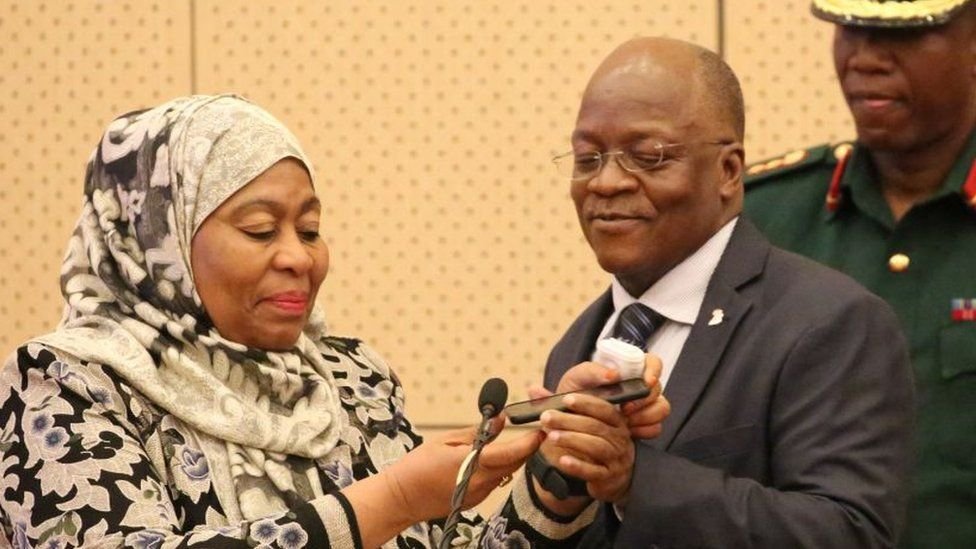
Hafidh Ameir Hassan, husband of Tanzanian President Samia Suluhu Hassan, has died at age 77 while undergoing treatment for a heart condition in Zanzibar. Vice-President Deogratius Ndejembi officially announced the passing on Monday morning, stating that he died at Emilio Mzena Memorial Hospital during medical care. Funeral arrangements are currently underway in Kizimkazi, a coastal village in southern Zanzibar, according to official statements. A retired agricultural academic, Hassan married the president in 1978. The couple raised four children together over nearly five decades. He became Tanzania’s inaugural First Gentleman in March 2021 when his wife assumed power following a tense political transition. His death follows President Samia’s sweeping electoral victory last year, coming amid a period of intense national and regional oversight. Regional leaders, including Kenyan President William Ruto and African Union officials, have issued formal condolences to the grieving family.
Tanzanian Vice President Steps Down Less Than Ten Months After Taking Office
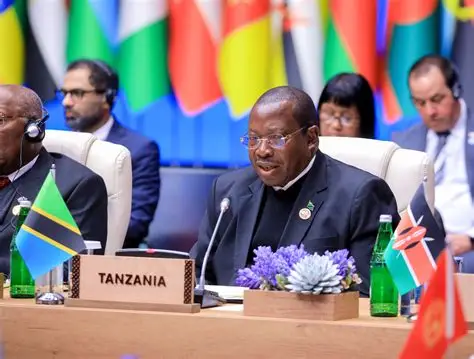
Emmanuel Nchimbi, Tanzania Vice President has tendered his resignation less than ten months after taking office, forcing a sudden executive leadership reset in East Africa’s second-largest economy. Chief Government Spokesperson confirmed President Samia Suluhu Hassan accepted the resignation, marking the first time a sitting Tanzanian vice president has voluntarily resigned since independence in 1964. “I am fully satisfied, without any doubt, that Her Excellency the President desires change, and thus I have decided to fulfil my promise,” Nchimbi stated in his official departure notice. Nchimbi, a former secretary-general of the ruling Chama Cha Mapinduzi (CCM) party, confirmed he will vacate the second-in-command office and retire entirely from active public life on September 4. The abrupt exit follows intense political friction generated by Nchimbi’s public speech on July 24, where he urged citizens and activists to keep pushing for comprehensive constitutional reforms. Constitutional reform remains a high-stakes, polarizing issue in Tanzania, long championed by opposition coalitions and civil society organizations while drawing skepticism from hardline elements within the ruling party. The political shake-up comes amidst broader institutional restructuring by President Hassan as she navigates internal party dynamics and attempts to maintain economic stability across key trade sectors. Under Article 50 of Tanzania’s Constitution, President Hassan must now nominate a successor to be submitted for confirmation by the National Assembly.
Tanzania Woos Dangote for Multi-Billion Dollar Fertilizer and Power Mega-Projects

Tanzania is aggressively courting multi-billion dollar investment commitments from Nigeria’s Dangote Group for a massive urea fertilizer complex, a 2,000-megawatt power plant, and regional transport infrastructure. The expansion plans were disclosed in a statement following an official delegation visit led by Tanzania Planning Minister Prof. Kitila A. Mkumbo to the Dangote Refinery facility in Lagos, Nigeria. The diplomatic pitch builds directly on high-level negotiations between Tanzanian President Samia Suluhu Hassan and industrialist Aliko Dangote in Dar es Salaam to expand the conglomerate’s East African footprint. Dangote Group currently operates an $800 million cement plant in Mtwara—the largest in Tanzania—with a three-million-tonne annual production capacity, anchoring its existing manufacturing footprint in the country. Tanzania seeks to leverage Dangote’s expertise from his $2.5 billion Lagos plant—which produces 3 million metric tonnes of urea annually—to curb its own $379 million annual fertilizer import dependency. “Africa now needs economic liberation, and that can only come through industrialisation,” stated Prof. Mkumbo during the Lagos facility tour, advocating for deeper cross-border trade under the African Continental Free Trade Area. The mega-project basket encompasses a Special Economic Zone, new port infrastructure, and a vital transport corridor connecting Mtwara to Mbamba Bay to boost regional industrial capacity and energy security. The high-stakes push comes weeks after Dangote selected neighboring Kenya for a separate $15-17 billion oil refinery, driving Tanzania to forcefully secure mega-investments in chemical manufacturing and power generation instead.