
From agriculture and hydropower to pharmaceuticals, transport and artificial intelligence, the Lokoja Dialogues exposed how deeply water is embedded in Nigeria’s economic future.
Nigeria’s economic ambitions are usually discussed sector by sector – agriculture, energy, manufacturing, healthcare, transport, etc. But there is one resource running through all of them – water.
That was perhaps the most important economic insight to emerge from the inaugural Lagos session of the Lokoja Dialogues.
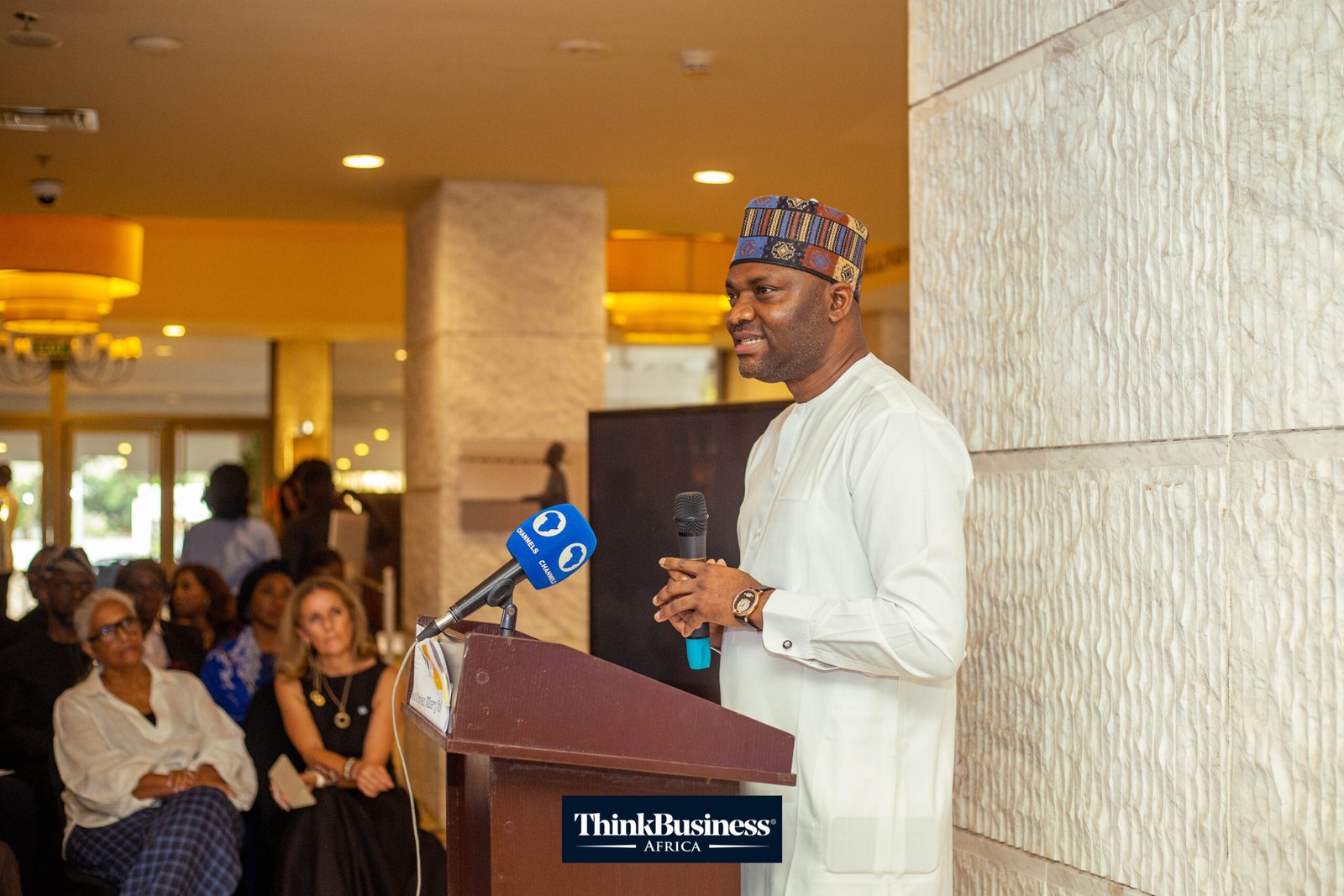
Water is not simply another sector. It is a cross-cutting economic input. Aminu Umar-Sadiq, Managing Director of the Nigerian Sovereign Investment Authority, demonstrated this by outlining five areas through which his institution thinks about water: power, sustainability, healthcare, irrigation and transportation.
Taken together, they tell a story about Nigeria’s growth model.
Agriculture cannot escape the water question
Nigeria has vast agricultural potential, but potential does not produce food. Productivity does. And productivity requires predictable access to water.
Umar-Sadiq pointed to what he described as a missing link in Nigeria’s agricultural system: large-scale irrigation.
The country has land. It has labour. It has water bodies. But getting water from those water bodies to crops, in the right quantities and at the right time, requires infrastructure.
Rain-fed agriculture makes production vulnerable to climate variability, but irrigation turns water into a productive asset. That means irrigation is not simply an agricultural intervention. It is an infrastructure investment.
And if Nigeria wants to build a more productive agricultural economy, the question of how it moves water to farms has to become part of the agricultural strategy.
Water and power are inseparable
The same logic applies to electricity. Umar-Sadiq described hydropower as a major area of interest for NSIA but also emphasised the substantial capital and technical challenges involved in developing hydro projects.
Damilola Ogunbiyi, speaking from her work in the energy sector, pushed the argument further. She described water and energy as increasingly inseparable.
The question is no longer simply how to connect communities to energy or water independently. It is how to build systems in which both remain sustainable.
This matters because infrastructure can become stranded when its underlying economics are weak.
Ogunbiyi pointed to the foreign-exchange challenge facing decentralised energy projects: infrastructure may be financed in hard currency while revenues are collected in naira.
The same principle applies to water. Build a system without solving its long-term operating economics, and the infrastructure may eventually deteriorate.
The pharmaceutical factory that needs water
Perhaps the most unexpected example came from healthcare. NSIA is exploring investments in pharmaceutical manufacturing, including the production of excipients — materials used alongside active pharmaceutical ingredients in medicines.
Umar-Sadiq explained that water is a critical input into excipient production and is therefore influencing decisions about where manufacturing plants can be located.
The implication goes far beyond pharmaceuticals. Industrial policy frequently focuses on land, electricity, tax incentives, transport and access to markets.
But reliable water can be equally important. A factory cannot manufacture at scale if its water supply is unreliable. That means water availability can influence where factories are built, what industries locate in particular communities and whether investments become commercially viable.
Water is therefore part of the industrial-location equation.
Nigeria’s waterways are infrastructure too
Water also offers a transportation opportunity. Umar-Sadiq pointed to the role inland waterways played in the industrial development of European economies and argued that Nigeria’s extensive network of water bodies represents a significant opportunity.
The waterways already exist. The question is whether Nigeria can turn them into productive infrastructure.
That is the recurring theme. Nigeria’s challenge is often not the absence of the underlying resource. It is the absence of the systems that convert the resource into economic value.
Then comes AI
The water conversation becomes even more interesting when it reaches the digital economy. Ogunbiyi warned that artificial intelligence and data-centre infrastructure have significant water requirements.
As Nigeria seeks to participate in the next phase of the digital economy, water demand cannot be ignored.
This raises an emerging policy question: What happens when digital infrastructure competes with communities for scarce resources?
Her proposition was that major technology companies should recognise the environmental impact of their infrastructure and translate their investments into tangible benefits for host communities.
It is a principle likely to become more important as Africa attracts data centres, cloud infrastructure and AI-related investments.
The digital economy may be intangible to its users. Its infrastructure is not. It requires land, power, and increasingly, it requires water.
The bigger picture: the WEFE nexus
Lokoja Dialogues frames its work around the interdependence of water, energy, food and ecosystems.
That framework is important because it breaks down the silos through which public policy is often organised. Water affects agriculture while agriculture affects food prices. Energy affects water pumping and treatment and water affects energy generation. Industry consumes water while ecosystem degradation affects water availability and climate change intensifies the interactions.
The result is a system. And systems cannot be solved one ministry at a time. This is why the contribution from the Federal Ministry of Budget and Economic Planning at the dialogue was significant.
A ministry representative noted that water cuts across agriculture, power, transportation, health and irrigation and therefore aligns with the government’s broader development planning framework.
That is the policy opportunity.
Rather than treating water as a narrow utility issue, Nigeria can begin treating it as part of its overall economic infrastructure strategy.
The growth story hiding in plain sight
The economic significance of water may therefore be hiding in plain sight. Nigeria wants more food, needs more electricity, wants more manufacturing, wants pharmaceutical self-sufficiency, wants better logistics, and wants to attract digital infrastructure.
All of these ambitions depend, in one way or another, on water. Nigeria cannot fully execute its growth ambitions without confronting its water economy.