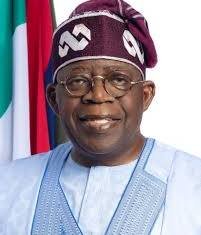
Nigeria’s forthcoming January 16th presidential election next year will test whether President Bola Ahmed Tinubu can turn the case for economic reform into a mandate for another four years. His prospects will depend on three interlocking forces: the performance of the economy, the ability of the opposition to unite behind a credible alternative, and the political alliances that determine how votes are distributed across the country.
Three months ahead of the election, the outlines of the contest are clear. Tinubu has the advantages of incumbency and a governing party with an extensive network of state-level political structures. The opposition, meanwhile, faces the familiar problem of converting widespread dissatisfaction into a coherent electoral challenge. The economy could decide which of these advantages matters more.
It’s the economy, stupid
The economy is both Tinubu’s strongest argument for re-election and his greatest political liability. Since taking office in May 2023, his administration has pursued a series of far-reaching reforms, most notably the removal of the petrol subsidy and changes to the foreign-exchange regime. These measures were intended to address longstanding distortions, ease fiscal pressures and create a more sustainable foundation for growth.
There are signs of progress. Nigeria’s economic growth has strengthened, especially with growth trajectory now over 4%, compared to an average of 2% in the last decade. Inflation, after reaching a peak of more than 30% in 2024, has moderated to less than 15% in September 2026. Foreign-exchange conditions have improved from the turbulence that followed the initial reforms, while the Nigerian Exchange’s All-Share Index has recorded substantial gains since June 2023. The International Monetary Fund’s 2026 Article IV assessment also recognises improvements in macroeconomic outcomes and resilience, while projecting real GDP growth of 4.1% in 2026 and 4.3% in 2027.
For the government, these developments support a straightforward argument: Nigeria’s economic problems required difficult decisions, and the reforms need time to deliver their full benefits. A second term would provide an opportunity to consolidate the gains and translate macroeconomic stability into stronger investment, productivity and employment.
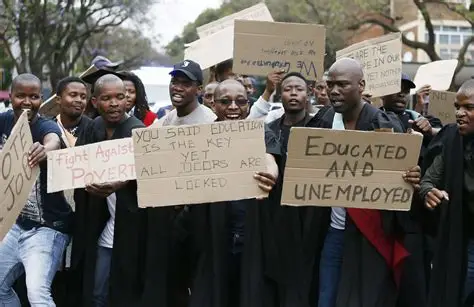
Yet the same economic record presents the president with a formidable problem. Improved headline indicators have not translated into improved living standards for majority of Nigerians. The 2026 Global Multidimensional Poverty Index, produced by the United Nations Development Programme and the Oxford Poverty and Human Development Initiative, points to the scale of the challenge. Over additional 17 million Nigerians suffer from multidimensional poverty in the survey carried out in 2024. For many Nigerians, the relevant economic indicators are not GDP growth or foreign reserves. They are the price of food, the cost of transport, the electricity bill and the purchasing power of their wages. According to them, macroeconomic outlook carry limited political weight.
This is the contradiction at the heart of Tinubu’s re-election campaign. The government can reasonably argue that the economy is moving in the right direction. Voters are equally asking when that direction will lead to a meaningful improvement in their lives.
Has the opposition handed Tinubu a victory before the votes are cast?
However, Tinubu’s political position is strengthened by a familiar weakness among his opponents: divided. In the 2023 election, the president won in a contest divided among several major candidates, including Atiku Abubakar of the People’s Democratic Party (PDP), Peter Obi of the Labour Party (LP) and Rabiu Musa Kwankwaso of the New Nigeria Peoples Party (NNPP). The fragmentation of opposition votes helped shape the result.
As in 2023, they risk dividing voters who might otherwise prefer an alternative to the incumbent. Attempts to build a common opposition platform have exposed tensions. The question of who should lead proved particularly difficult, given the ambitions and established support bases of the principal contenders.
Atiku has pursued the presidency for decades. His supporters regard him as an experienced candidate with a substantial political network; others question whether another campaign under his leadership can attract the voters needed to defeat Tinubu. Obi brings a different political appeal, particularly among voters seeking a break with established political structures. Kwankwaso has his own constituency and organisational base and has teamed up with Obi this time as the running mate under the Nigeria Democratic Congress banner..
While they agree that Tinubu should leave office, they could not agree on who should replace him, what that person would do differently and how the coalition would govern. The President is set to benefit from a divided opposition though the election marked by considerable public dissatisfaction.
Policies, policies, policies
The debate over petrol subsidies illustrates the importance of policy choices—and the difficulty of explaining them to voters. In August, Atiku said he would restore fuel subsidies if elected, questioning how the savings from their removal had been used. He subsequently clarified his position by proposing support for domestic production, including preferential pricing arrangements for Nigerian crude supplied to local refineries. Obi has also argued for addressing the consequences of subsidy removal and eliminating the corruption associated with the old system.
The distinction between subsidising consumption and supporting production matters. They are different policies, with different fiscal costs, beneficiaries and incentives. A proposal to sell crude to domestic refiners at preferential prices, for example, would still require a clear account of how the discount would be valued, financed and monitored.
The government’s position is that the former subsidy regime imposed a substantial fiscal burden and created opportunities for abuse. Restoring it, in any form, could reintroduce the distortions that reform was intended to remove. The opposition cannot simply promise cheaper fuel without explaining who would pay the bill. Nor can the government assume that the removal of subsidies settles the question of affordability. Nigerians may accept the case for reform in principle while remaining dissatisfied with its consequences.
The cost of living: the electoral hot potato
The cost of living is likely to be the opposition’s most potent line of attack. It is also the issue on which the government’s economic argument will be most severely tested. The administration maintains that the reforms have put Nigeria on a more sustainable economic path and that the welfare gains will take time to materialise. Its case is that a return to the policies of the past would jeopardise progress and recreate fiscal pressures.
The opposition, by contrast, point to the immediate burden on households. Higher prices for food, fuel, transport and housing have altered the economics of daily life, while many incomes have struggled to keep pace.
Neither side can resolve this argument through rhetoric alone. The government needs to demonstrate that stabilisation is translating into jobs, higher real incomes, better public services and greater economic opportunity. The opposition needs to explain how it would reduce hardship without undermining fiscal sustainability or creating new distortions.
Electricity provides another test. Tinubu reportedly challenged Nigerians before the 2023 election to judge his administration by its ability to address the country’s persistent power crisis. By 2027, the question will not simply be whether the government has introduced reforms. It will be whether the results justify asking Nigerians to give those reforms another four years.
Alignments and realignments
Nigeria’s elections are fought on policy, but also on political alliances. Regional interests, party networks, religious identities and calculations about the rotation of power influence how voters and political elites align themselves.
These factors will matter in 2027. The APC has an extensive network of governors and party officials, giving it a potential organisational advantage. The support of governors will help with mobilisation. The governing party’s ability to attract support beyond its formal membership also matter. The public endorsements by Chukwuma Soludo of Anambra and Ademola Adeleke of Osun States, respectively, is a signal of a broader coalition. The distribution of power between North and South may also feature in political calculations, so may the repeat of the religious identity and debates about the APC’s Muslim-Muslim presidential ticket.
The political arithmetic is complex. The president needs a broad enough coalition to meet the constitutional requirements for victory. The opposition needs to coordinate its support without assuming that regional or demographic allegiances will automatically produce a particular result.
Who wins?
The opposition’s prospects will depend on whether it can turn public dissatisfaction into votes. That will not be easy.
First, the opposition needs a clearer policy proposition. Criticism of subsidy removal is not, on its own, an economic programme. As of today, there are no clear policy proposals from any of the opposition candidates.
Second, Nigerian voters are increasingly sceptical of the political class as a whole. Dissatisfaction with the incumbent does not automatically create enthusiasm for the opposition. If voters conclude that none of the candidates offers a convincing alternative, some may abstain. Nigeria’s declining turnout in recent presidential elections makes participation an important variable: turnout fell from 43.7% in 2015 to 34.7% in 2019 and 26.7% in 2023. Low turn is expected to favour the president.
Third, elections require money, organisation and sustained mobilisation. The APC’s incumbency and extensive political network gives it an advantage.
Finally, and perhaps most importantly, a weak and divided opposition will be the greatest boost to the president’s relection. So far, the opposition candidates have demonstrated that they are more interested in becoming president than removing the ruling APC from power.