
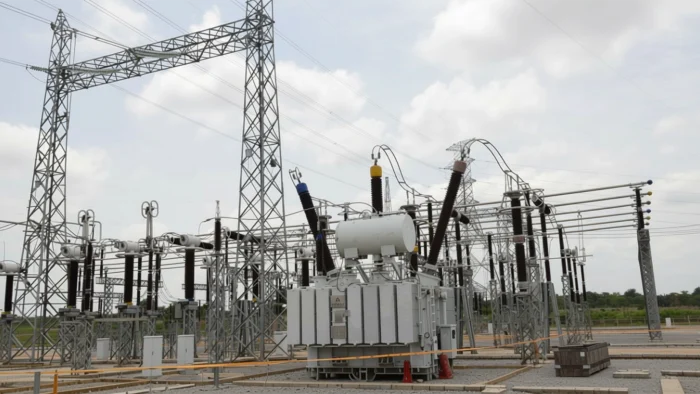
On 19 October 2026, Nigeria’s electricity generation fell from about 3,840 megawatts in the morning to under 500 MW by early afternoon after multiple trips on the 330 kV transmission network.
The Nigerian Independent System Operator called it a partial disturbance limited to one section of the grid and said operations were restored after work with the Transmission Company of Nigeria. Residents in parts of Lagos, Abuja and elsewhere reported blackouts, and output stayed low for hours.
The same day, South Africa’s Eskom reported roughly 520 consecutive days without load shedding. The streak began around 16 May 2025. Eskom’s year-to-date Energy Availability Factor stood at 68.2 % its highest in six years with about 5,695 MW of surplus capacity. Unplanned outages had improved by roughly 6.67% year-on-year, returning more than 3,000 MW to service.
The contrast is clear; look at the numbers:
| Metric | South Africa | Nigeria |
| Population | 60–64 million | 220+ million |
| Installed capacity | Significantly higher (historically 48,000+ MW range) | 13,000–14,000 MW |
| Typical available/operating generation | Higher and more consistent recently | Often 3,000–5,000 MW (Sept 2026: ~5,038 MW available, ~4,089 MW hourly) |
| Recent reliability | 520 days without load shedding | Frequent collapses/partial collapses; major drop on 19 Oct 2026 |
| Energy Availability Factor / plant performance | 68.2% YTD (six-year high); +12.8 pts over 3 years | Many plants below 50% of installed capacity |
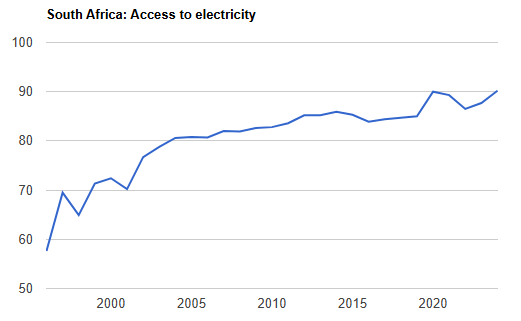
| Electricity access | 90% | 61% |
Eskom’s Generation Recovery Plan, launched in 2023, drove the improvement through intensive maintenance, fewer unplanned breakdowns, and better fleet reliability.
Over three years the Energy Availability Factor rose by about 12.8 percentage points, returning more than 6,500 MW of capacity. Diesel use for open-cycle turbines fell sharply. Private rooftop solar also eased daytime pressure. Load reduction (a local measure for overloaded networks with illegal connections) has largely been phased out in most provinces.
Nigeria’s constraints are broader. The system relies heavily on gas plants that face fuel and payment issues.
Transmission remains a bottleneck, so available generation cannot always be delivered. Unit trips cascade into large losses, as seen on 19 October. Low plant availability and commercial problems limit maintenance and investment. Partial disturbances therefore produce widespread blackouts and sharp generation drops. Nigeria has recorded multiple full or near-full collapses in recent years.
Both countries have seen private solar growth. In Nigeria, chronic grid failure has accelerated rooftop and commercial solar adoption, making it one of Africa’s larger solar markets.
Households and businesses increasingly treat self-generation as the reliable option.
South Africa’s private solar expanded during the load-shedding years and continues to support the system, but it has done so alongside a central utility that has improved generation performance.
South Africa’s recovery shows that focused maintenance and reduced unplanned outages can reverse a severe generation crisis within a few years.
Nigeria’s problems involve gas supply, transmission bottlenecks, plant availability, and commercial sustainability that have so far blocked comparable stabilisation of the national grid.
Meanwhile, President Bola Ahmed Tinubu promised Nigerians improved electricity supply—widely interpreted as a pledge of 24-hour power—during his 2023 campaign, telling voters not to re-elect him if he failed to deliver.
With the presidential election set for 16 January 2027, just under three months away, the gap between that campaign commitment and the country’s continued grid instability has become a prominent issue ahead of the vote.