
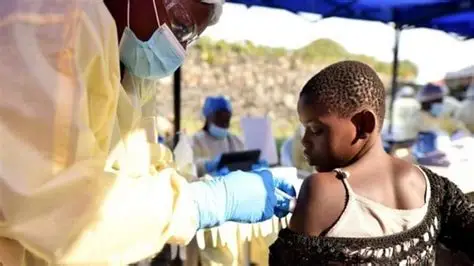
Uganda has officially contained the rare Bundibugyo strain of the Ebola virus after completing its mandatory 42-day surveillance period without registering a single new infection.
A World Health Organization (WHO) official confirmed the milestone during a Wednesday press briefing, cautioning that cross-border threats persist as infections accelerate rapidly across the neighboring Democratic Republic of Congo (DRC).
“While Uganda’s swift containment demonstrates the power of early digital tracking, the unrest across the border keeps the entire region at extreme risk,” the WHO official stated during the briefing.
Uganda’s Ministry of Health originally declared the end of local transmission on July 28. The outbreak, which began in mid-May 2026, resulted in 20 total confirmed cases and two fatalities.
Epidemiological tracking showed 15 cases were imported directly from the DRC, while five were secondary infections among health workers. All 18 surviving patients have been discharged after successful treatment.
In contrast, the epidemiological crisis in the eastern DRC continues to escalate drastically. Cumulative figures have surpassed 4,686 confirmed cases, placing severe strain on local health systems.
Unlike the prevalent Zaire strain, the Bundibugyo virus currently lacks a broadly deployed, licensed vaccine or standardized monoclonal antibody treatment, forcing health authorities to rely heavily on rapid diagnostics.
The WHO maintains its Public Health Emergency of International Concern designation for the region. Active conflict and militia blockades in Ituri and North Kivu provinces continue to severely hamper containment and contact tracing.