
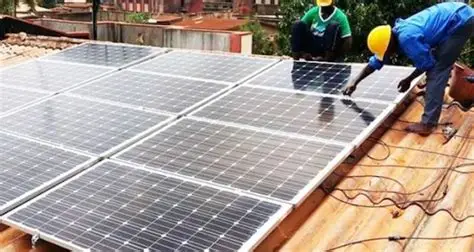
Plummeting solar and battery prices are transforming off-grid clean energy from a corporate social responsibility project into an aggressive profit-preservation tool for commercial and industrial firms across Sub-Saharan Africa.
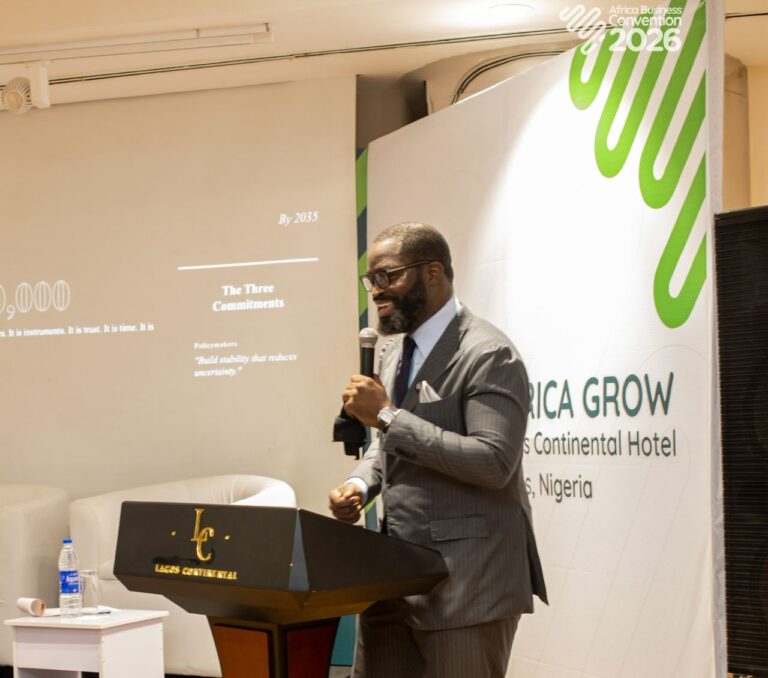
According to “The Great Reallocation” report released in September, by Platform Capital’s Founder Dr. Akintoye Akindele, Morayo Akintola, and the Platform Capital Research Desk, global finance is undergoing a historic $2 trillion annual capital reallocation into clean energy.
The report reveals clean energy spending outpaced fossil fuel supply two-to-one in 2025, noting that “while legacy fuels linger, new capital is setting a permanent direction toward clean energy”.
According to the findings, solar module prices dropped 95% since 2010 to $0.09 per watt, while battery pack costs fell to $95 per kilowatt-hour.
These cost declines allow business leaders to displace expensive, unpredictable diesel generation with fixed-rate clean power, insulating corporate earnings from volatile fuel prices and foreign exchange pressures.
In Nigeria, where commercial enterprises spend over $14 billion according to African Development Bank (AfDB) annually on backup fuel amid persistent grid unreliability, businesses face a cumulative $410 billion energy transition requirement through 2060.
However, the report highlights a massive regional gap, observing that “Africa accounts for 20% of the world’s population but receives under 2% of global clean energy capital”.
Addressing this imbalance, the report stress that “the issue is not a global shortage of liquidity, but a missing financial architecture” required to structure bankable projects for local off-takers.
To overcome capital bottlenecks, developers are tapping emerging financial instruments including Asset-Backed Carbon Notes, Green Sukuk, and Article 6.2 bilateral carbon transfers to bridge project bankability gaps.
Voluntary carbon markets, valued globally at $114 billion, provide a critical mezzanine revenue layer that lowers effective borrowing costs for African solar and mobility deployments.
Specialized Independent Power Producers absorb heavy upfront capital costs, selling electricity through long-term Power Purchase Agreements that slash effective commercial energy expenses by up to 60%.
This framework anchors high-return services generating “15% to 25% returns on invested capital,” backed by “20 to 30 years of inflation-indexed, recurring revenue per installed gigawatt,” the report reveals.
Energy storage makes round-the-clock solar viable, with global battery storage shipments surging 75.5% as lower-cost sodium-ion technologies enter the market at a 20% to 30% discount to lithium-iron-phosphate.
Fintech credit rails and embedded Pay-As-You-Go software are simultaneously de-risking collections for off-grid providers, allowing developers to expand automated power systems across small-scale commercial hubs.
Commercial solar-plus-storage projects now achieve full financial payback within two to four years, delivering immediate expansion to earnings before interest, taxes, depreciation, and amortization.
With central grids clogged by over 2.3 Terawatts of queued capacity globally, the report notes that clean infrastructure is increasingly deployed “at a scale that outstrips incumbent infrastructure”.
Off-grid commercial solar has consequently shifted from an environmental preference into an imperative financial buffer, permanently reshaping how African industrial enterprises defend corporate margins against economic shocks.