
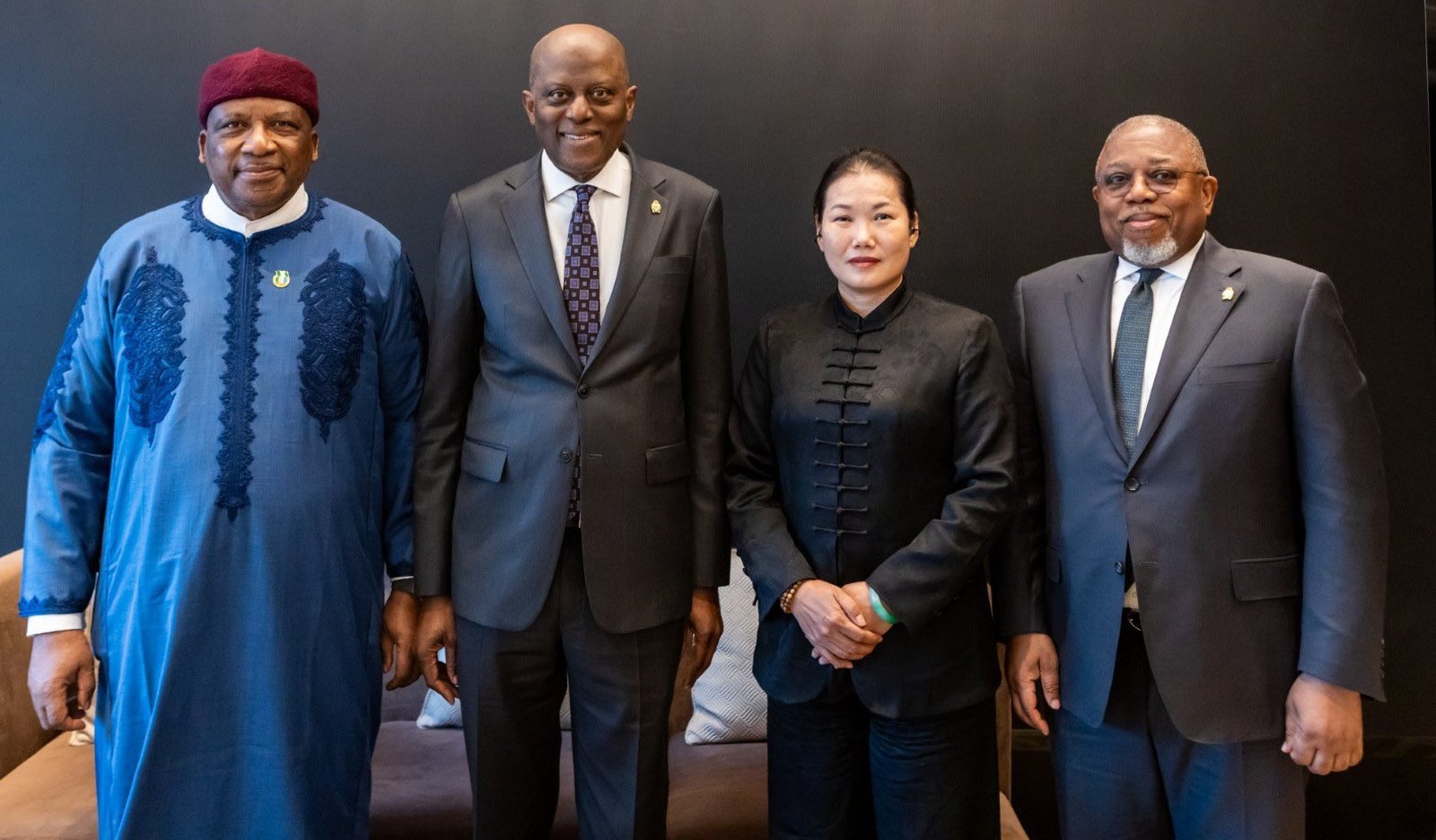
Central Bank of Nigeria (CBN) Governor Olayemi Cardoso has opened direct talks in Beijing with Nigerian and Chinese business leaders to remove payment and settlement bottlenecks that risk constraining a rapidly expanding trade relationship.
The engagement took place at a roundtable on Wednesday under the theme “Strengthening the Nigeria–China Financial Corridor,” according to a statement issued by the Central Bank of Nigeria and published on its official X account.
“As economic ties between Nigeria and China deepen, the financial architecture supporting trade and investment must keep pace,” the CBN said in the statement.
China’s exports to Nigeria reached a record $24.9 billion in 2025, while Chinese imports from Nigeria jumped 80% to $2.3 billion in the first half of 2026 after Beijing introduced zero tariffs on African goods from 1 May.
Bilateral trade rose 35% year-on-year to roughly $18 billion in the same period, yet China still accounts for nearly 40% of Nigeria’s total imports, leaving a large and persistent deficit.
Participants at the Pan Pacific Beijing meeting identified slow settlement times, weak banking connectivity and the limited presence of Nigerian banks in China as the main obstacles to smoother transactions.
Cardoso told the gathering that the ambition is not simply to make transactions easier but to create the conditions for more transactions, greater investment and stronger financial flows in both directions.
The Beijing session builds on earlier discussions with People’s Bank of China Governor Pan Gongsheng during the IMF and World Bank Annual Meetings in Bangkok and follows similar outreach in Singapore on financial innovation.
It also runs parallel to federal government efforts to expand the existing Naira-Yuan swap arrangement beyond its current roughly $2.5 billion scale to reduce reliance on the dollar for bilateral trade.
CBN officials plan a follow-up listening session with Nigerian businesses in Guangzhou focused on remittance channels and investment facilitation.
Whether the dialogue produces faster settlements and deeper banking links will determine how effectively Nigeria converts rising Chinese demand under the zero-tariff regime into more balanced trade and investment flows.