
Southern, Western and Northern Africa posted trade surpluses in 2024 as total intra-African trade reached a record $211.6 billion, up from $31.8 billion in 2000.
The analysis, published by the Africa Business Convention (ABC) and based on African Export-Import Bank data, shows compound annual growth of 8.2 percent over 24 years.
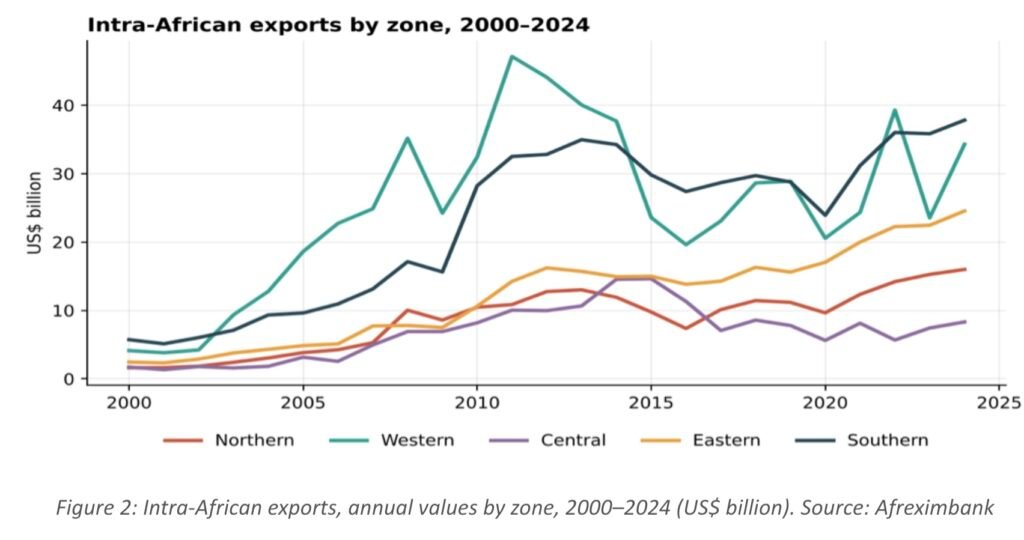
Southern Africa remained the largest bloc, with $61.5 billion in total trade and $37.8 billion in exports, of which South Africa accounted for $31.1 billion, or 82%.
Western Africa generated $34.3 billion in exports, led by Nigeria’s $15.7 billion, though volumes stayed below the 2011 peak of $47.1 billion amid commodity volatility.
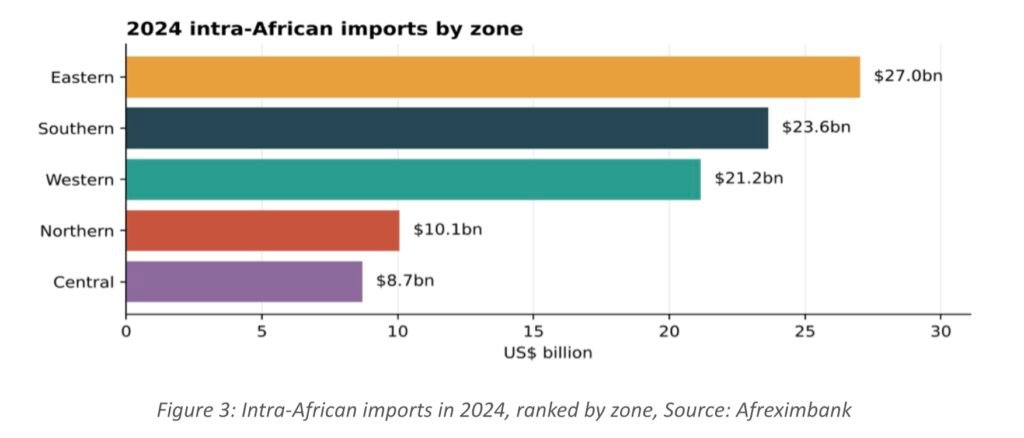
Northern Africa recorded a $5.9 billion surplus, and the three zones together saw reported exports of $121 billion exceed imports of $90.6 billion by $30.4 billion.
Eastern Africa emerged as the dominant demand hub, with imports rising to $27 billion, or 29.8% of the continental total, and overall trade reaching $51.6 billion.
Central Africa lagged at $17 billion, or 8% of total trade, constrained by infrastructure bottlenecks and a narrow export base.
The persistent export-import gap reflects re-export activity through hubs such as South Africa, Côte d’Ivoire and Kenya, plus informal flows that official data undercount.
AfCFTA implementation has supported the recovery, with nearly 50 countries now state parties and tariff offers finalized for most markets by late 2026.
Nigeria’s Dangote Refinery has begun direct supplies of refined petroleum products to neighbouring countries, cutting reliance on extra-continental intermediaries.
Trade-finance shortfalls estimated near $100 billion, slow customs harmonisation and border infrastructure gaps continue to limit full gains from the single-market framework.
Governments must prioritise regional payment systems and formalise informal trade to stabilise reserves in net-importing zones while reducing exposure to commodity shocks.