
By: ThinkBusiness Africa
A global financial system with trillions in capital is seeking a home, yet African infrastructure remains starved for funding. According to industry experts, the continent does not have a money problem; it has a project preparation crisis.
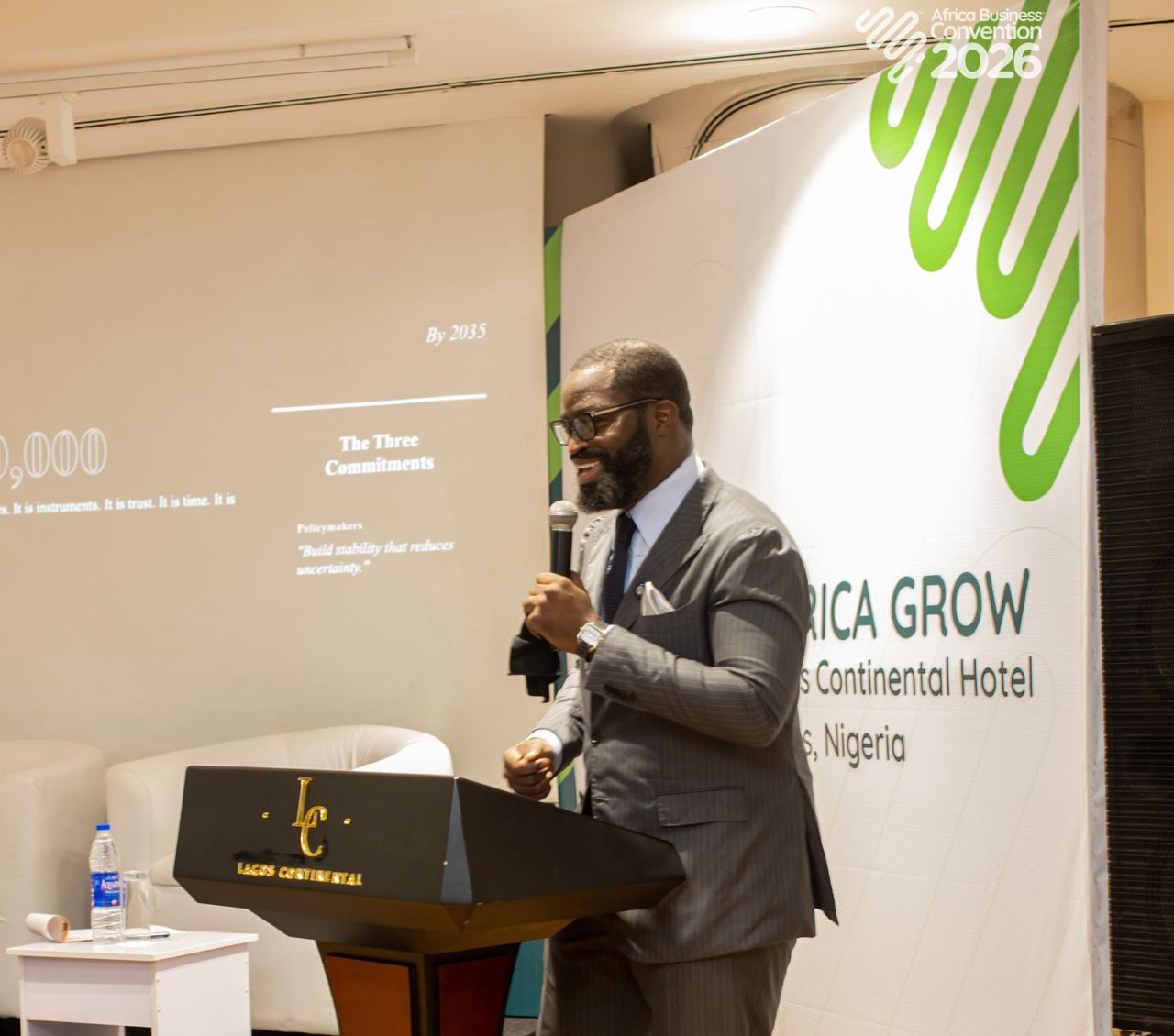
While delivering a keynote address at the 2026 African Business Convention (ABC), Ismael Adam Cisse, an investment banker and Founder & CEO of Infinity Africa Group, emphasized that Africa’s growth is stunted by a lack of bankable infrastructural projects, rather than a lack of capital.
Speaking on the theme “Africa Grow,” Cisse explained that while investors are ready to sign checks, they are navigating a landscape saturated with ambitious ideas that lack the legal, technical, and financial “bankability” required to move a project from a pitch deck to a construction site.
He highlighted that for the continent to grow at a steady pace, it must build systems that allow for large-scale investment to bridge the infrastructural deficit currently slowing economic progress.
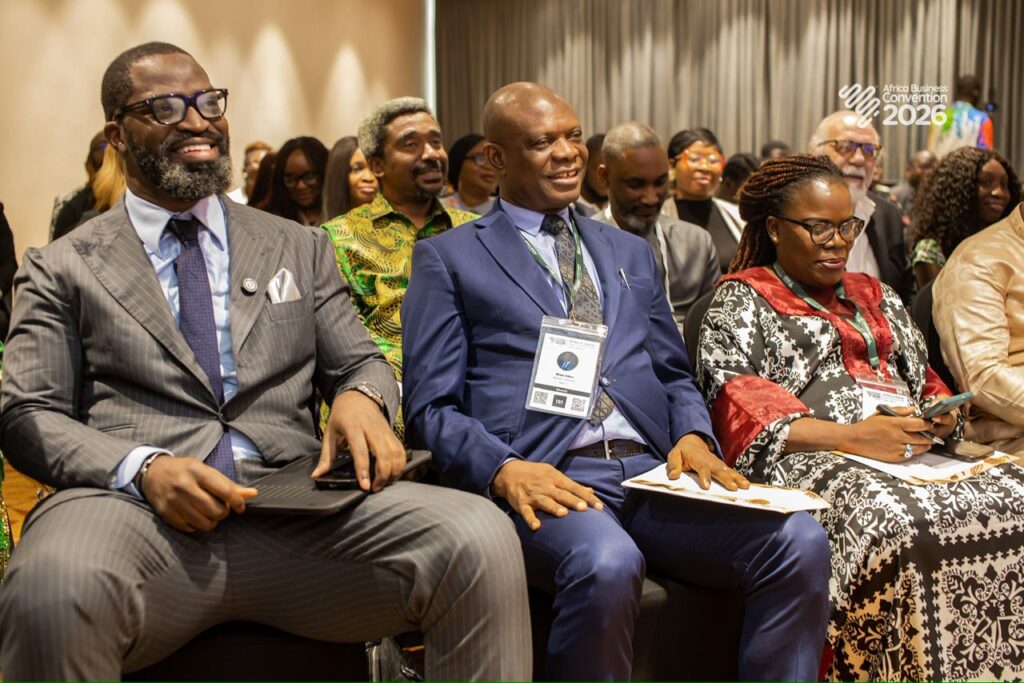
“I believe Africa’s growth comes down to moves that turn ambition into load-bearing capacity,” Cisse said. “The first move is to build investible pipelines—not isolated projects, but pipelines that can be repeated, compared, and funded. Capital doesn’t fund dreams; capital funds systems.” He said.
The scale of the challenge is reflected in the data. Roughly 600 million people—43% of Africa’s population—still lack access to grid electricity. While energy represents the single largest “investible” opportunity, it remains the continent’s largest deficit. Furthermore, Africa has the lowest road density in the world. Transport costs on the continent are 60% to 100% higher than in other developing regions, acting as a “silent tax” on every traded item.
The crisis extends to basic necessities and digital futures. Over 400 million people lack access to safe drinking water, a sector that struggles to attract private capital because the “user-pays” model is difficult to implement for a basic human right. In the digital space, while mobile penetration is high, the “middle-mile”—fiber networks and data centers—is underfunded, limiting the continent’s ability to compete in the burgeoning AI and cloud economies.
This infrastructure deficit reduces Africa’s GDP per-capita economic growth by roughly 2.6% annually.
The barrier to entry remains high. It is estimated that preparing a project to be “bankable” can cost between 5% and 10% of the total project value. With investors often demanding a 3% to 5% higher return to offset the “perceived risk” of the region, roughly 80% of African infrastructure projects fail at the feasibility stage.
To bridge this gap, Mr. Adam Cisse told entrepreneurs and policymakers at the convention that Africa needs financial instruments that match its unique reality: “blended finance, guarantees, Islamic finance, and robust capital markets.”
He further called for the integration of domestic capital, including pension funds, insurance funds, and diaspora remittances. “One tool cannot build a city,” he concluded. “You need a toolbox.”