
CAF Executive Committee Reverses Four-Year Cycle Decision to Safeguard Revenue and Elevate African Talent
In a landmark move that has reverberated across continental sports administrative circles, the Confederation of African Football (CAF) Executive Committee unanimously voted to reinstate the Africa Cup of Nations (AFCON) to its traditional two-year cycle. The decision effectively dismantles the controversial four-year tournament model proposed in late 2025 and re-anchors the crown jewel of African football as a biennial event.
The dramatic policy pivot highlights the delicate balancing act between managing international club friction and preserving financial viability. While European clubs frequently push for reduced international commitments to protect multi-million-dollar squad investments, CAF leaders concluded that extending the gap between AFCON tournaments posed severe risks to national team development and institutional revenues.
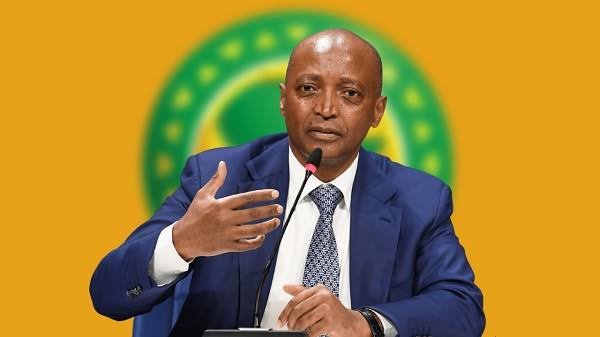
| “The decision by the CAF Executive Committee to reinstate the organization of the AFCON every two years aims to advance, protect and promote the interests of African football and the 54 CAF Member Associations, as well as those of African players playing for clubs outside the continent.”, Patrice Motsepe, CAF President |
Central to CAF’s reversal was a realistic appraisal of commercial realities. The previously envisioned alternative, a proposed African Nations League intended to fill the financial vacuum of a quadrennial AFCON, proved fiscally inadequate. Internal financial projections revealed that building a brand-new tournament format into a self-sustaining revenue driver would take years, threatening the direct funding allocations distributed to member associations.
| “We were also concerned by the several years required before the African Nations League could make the substantial financial and football development contributions for African football and CAF competitions to be globally competitive and self-supporting.”, Patrice Motsepe, CAF President |
Beyond television broadcasting rights and commercial sponsorships, the biennial rhythm provides irreplaceable competitive continuity for national teams. Unlike heavily resourced European federations, many African national teams rely almost entirely on AFCON qualification cycles and main tournament appearances to maintain elite squad preparation, secure corporate sponsorships, and upgrade domestic infrastructure.
Under the ratified schedule, Kenya, Tanzania, and Uganda will co-host the upcoming edition in 2027, followed by subsequent tournaments in 2028, 2031, and 2033. The 2028 tournament was scheduled to realign with the two-year cycle. To avoid scheduling conflicts with expanded FIFA global events, CAF confirmed that AFCON will not take place during FIFA World Cup years, explaining the intentional gap in 2030.
As East Africa prepares to welcome the continent in 2027, CAF’s decisive course correction reaffirms AFCON’s standing not merely as a football tournament, but as an indispensable engine of economic growth, athletic development, and continental pride.
Upcoming AFCON Tournament Schedule
| Year | Host Nation(s) | Cycle Status |
| 2027 | Kenya, Tanzania & Uganda (Joint Host) | Confirmed (Biennial Return) |
| 2028 | To Be Announced | Confirmed (Consecutive Transition) |
| 2031 | To Be Announced | Confirmed (Post-World Cup Cycle) |
| 2033 | To Be Announced | Confirmed (Biennial Cadence) |