Africa’s message at the 81st United Nations General Assembly is less about who occupies the podium and more about who captures the value. As the General Debate opens on 22 September, African governments are using the week to push investment, trade and financial reform — arguing that the continent should no longer be treated as a source of raw materials and a destination for aid.
The official theme is “Restoring trust, managing transformation: A United Nations that delivers for all.” For African delegations, transformation means cheaper capital, processing of critical minerals at home, and a bigger role in writing the rules of global commerce.
Many presidents are in New York in person, including Kenya’s William Ruto, Ghana’s John Mahama, Zimbabwe’s Emmerson Mnangagwa, Angola’s João Lourenço, Zambia’s Hakainde Hichilema, Botswana’s Duma Boko and Namibia’s Netumbo Nandi-Ndaitwah. Others have sent vice presidents or ministers, among them Nigeria, Tanzania, Uganda, Rwanda and South Africa. The mix is common this year: the UN itself expects dozens of deputies and ministers among the speakers. What unites the African group is the commercial agenda behind the diplomacy.
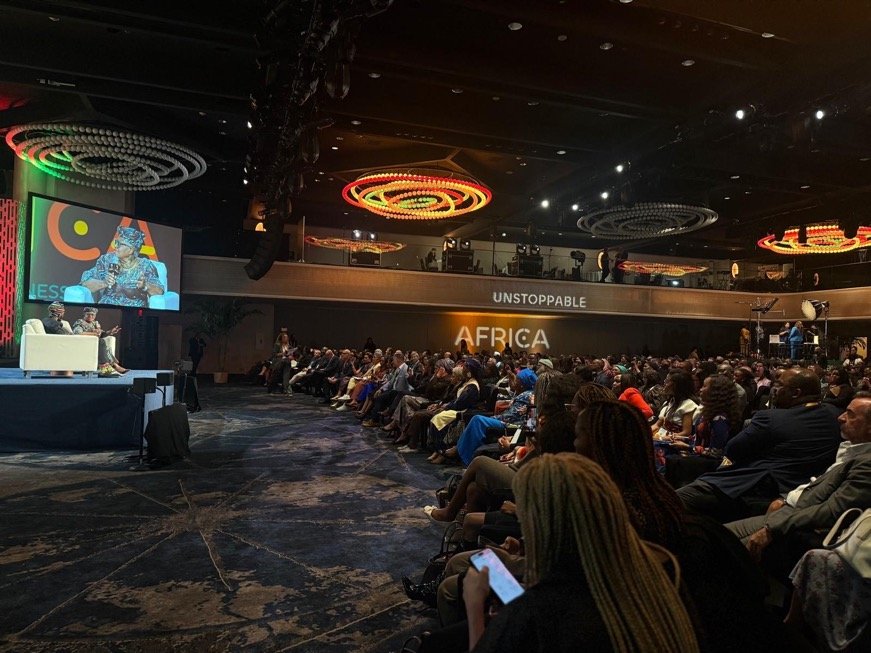
That agenda was previewed on 20–21 September at Unstoppable Africa 2026, the flagship business forum held on the margins of UNGA and convened with the United Nations and the African Union. Under the theme “Powering Business, Scaling Economies, Shaping the Future,” heads of state sat with investors and CEOs, including Aliko Dangote and African Finance Corporation chief Samaila Zubairu.
UN Secretary-General António Guterres told the gathering that global markets are shifting “from doing business in Africa to doing business with Africa”. He said the continent’s economy grew 4.4% last year, which matches the AfDB 2026 African Economic Outlook estimate for 2025 (4.4%), and that intra-African trade is on course to reach about $230 billion this year.
The business case African leaders are making has four parts.
First, finance. They want reform of a system they say still prices African risk too high. Ruto is promoting an “Africa-financing-Africa” approach, arguing the continent already holds more than $4 trillion in domestic savings and assets.
Kenya is highlighting a National Infrastructure Fund designed to mobilise up to $40 billion without adding to public debt, and is seeking international guarantees that would unlock African capital for energy, manufacturing and infrastructure.
Second, minerals and energy. Competition for lithium, cobalt, copper and other transition metals has intensified. African governments want local processing, jobs and power plants, not another cycle of extraction.
Guterres warned against shipping resources overseas without building industry at home. Side meetings this week are pairing mining ministers with New York capital markets on that point.
Third, digital and AI infrastructure. Several delegations are selling Africa as a builder in the AI value chain, not only a consumer of imported tools. Kenya is backing a $10 billion African Development Bank-linked AI initiative. UNDP and partners are using UNGA week to connect startups to compute, capital and markets.
Fourth, institutional power. Business and diplomacy meet in the demand for UN Security Council reform and a rewrite of the global financial architecture.
The African Union still wants at least two permanent Council seats.
Guterres repeated that call, saying institutions designed after 1945 do not reflect Africa’s weight. For investors, the argument is practical: countries that help set the rules are better placed to attract long-term capital.
The test for Africa at UNGA 81 is whether the week produces more than familiar talking points. The speeches in the General Assembly Hall will be watched.