By: ThinkBusiness Africa
Ethiopian Airlines Group, Africa’s largest aviation firm, announced on Tuesday a 14% surge in half-year revenue, reaching a record $4.4 billion. The performance, covering the first six months of the 2025/26 fiscal year, was driven by a strategic combination of fleet growth and a widening global network.
Speaking at a press conference at the Ethiopian Skylight Hotel, Group CEO Mesfin Tasew confirmed that the results exceeded internal targets by 2%, despite a “complex” operating environment marked by global conflict and fuel price volatility.
The carrier’s growth was felt across both passenger and logistics sectors. The airline carried 10.64 million passengers, an 11% increase year-on-year.
Solidifying its role as a global logistics hub, the airline moved 451,000 tonnes of cargo, a 19% jump from the previous year. The fleet clocked nearly 334,000 flight hours during the six-month reporting period.
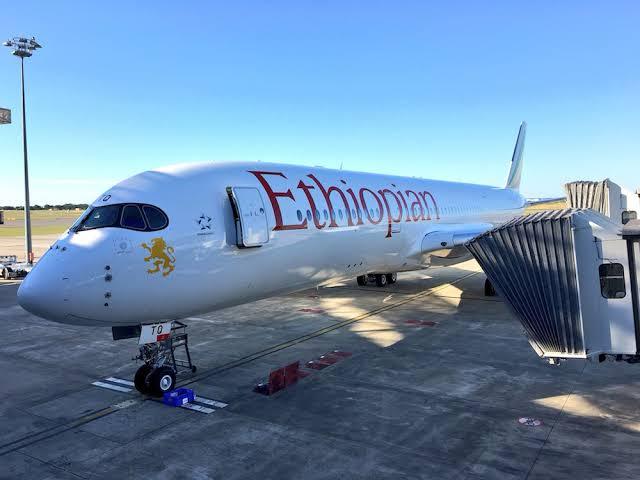
The revenue spike is directly linked to the airline’s “Vision 2035” expansion strategy. During the half-year period, Ethiopian added seven new aircraft to its fleet, including: Airbus A350-1000 (The first of its kind in Africa), Boeing 737 MAX 8 Boeing 787-8 Dreamliners.
This capacity boost supported the launch of three new international destinations—Hanoi (Vietnam), Porto (Portugal), and Abu Dhabi (UAE)—bringing the airline’s total international network to 145 destinations.
Despite the stellar financial figures, Tasew noted that the half-year was not without obstacles. The CEO highlighted that restrictive visa policies in certain regions and ongoing geopolitical conflicts in the Middle East and neighboring regions have impacted specific flight frequencies.
“Our revenue performance exceeded our plan, even as the operating environment became more complex due to aircraft shortages and volatile international security conditions,” Tasew told reporters.
Just last month, Ethiopian Airline confirmed an order for nine Boeing 787-9 Dreamliners and officially broke ground on the $12.5 billion Bishoftu International Airport. Located 40km south of Addis Ababa, the project is designed to handle 110 million passengers annually by its final phase in 2030, dwarfing the current capacity of Bole International Airport.