By: ThinkBusiness Africa
In a significant move to tackle Nigeria’s intertwined challenges of water scarcity, food security, and climate vulnerability, a broad coalition of national stakeholders officially launched the Lokoja Dialogues platform on Wednesday.
The independent, non-profit initiative is dedicated to strengthening Nigeria’s resilience by applying the comprehensive Water, Energy, Food, and Ecosystems (WEFE) nexus approach to community-level challenges.
Convened by Mrs. Polly Alakija, the platform’s launch introduced a unique engagement model designed to bridge the gap between community realities, technical expertise, national policy planning, and investment opportunities.
Mrs. Alakija noted that despite the country’s abundant water resources, equitable access and effective management remain elusive.
“Nigeria’s water crisis is not about availability, it is about access. And certainly, we can say that our broken water cycles have become our poverty cycle. As recognised in the COP29 Water for Climate Action Declaration – the climate crisis is a water crisis,” she stated.
The launch received high-level support, underscoring the platform’s national importance. Her Excellency, Senator Oluremi Tinubu, CON, First Lady of the Federal Republic of Nigeria, was represented by Her Excellency, Hajiya Nana Shettima, The Second Lady of Nigeria.
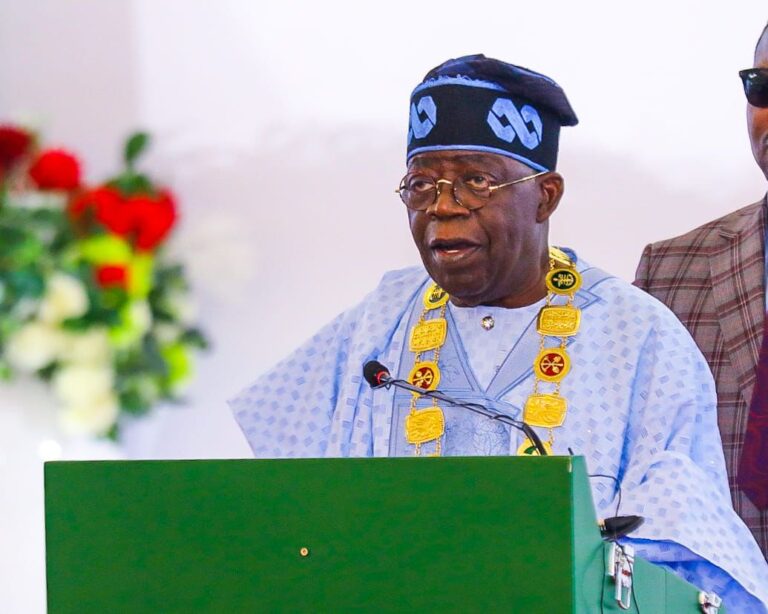
Hajiya Nana Shettima highlighted the initiative’s focus on human well-being, stating that the drive to provide families with better access to clean water, food, and energy aligns directly with President Bola Ahmed Tinubu’s “Renewed Hope Agenda,” which seeks to enhance the quality of life for all Nigerians through unity, compassion, and purposeful action.
Speaking from an economic perspective, Mr. Wale Edun, Nigerian Minister of Finance and Coordinating Minister of the Economy, stressed that water security is critical to Nigeria’s ongoing reform trajectory.
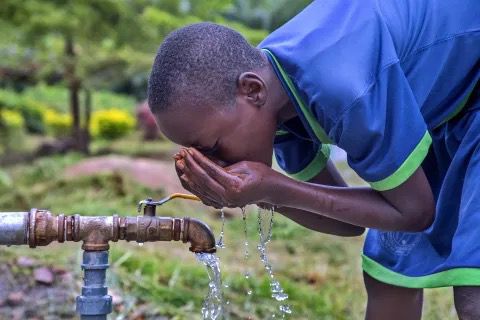
Over 60 Million (about 30% of the population) Nigerians lack access to basic water; and 48 Million (22% of the population) still practice open defecation, leading to the annual death of over 70,000 children under the age of five due to waterborne diseases like: cholera, fever.
“The scale of Nigeria’s water challenge is national, but its impact is local and deeply personal. We have to work together – government, partners, and communities, to close the gap,” Minister Edun urged the assembled government officials, development partners, civil society groups, diplomatic corps, and private sector representatives.
A key component of the inaugural event was the formation of working groups that explored critical areas: water and food security, the water and energy nexus, and wetland conservation.
Over 40 participants, including community representatives from states like Kebbi, Delta, and Yobe, engaged in focused discussions to identify practical challenges and locally anchored solutions. Early insights from these groups included: crucial need for reliable irrigation to mitigate climate risk in agriculture; the urgency of ensuring affordable power for operating rural water systems; and the immediate requirement for action to control invasive species and accelerate wetland restoration.
The world bank had approved a $700 million extended financing package split between 2021-2027 to help tackle Nigeria’s water crisis by providing 6.1 million people with basic drinking water services, 1.4 million people with improved sanitation services, and assisting 500 communities in achieving Open Defecation Free (ODF) status.