
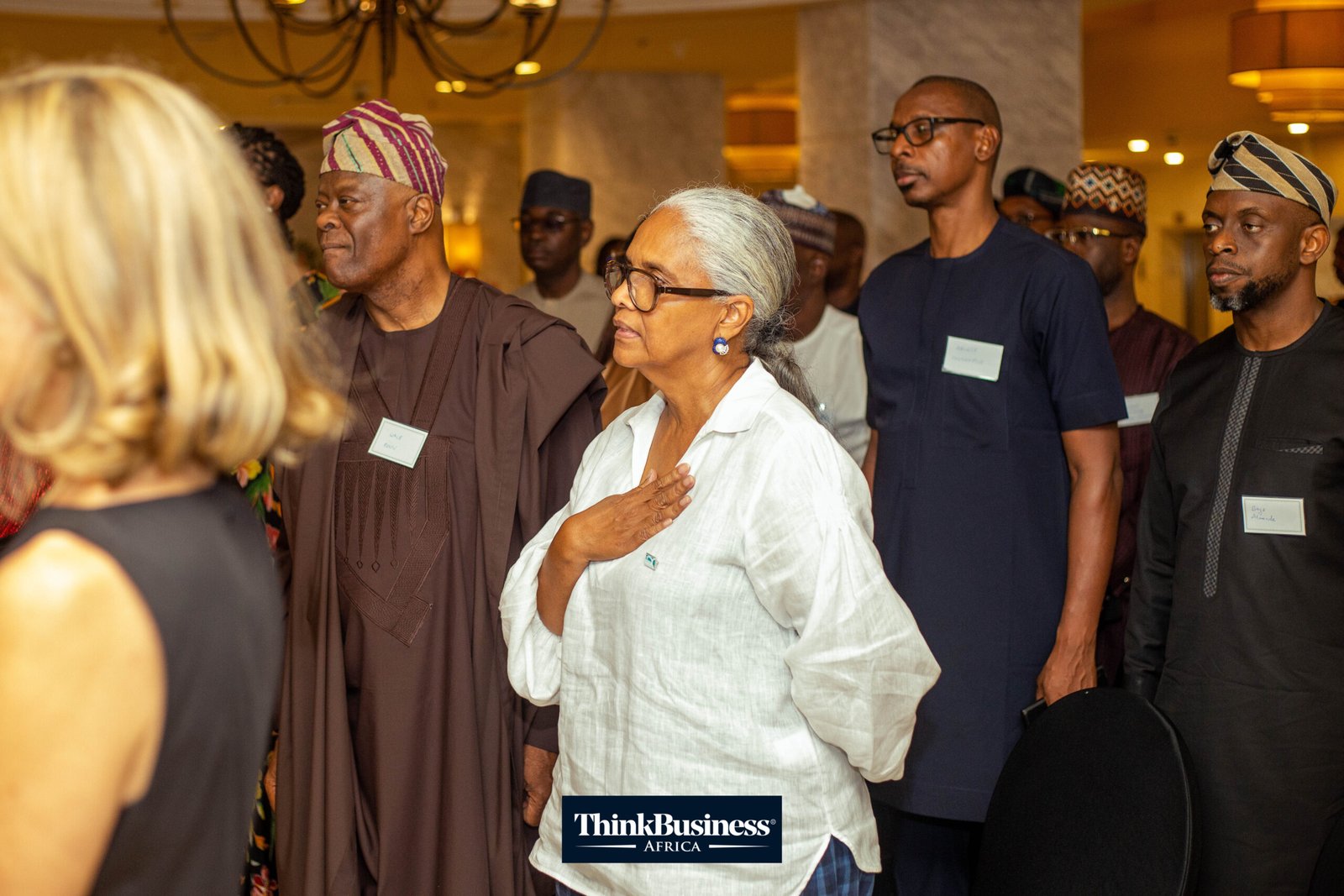
At the inaugural Lagos dialogue, policymakers, investors and water-sector practitioners confronted an uncomfortable paradox: Nigeria has abundant water, yet the failure to manage, distribute and finance it is increasingly constraining economic development.
Nigeria’s water problem may be one of the country’s most consequential economic contradictions.
The country is blessed with rivers, lakes, wetlands, aquifers and an extensive network of surface and underground water resources.
Yet millions of Nigerians struggle to obtain reliable access to clean water, while businesses, farmers and communities bear the cost of inadequate infrastructure and poorly functioning water systems.
At the inaugural Lagos session of the Lokoja Dialogues on August 21, that contradiction was placed at the centre of an unusually broad economic conversation.
The discussion was not simply about access to water. It was about what happens to an economy when water infrastructure fails. Polly Alakija, Chief Executive of Lokoja Dialogues, framed the challenge starkly.
“Nigeria is a water paradise,” she said, even as the country ranks among the world’s water-stressed countries. The problem, she argued, is not simply how much water Nigeria possesses, but how the interconnected water cycle is managed.
That distinction matters.
A country can have water and still experience a water emergency. And Nigeria’s emergency is beginning to reveal itself in agriculture, electricity, health, manufacturing, transportation, livelihoods and investment.
From water crisis to economic crisis
Lokoja Dialogues was conceived as an attempt to change the way Nigeria thinks about the problem.
Alakija described the platform as a response to a challenge thrown down by the former Finance Minister and Coordinating Minister of the Economy Wale Edun after he encountered the stories of communities experiencing the consequences of a broken water cycle.
” You can’t just talk about it,” she recalled him saying. “So, what are you going to do?”

The answer became Lokoja Dialogues: a community-driven platform intended to connect local realities with the people and institutions capable of shaping policy, providing technical expertise, deploying capital and delivering services.
The proposition is important because Nigeria has spent decades treating water largely as a publicservice problem. The dialogue suggested it should increasingly be treated as economic infrastructure. Reliable water reduces vulnerability.
It supports production. It makes industrial investments possible. It enables agriculture. It affects energy. It influences where factories can locate. It shapes public health and household welfare. In other words, water is not an input into the economy.
It is part of the economy’s infrastructure.

The infrastructure that exists but does not work
The scale of the infrastructure problem became clear during the discussion. Norbert Shelsuk, a private water developer, cited data suggesting that Nigeria has roughly 1,600 water utilities, but only about a quarter are operational.
He also said only around 200 of the country’s 774 local government areas have piped water. The implication is profound.
Nigeria’s water challenge is not simply one of building more infrastructure. It is also one of making existing infrastructure functional, commercially sustainable and properly managed.
Shelsuk argued that billions of naira and decades of effort can produce little economic value when projects are poorly structured.
The result is a familiar Nigerian infrastructure paradox: physical assets exist, but the systems required to operate, maintain and finance them do not.
In Lagos, he cited another striking example, saying that non-revenue water was above 60 percent — meaning a substantial proportion of water entering the distribution system does not generate revenue.
This is where water becomes an economic problem. Every litre lost through leaking infrastructure, illegal connections, poor metering or weak collection represents not just a service failure but a loss of capital, revenue and productivity.
Water is already shaping investment decisions
Aminu Umar-Sadiq, Managing Director of the Nigerian Sovereign Investment Authority, offered perhaps the clearest demonstration of why the water conversation belongs inside economic policy.
NSIA, he explained, looks at water through multiple investment lenses: power, sustainability, healthcare, irrigation and transportation. The examples are revealing. Hydropower requires water.
Large-scale agriculture requires irrigation. Pharmaceutical manufacturing requires enormous quantities of water. Inland waterways can become transport infrastructure.
Carbon markets can create additional sources of value around environmental projects. For Umar-Sadiq, therefore, water is not one sector sitting alongside agriculture, power and healthcare. It cuts across them. That is precisely why the water question is becoming an economic question.
The price of getting it wrong
The human consequences remain severe. A representative of Lokoja Dialogues described a community in Sokoto where families may have food stored — sorghum and millet — but insufficient water to cook it during the dry season.
“Sometimes families go to bed hungry,” she said, not because they lack food, but because they lack enough water to prepare it.
That story captures the economic logic of water scarcity better than almost any statistic. Water affects food security not only because crops need it. It affects whether food can be processed, cooked and consumed.
The same logic extends into industry.
If a pharmaceutical plant cannot secure reliable water, its production is compromised. If farmers cannot irrigate, their productivity remains exposed to rainfall.
If energy infrastructure depends on water, electricity supply is affected. If factories cannot depend on public water systems, they must invest in private alternatives.
The cost eventually appears somewhere. Often, the consumer pays it.
From recipient of solutions to producer of solutions
The strongest message from Lokoja Dialogues was therefore not that Nigeria needs more water projects. Nigeria needs better water systems.
Systems that begin with community realities, understand the economics of delivery, can attract private capital, that can be maintained, and that can scale.
Alakija said Lokoja Dialogues begins at community level because local participation provides evidence for designing services and identifying the right problem before a solution is imposed. Nigeria has spent decades trying to solve water problems from the top down.
The emerging proposition is to listen from the bottom up — and then connect those realities to capital, policy and technical expertise. 3The opportunity is considerable. So is the cost of failure.
As Alakija put it, the challenge is ultimately about moving from crisis response towards managing what she described as water bankruptcy.
Nigeria may not have a shortage of water. It may have a shortage of the institutions, infrastructure, investment models and political will required to turn water into prosperity.
That is an economic problem. And increasingly, it is an economic opportunity.