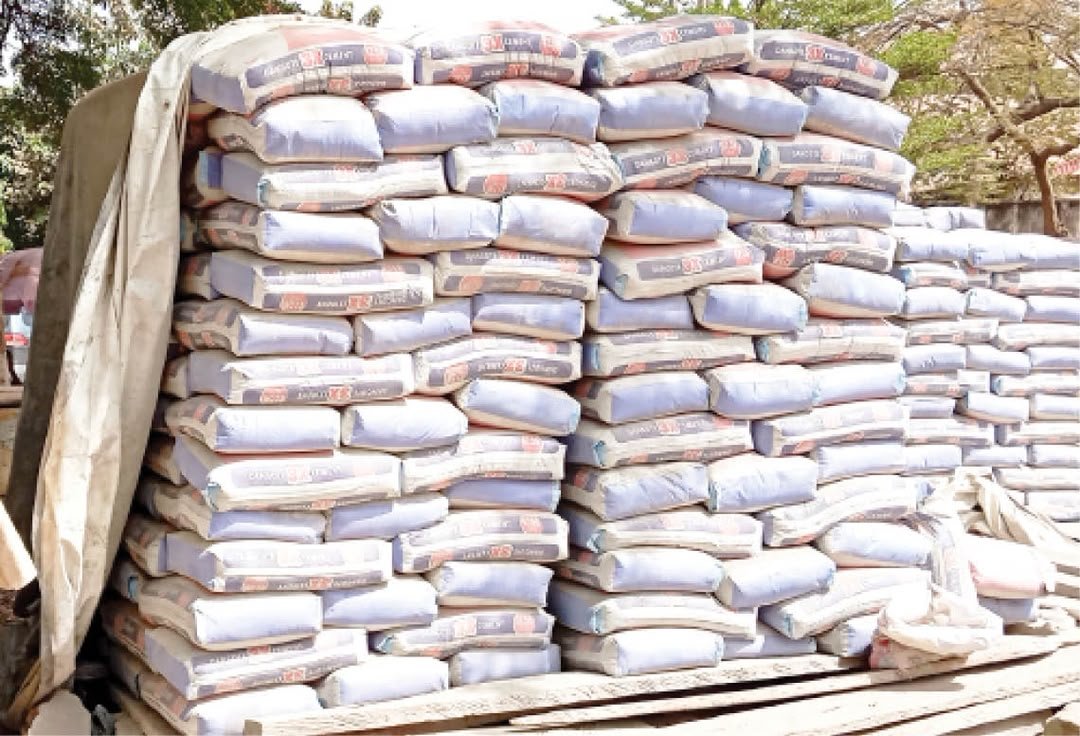
Nigeria’s competition watchdog has raised the possibility of price manipulation in the cement market, pointing to persistently high retail costs despite abundant raw materials, surplus production capacity and net export status.
On Tuesday, the Federal Competition and Consumer Protection Commission (FCCPC) released preliminary findings from a three-month industry-wide probe, including comparisons with other African markets. The investigation was triggered by public complaints over the cost of a 50kg bag of cement, a critical input for housing, infrastructure and commercial construction.
According to the FCCPC, Nigerian retail prices climbed sharply in the first half of 2026. Bags that sold for between N9,300 and N9,700 in January were fetching N10,500 to N13,000 by mid-year, with reports of N13,000 to N15,000 in some locations by July.
Nigeria’s installed capacity exceeds 60–65 million metric tonnes a year, while domestic consumption is estimated at only 25–30 million tonnes. Three producers control more than 90% of capacity, and the country ships cement to neighboring markets.
Those figures stand in contrast to several African peers examined by the Commission’s Anticompetitive Practices Department. In Kenya, which has a population of about 58.6 million, roughly 76% smaller than Nigeria’s and domestic demand of approximately 9.3 million tonnes, a bag retailed for $5.40 (about N7,344) in Nairobi. Kenya also has limestone deposits.
Tanzania, with a population of 66.3 million and similar demand of 9.3 million tonnes, sold cement for $4.80 (N6,528). Even Togo, which lacks limestone, recorded a price of $6.75 (N9,180).
The FCCPC noted that excess capacity in a competitive market would ordinarily exert downward pressure on prices. Industry participants have cited energy costs, naira depreciation affecting imported machinery and spare parts, and logistics expenses. The Commission is testing those explanations against verified data on costs, production, pricing and commercial relationships.
“Cement occupies a strategic place in the Nigerian economy,” said Tunji Bello, the FCCPC’s Executive Vice Chairman. “Its price affects the cost of building a home, developing commercial property, delivering public infrastructure and, ultimately, the cost of doing business.”
The agency has issued formal notices of investigation and summonses to produce documents to key players. All major manufacturers cooperated by providing records except one. The next phase will determine whether current prices reflect legitimate costs and market conditions or point to coordinated conduct, abuse of market power, restricted domestic supply or anti-competitive distribution practices.
For Nigerian consumers and builders, the outcome could influence construction costs at a time when housing and infrastructure remain pressing priorities. Across the continent, the price gaps highlighted by the FCCPC underscore how market structure, competition intensity and cost environments can produce markedly different outcomes even among countries with comparable resource endowments.