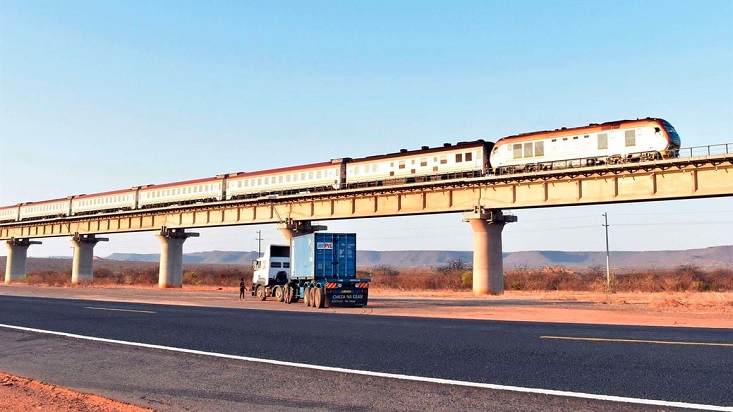


In Abia State, (South-East Nigeria), federation transfers more than tripled in real terms between 2023 and 2025; the largest increase of any state in Nigeria. The money did not primarily go into classrooms or clinics. It went into roads.
Across the country, the same pattern held. Nigeria’s states received a historic revenue windfall after the 2023 reforms, and most of them spent the bulk of it on economic infrastructure, especially roads. Education and health grew in absolute terms but lost relative share.
As the World Bank’s October 2026 Nigeria Development Update puts it, “the strongest relative shift was toward economic infrastructure especially transport.”
States’ share of federation revenues rose about 130% in real terms between 2023 and 2025; more than three times the federal government’s increase. Capital expenditure jumped 151%, raising its share of total spending from roughly 48% to 61%. Transport, overwhelmingly roads, accounted for about 26.5% of all state expenditure by 2025.
Education spending roughly doubled from about N500 BIllion in 2021 to N1.1 trillion in 2025, and health rose from about N200 Billion to N700 Billion. Yet their shares of the budget fell or stagnated.
Education dropped from 14.9 % to 12.1% of total spending; health slipped from 7.4 % to 7.1%. Social protection rose to 4.4 % from a very low base.
The report notes that “spending on education, health, and social protection rose substantially in absolute terms but did not keep pace with the rapid growth in economic infrastructure spending.”
Almost every state increased real per-capita social spending, including those with below-average Human Capital Index scores. Still, “the composition of additional spending shifted more toward infrastructure in several states, including some with below-average HCI.” The windfall was not used to close the human-capital gap at anything like the pace of the infrastructure build-out.
Variation across states was wide. Abia’s +200% real increase in transfers was the largest. Enugu engineered the sharpest own-revenue surge, with internally generated revenue up more than 700% in real terms.
Only Lagos and Enugu generate enough own revenue to cover recurrent costs. The report observes that “the spending response varied considerably across states,” with expenditure growing faster than revenue in most places.
Roads and other economic infrastructure can raise productivity. The report itself cautions that the development impact of the capital surge “will depend on project selection, execution, and maintenance.” Roads are visible and politically salient; learning outcomes and primary healthcare are slower and harder to measure. When a sudden windfall arrives, the former is easier to prioritize.
Transparency has improved enough to make these choices visible. Nearly all states now publish budgets, quarterly implementation reports, and audited statements.
Yet the same transparency has exposed limits: weak public investment management, frequent shortfalls in capital execution, and procurement and cash controls that have not kept pace with the spending surge. The report concludes that “the central challenge is therefore no longer simply one of resource availability, but of using resources more effectively.”
Whether the current pattern raises living standards will depend less on how much more money states received and more on whether they can convert it into durable services rather than just completed kilometers of asphalt.