
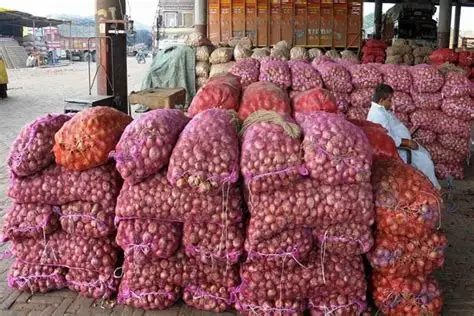
A standard 120-kilogram bag of onions now costs about 300,000 naira (roughly $220) in major Nigerian markets, up from 30,000 naira in April 2026, a 900% increase in six months.
President of Nigeria Onion merchants (NOPPMAN) Aliyu Isah said national production was sufficient, yet more than 51% of the harvest was lost between April and October.
The losses stemmed mainly from the near-absence of climate-controlled storage and from warehouse fires in the northern growing regions that supply most of the country’s onions.
Poor-quality seeds introduced in the 2024–2025 seasons, reportedly sourced from Algeria, further cut yields and caused farmer losses estimated at nearly 100 billion naira (about $75 million).
Flooding and unseasonal rains in key northern states including Sokoto, Kebbi, Kano, Zamfara, and Kaduna reduced stocks available for the current off-season.
High diesel prices and long-haul transport costs from the North to southern commercial centres such as Lagos have added substantially to retail prices.
A Vanguard survey found fresh onions at 300,000 naira per large bag at Lagos’s Mile 12 market, with dried varieties at 350,000–380,000 naira. In Enugu (Eastern Nigeria), bags reached 272,000–280,000 naira.
One bag now exceeds four times Nigeria’s national minimum wage of 70,000 naira (about $52) a month, making a kitchen staple unaffordable for many households.
The spike occurs even as headline food inflation eased to 19.59% year-on-year in September 2026, according to the National Bureau of Statistics, with some other staples moderating on seasonal harvests.
Tomatoes and peppers have also stayed elevated in recent weeks in Lagos and other cities, intensifying pressure on household budgets in Africa’s most populous country.
NOPPMAN expects modest relief when new harvests begin arriving from Sokoto in November and December, followed by supplies from Kebbi in early January.
Until then, weak post-harvest infrastructure, residual flood damage, and elevated logistics costs are likely to keep onion prices high.