

Ethiopia Appoints Fitsum Assefa as Finance Minister Amid Debt Restructuring Drive
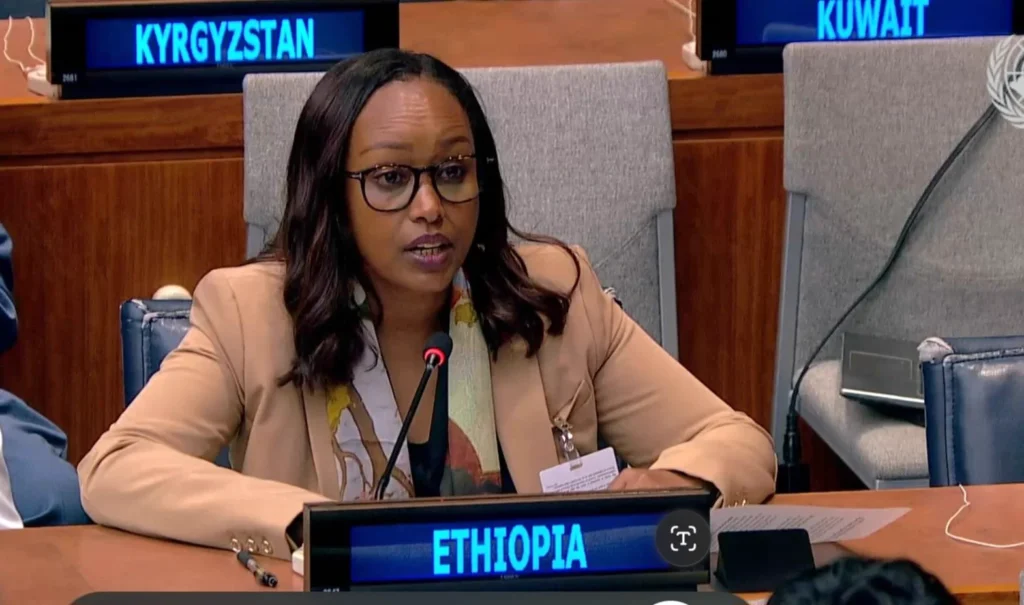
Ethiopian Prime Minister Abiy Ahmed appointed Dr. Fitsum Assefa Adela as the country’s new Minister of Finance, executing a major leadership shift atop East Africa’s largest economy. According to official government announcements released on Thursday, Fitsum replaces longtime finance chief Ahmed Shide, who transitions to serve as speaker of the lower house of parliament. Fitsum previously served as Minister of Planning and Development since 2018. She takes over key financial duties as Ethiopia navigates complex international debt restructuring and market reforms. The East African nation is actively reworking its sovereign debt under the G20 Common Framework after defaulting on its $1 billion Eurobond in December 2023. Earlier this year, authorities secured a preliminary restructuring deal with private bondholders while advancing macroeconomic adjustments, including a landmark currency float aimed at unlocking multilateral support. The high-profile cabinet restructuring also appointed Frehiwot Tamiru, former chief executive officer of state-owned Ethio Telecom, as Minister of Innovation and Technology. Fitsum Assefa’s appointment reassures foreign creditors and the IMF of policy continuity as Ethiopia advances critical economic reforms, including its currency float and G20 debt restructuring under its $3.4 billion Extended Credit Facility program.
Egypt, Eritrea, Sudan and Somalia Align on Nile, Red Sea and Trade
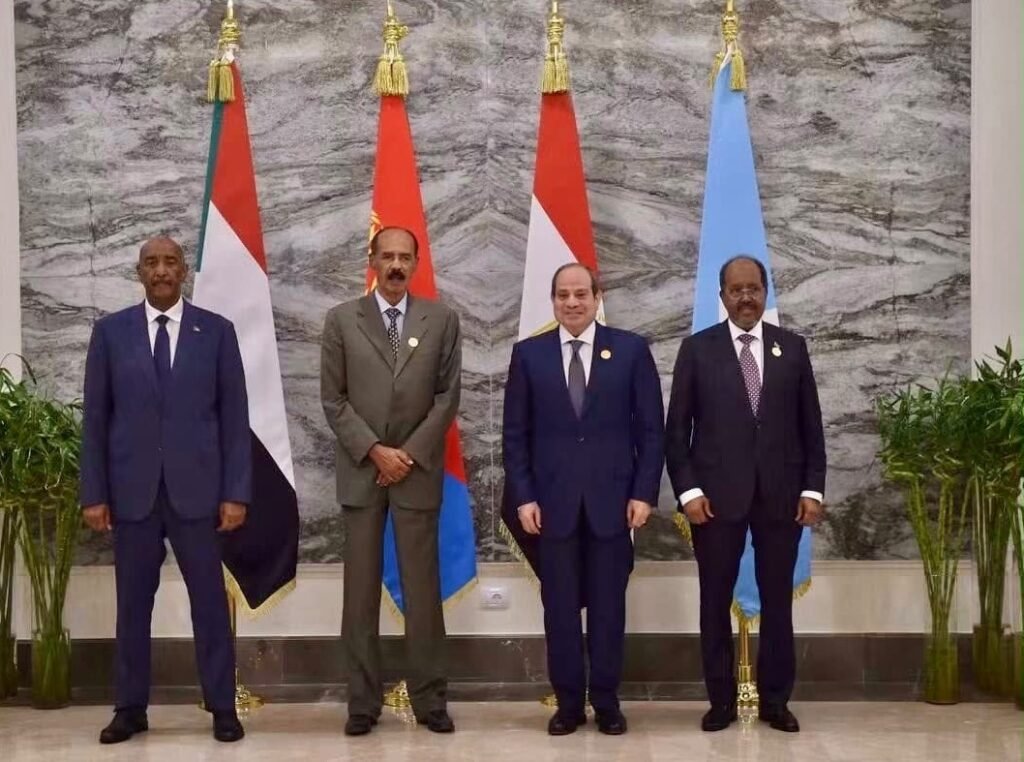
Egypt, Eritrea, Sudan and Somalia agreed on Sunday to deepen political and commercial coordination, rejecting unilateral action on the Nile and outside claims over the Red Sea, as Horn diplomatic ties fractured. The El-Alamein joint declaration was posted by Villa Somalia, the office of Somali President Hassan Sheikh Mohamud. It followed a quadrilateral summit hosted by Egyptian President Abdel Fattah el-Sisi in New Alamein on 4 October. “Red Sea governance is the exclusive responsibility of the littoral states,” the leaders said, while affirming freedom of navigation. They also rejected any recognition of Somaliland as a breach of Somalia’s sovereignty and territorial unity. Leaders Isaias Afwerki of Eritrea, Hassan Sheikh Mohamud of Somalia and Abdel Fattah al-Burhan of Sudan attended. They pledged closer trade, economic and cultural ties and a standing mechanism to meet periodically. On rivers, the four affirmed international law for transboundary waters, including the Nile. They cited the no-harm rule, prior notification and consultation, and “the complete rejection of any unilateral measures that harm the existing water uses of the two downstream states.” The summit backed Sudan’s unity and national institutions, rejected parallel authorities and any support for mercenaries, and called for a Sudanese-owned political process. Sudan’s war has already disrupted regional trade and oil transit. They also backed Somalia’s counter-terrorism efforts and urged “adequate, sustainable and predictable funding” for the African Union Support and Stabilisation Mission in Somalia, so security duties can transfer to Somali forces. The same day, the African Union Commission clarified that its 1 October call for restraint among Ethiopia, Eritrea and Egypt was not an assignment of blame. Cairo had objected to that earlier note. Ethiopia had expelled 10 Eritrean diplomats, closed its embassy in Asmara, and declared an Egyptian diplomat persona non grata. Eritrea severed ties. Egypt ordered an Ethiopian counsellor out of Cairo within 48 hours. Addis Ababa accuses Eritrea, Egypt and Sudan of backing a Tigray People’s Liberation Front-led alliance fighting federal forces. All three deny it. Fighting resumed in September, the worst escalation since the 2020–2022 war. African leaders also closed the eighth AU Mid-Year Coordination Meeting in El-Alamein, focused on the African Continental Free Trade Area. The four did not name Ethiopia, but the Nile, Red Sea and Somaliland clauses track disputes already straining investment corridors.
Ethiopia’s diplomatic break with Eritrea and Egypt puts trade corridor and export rebound at risk
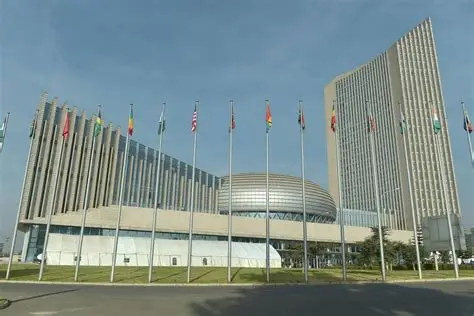
Ethiopia closed its embassy in Asmara and expelled 10 Eritrean diplomats on Thursday, prompting Asmara to sever all ties. Addis Ababa also ordered an Egyptian diplomat out within 48 hours. The rupture lands as fighting returns to the north and Ethiopia’s trade recovery still depends on a single foreign port. The African Union Commission said it was following the tensions “with concern” and urged maximum restraint and dialogue. However, the same day overnight blasts in Addis Ababa added to fears the northern conflict could spread. Egypt later declared an Ethiopian diplomat persona non grata, state-linked media said. Ethiopia accused Eritrea of “direct and indirect acts of hostility” and said the diplomats, including staff accredited to the AU, threatened national security. Eritrea’s foreign ministry called the charges “astounding” and said Addis Ababa had pursued sea access “through the invasion of sovereign Eritrean ports.” Both sides deny supporting the other’s adversaries. The commercial exposure is concentrated. Ethiopia moved 17.57 million tonnes of external cargo in fiscal 2025/26, and Djibouti handled 96.71% of seaborne freight, the Transport Ministry said. Imports were 15.93 million tonnes; exports 1.64 million. Fuel alone was 4.23 million tonnes. Berbera took 2.74%, Tadjourah 1.23% and the Mombasa–Moyale corridor 0.56%. Road haulage carried about 80% of freight. Djibouti’s ports authority has said pure port revenue is about $400 million, not the $1.4 billion figure often cited, which mixes in inland trucking. That corridor now sits near the fighting. Tigrayan forces seized airports at Mekelle, Axum and Shire on 23 September and advanced into Afar and Amhara, federal officials reported. Seven armed groups had formed an anti-government alliance three days earlier. A break on the Afar stretch would hit fuel, fertiliser and factory inputs at once. Power is the other exposed asset. Ethiopian Electric Power generated 35,671 GWh in the year to July, with the Grand Ethiopian Renaissance Dam supplying 51.5%, a consortium citing EEP data said. The 5,150 MW plant, inaugurated on 9 September 2025, also underpinned about 2,500 GWh of exports to Kenya, Djibouti and Sudan. Cairo still treats the dam as a water-security threat. Ethiopia’s water minister said this week a national committee had logged more than 22 projects, including GERD, that it claims Egypt obstructed. Addis Ababa has separately accused Egypt, Eritrea and Sudan of backing northern rebels. All three deny it. The AU, headquartered in Addis Ababa, offered to support de-escalation only “in consultation with the countries concerned.” It did not address the expulsion of diplomats accredited to the Union itself. For shippers and power buyers, the open question is whether the Djibouti road and railway stay open.
Africa’s Fastest-Growing Large Economy Is Sliding Back into War
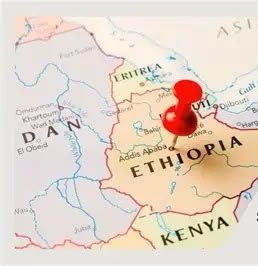
Ethiopia, one of Africa’s fastest-growing large economies, is back at war. Fighting that resumed in late September has broken the 2022 Pretoria Agreement, sent Tigrayan forces into Afar and Amhara, and put the Djibouti trade corridor — 96.7% of the country’s external cargo — inside the conflict zone. The IMF’s July 2026 review of Ethiopia’s Extended Credit Facility projected real GDP growth of 9.2% in fiscal 2025/26, easing to 7.8% the year after. World Bank and later consensus tracks put 2026 closer to 7%. Either figure is well above the sub-Saharan average of roughly 4%. Goods exports reached a record $10.7 billion in the year to July 2026, up from $3.8 billion two years earlier, after the local currency (birr) was floated in July 2024. Gold brought in about $5.5 billion and coffee about $3 billion, together roughly 78% of receipts. On 20 September, seven armed groups formed the Ethiopian Peoples’ Forces Alliance for Survival, aiming to remove Prime Minister Abiy Ahmed. Three days later Tigrayan forces seized the airports at Mekelle, Axum and Shire and advanced into Afar and Amhara, federal officials and Reuters reported. Federal forces later said they had retaken Alamata; diplomatic sources described opposition units pulling back. Rebels have held ground in Afar. This account reflects reporting through 30 September. No fresh comment from both sides. The commercial exposure is immediate. The Ministry of Transport said Djibouti handled 17.57 million tonnes of Ethiopian cargo in 2025/26, including 15.93 million tonnes of imports and 4.23 million tonnes of fuel. Berbera, Tadjourah and the Mombasa–Moyale route together took less than 4%. Road haulage carried about 80% of freight; the Ethio-Djibouti railway most of the rest. A break on the Afar stretch would hit fuel, fertiliser, factory inputs and exports at once. Power is almost as concentrated. Ethiopian Electric Power generated 35,671 GWh in the year to July 2026, up 21%, with the Grand Ethiopian Renaissance Dam supplying 51.5%. The dam remains the center of the unresolved Nile dispute with Egypt. The balance sheet was already strained. The IMF’s July debt analysis put public and publicly guaranteed debt at 50.5% of GDP at end-June 2025, and external debt at 31.8%. Ethiopia is still classed in debt distress and is negotiating with bondholders. Inflation has not settled: the Fund looked for an average near 12%, while some later readings stayed in the mid-teens. It projects a current-account deficit of about 2.5% of GDP, manageable only if exports and the corridor hold. The 2020–2022 war killed hundreds of thousands and displaced millions, on standard humanitarian estimates. In this round, Doctors Without Borders said it received more than 700 war-wounded in Tigray from 22 to 25 September. Army casualty claims in Amhara are unverified. Independent conflict monitor group, ACLED (Armed Conflict Location & Event Data) has logged repeated drone strikes since 22 September. Growth of 7–9% assumes the Djibouti route stays open and the reform programme holds. The September offensive has already removed the first of those assumptions.
U.S. Court Clears Final Obstacle for Trump Administration to Revoke Ethiopian Protection Status

A U.S. federal judge cleared the final legal barrier Tuesday for the Trump administration to terminate Temporary Protected Status (TPS) for over 5,000 Ethiopian nationals residing across the United States. U.S. District Judge Brian E. Murphy in Boston denied a request by immigrant advocacy group African Communities Together to delay the termination, stripping beneficiaries of work authorization and protection from deportation. The decision follows a 6–3 U.S. Supreme Court ruling in June, which held that federal courts generally lack statutory authority to review Department of Homeland Security decisions regarding TPS cancellations. With Judge Murphy’s ruling, all nationwide court injunctions delaying TPS revocations are lifted, enabling the Department of Homeland Security to proceed with its targeted wind-down of protections for foreign workers. Following the court order, the Department of Homeland Security issued a statement warning affected individuals to leave the country immediately or face mandatory deportation procedures. The policy shift forms part of a broader white-house initiative aimed at terminating TPS designations for 13 nations, affecting nearly 1.3 million immigrants nationwide. In late 2025, the Department of Homeland Security determined that domestic conditions in Ethiopia had sufficiently stabilized to end human-rights protections originally granted in 2022 amid severe armed conflict. The latest action directly aligns with similar recent court clearances ending protected status for roughly 1,100 Somali nationals, signaling a comprehensive structural overhaul of U.S. humanitarian immigration policy. Impacted Ethiopian workers must now acquire alternative legal visas, voluntarily depart, or face immediate removal by U.S. Immigration and Customs Enforcement officials.
