

U.S.-Iran Hostilities Push Brent Crude to $85 Amid Dual-Choke Point Shipping Threat
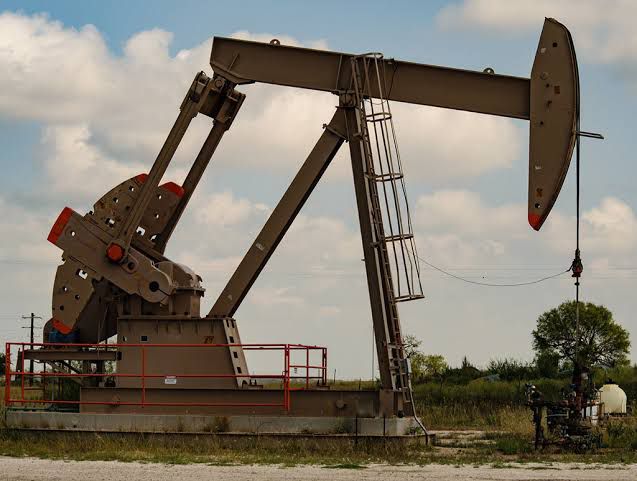
LAGOS — Global oil prices climbed Friday as intensifying military clashes between the United States and Iran crippled vital maritime trade routes and raised fears of a coordinated blockade across the Middle East. International benchmark Brent crude rose to $85.10 a barrel, while U.S. West Texas Intermediate hit $79.93. Both contracts locked in a massive 12% gain for the week. The sudden price surge followed consecutive nights of U.S. airstrikes hitting Iranian coastal defenses, disabling a sanctioned tanker near Kharg Island. This aggressive naval blockade follows a collapsed June ceasefire agreement. Energy supply lines are tightening rapidly. Energy consultancy Kpler reported that confirmed crude transits through the critical Strait of Hormuz plummeted 62% this week to just 4.1 million barrels per day. Adding to market anxieties, Tehran directed Yemen’s Houthi movement to prepare to shut down the Bab el-Mandeb Strait, threatening a complete closure of the crucial Red Sea export route. Market analysts warn that this dual-threat scenario effectively targets both primary regional shipping corridors simultaneously, leaving global energy supply chains highly vulnerable to unprecedented logistics and insurance spikes.
Oil Prices Surge Past 4% as Renewed U.S.-Iran Strikes Imperil Strait of Hormuz

LAGOS – Global oil prices surged over 4% Monday following new U.S. and Iranian military strikes, renewing supply fears along the Strait of Hormuz. The escalation disrupted vital shipping infrastructure in the Middle East. Brent crude futures climbed $3.10, or 4.08%, to $79.11 a barrel by 0325 GMT. Concurrently, U.S. West Texas Intermediate crude increased $2.95, or 4.11%, to settle at $74.36 a barrel. The price surge followed weekend combat. U.S. forces executed precision airstrikes on Iranian targets, while Iran’s Revolutionary Guards launched retaliatory attacks against American military installations located in Kuwait and Bahrain. This conflict directly threatens the Strait of Hormuz, a maritime chokepoint that normally accommodates roughly 20% of global petroleum liquid consumption. Ship-tracking data showed daily transits falling to a five-week low. The flare-up jeopardizes a fragile June interim peace agreement designed to fully reopen the corridor. The International Energy Agency recently noted that global supply had recovered by 4.1 million barrels per day. However, global oil output still remains 9.4 million barrels per day below pre-war baselines. Analysts warn that protracted infrastructure vulnerability will continually inject a volatile geopolitical risk premium into global energy markets.
Nigeria’s Oil Production Hits 74-Month High, Surpassing OPEC Quota at 1.74m Bpd
LAGOS – Nigeria’s daily crude oil and condensate production surged to an average of 1,735,398 barrels in June 2026, marking a 74-month high for Africa’s top petroleum producer, regulatory data released Sunday shows. The Nigerian Upstream Petroleum Regulatory Commission reported that strict crude output, excluding condensates, hit 1.56 million barrels per day, meaning the nation successfully met 104% of its active OPEC production quota. The landmark June performance represents a 2.2% month-on-month growth, extending a steady four-month upward trajectory from 1.48 million barrels per day recorded earlier in February. Officials attributed the production boom to sustained operational stability across major upstream assets and a critical absence of major pipeline outages or disruptions, which greatly optimized national crude evacuation efficiency. The surge marks a major operational turnaround for the West African nation, which has spent years struggling against rampant industrial-scale oil theft, pipeline vandalism, and chronic underinvestment. During the height of these security challenges between 2022 and 2024, Nigeria’s output frequently plummeted below 1.2 million barrels per day, forcing OPEC to repeatedly slash the country’s baseline allocation. The current recovery, bolstered by intensified military pipelines monitoring and joint surveillance contracts with host communities, suggests that Nigeria is steadily reclaiming its structural capacity to sustain higher output. The latest NUPRC data indicates that combined daily output actually peaked at 1.89 million barrels in June, signaling strong technical momentum toward the government’s medium-term target of 2 million barrels per day. “The statistics shows that Nigeria has maintained an upward trajectory, increasing from 1.483 mbpd in February to 1.546 mbpd in March, 1.663 mbpd in April, 1.700 mbpd in May, and 1.735 mbpd in June representing a 2.2% growth month on month.” NUPRC said in statement. Sustaining this momentum remains critical for stabilizing public finances, as the federal government aims to defend its ambitious oil revenue target outlined in the national budget.
Dangote Reduces Fuel Price as Oil Returns to Pre-Iran War Levels
LAGOS – Dangote Petroleum Refinery has slashed the ex-depot price of Premium Motor Spirit (PMS) by N50 Naira per litre on Thursday. This marks the fourth reduction in one month, bringing the total cumulative cut to N200. The adjustment follows a significant cooling in global crude markets. Prices have returned to levels last seen before the Iran-Israel war escalated geopolitical tensions earlier this year. “Today’s N50 per litre reduction is the fourth price cut in one month,” the company stated. The move aims to pass cost efficiencies to consumers while maintaining domestic refinery sustainability. Refinery officials highlighted that their pricing formula accounts for actual production economics. This includes the cost of crude oil inventories purchased weeks before processing under long-term commercial contracts. Data shows the refinery processed crude at an average cost of $124.80 per barrel in May. By June, that cost fell to $95.25 per barrel, against a global benchmark of $71.01. These costs previously kept prices elevated. As lower-cost crude cargoes now enter the production cycle, the refinery is finally able to pass those savings on to the Nigerian market. This downward trend is mirrored across Africa as global oil prices stabilize. South Africa saw petrol prices drop by up to 2.01 Rand per litre effective July 1, 2026. Similarly, Namibia announced significant fuel cuts effective July 3, 2026. Petrol 95 decreased by 1.00 Namibian dollar per litre, while all diesel grades were slashed by N$4.00 per litre to provide consumer relief. As of today July 3, 2026, Brent Crude is trading near $72.13 per barrel, while West Texas Intermediate (WTI) trades at $68.95 per barrel. Prices remain under pressure despite slight daily gains as markets digest ongoing diplomatic efforts in the Middle East.
Oil Falls to Pre-Iran War Level as Peace Agreement Moves Tankers
LAGOS – Global oil prices dropped sharply to pre-war levels on Thursday, completely wiping out the geopolitical risk premium built up since the conflict erupted on 28th February. Brent crude futures tumbled 1.44% to $72.68 a barrel, while U.S. West Texas Intermediate fell 1.08% to $69.58. Both benchmarks reached their lowest levels since the day before the war began. Prices previously peaked near $126 a barrel after the closure of the Strait of Hormuz chokepoint trapped vital crude supplies. Brent has now shed nearly 25% of its value over the last month. The steep market correction follows a preliminary U.S.-Iran peace agreement signed in mid-June. The deal effectively terminated military blockades and immediately reopened the strategic waterway to global commercial shipping. To preserve the fragile truce, the U.S. Treasury also issued a 60-day General License. This waiver officially authorizes the production, delivery, and sale of Iranian oil through late August. As physical crude flows rapidly normalize, energy analysts report that automated tracking systems show a massive backlog of oil tankers finally exiting the Gulf to supply global markets. Market focus has pivoted from supply panic to macroeconomic headwinds. Despite heavily depleted global inventories from the 110-day war, traders are aggressively betting on a projected 2026 global supply surplus.
Oil Prices Slid Below $80 Following U.S.-Iran Diplomatic Breakthrough
Global crude prices fell Monday after U.S.-Iran talks concluded with Tehran securing export waivers. Brent crude slid 1.48% to $79.38 a barrel, while U.S. West Texas Intermediate futures dropped to $76.73 ahead of expiry. The diplomatic progress in Switzerland instantly defused supply anxieties. Earlier, Brent had surged to $82.30, fueled by friction and threats from U.S. President Donald Trump to restart hostilities. Fears had also mounted when Tehran announced it re-closed the critical Strait of Hormuz waterway. However, the unexpected export exemptions rapidly erased that geopolitical risk premium, pulling both benchmarks downward. This high-stakes diplomacy builds directly on a broader interim peace deal fast-tracked last week. Both nations signed a memorandum of understanding establishing a 60-day roadmap toward a comprehensive agreement. Analysts noted that despite the volatile rhetoric, the Swiss breakthrough successfully revives concrete expectations for normalized shipping lanes and a steady return of Iranian crude oil to international energy markets.
Hormuz Reopening: Global Oil Prices Tumble as US-Iran Peace Deal Takes Effect
LAGOS – Global oil prices tumbled Friday after a landmark U.S.-Iran interim peace agreement took effect, prompting a flurry of commercial oil tankers to resume transits through the critical, newly reopened Strait of Hormuz. International benchmark Brent crude slipped near $80 per barrel, marking a sharp $15 drop over the past week. Concurrently, West Texas Intermediate crude fell toward $76 per barrel on expanded supply prospects. The downturn followed maritime reports confirming that several Saudi Arabian, Qatari, and Chinese supertankers have successfully exited the strait. Four Iranian tankers also crossed the shipping lane, signaling an end to the blockade. The breakthrough comes as an immediate relief to energy markets rattled by a three-month war that began on February 28, which effectively erased roughly 14 million barrels per day from global supplies. Prices had spiked past $118 per barrel in April during the height of the conflict. The closure of the waterway, which handles 20% of global petroleum liquids, triggered widespread global inflation fears. The 60-day interim accord, signed in Europe, mandates that Iran immediately reopen the waterway. Concurrently, the United States has officially ended its aggressive naval blockade of major Iranian ports. Despite the initial drop in futures, energy analysts caution that a definitive price floor may hold around $75 per barrel due to fast-depleted global summer stockpiles and remaining transit backlogs. Maritime security groups note that full shipping normalization will take weeks. Fleets still face security anxieties and delayed mine clearance operations despite the formal suspension of transit tolls.
Brent and WTI Futures Plunge Over 2% to 3-Month Lows on U.S.-Iran Accord
LAGOS — Global oil prices plunged over one dollar per barrel Thursday after the United States and Iran signed a historic interim accord effectively ending their recent war and reviving global energy supply certainties. The groundbreaking agreement guarantees the immediate reopening of the blockaded Strait of Hormuz. It also waives heavy U.S. sanctions on Tehran’s petroleum sector, significantly boosting the near-term global crude outlook. Brent crude futures fell $1.64, or 2.06%, to $77.91 a barrel early Thursday. Concurrently, U.S. West Texas Intermediate (WTI) futures dropped $1.80, or 2.34 percent, to reach $74.99 a barrel. The aggressive selloff reflects rapid unwinding of geopolitical risk premiums. Analysts note that clearing the world’s most critical maritime chokepoint defuses severe inventory depletion risks that threatened major economies earlier this year. The sudden diplomatic breakthrough alters medium-term fundamentals. Energy experts warn that injecting locked-up Iranian barrels back into global trade routes could transition the market from a tight supply squeeze to a massive surplus of over 5 million barrels per day by 2027. Traders are now recalibrating portfolios as the physical threat to Middle Eastern shipping dissolves, shifting market focus back toward flagging global demand and expanding non-OPEC production capacity through the late 2020s.
US, Iran Draft Wide-Ranging Deal to Curb Conflict and Reopen Key Shipping Lane

The United States and Iran have drafted a preliminary agreement covering Tehran’s nuclear programme, oil exports, frozen assets, and regional security to halt escalating Middle East conflict. According to an official who spoke to Reuters, the framework establishes a critical 60-day negotiating window for both nations to finalize terms and secure lasting regional stability. Under the immediate terms of the draft pact, Iran has committed to reopening the strategic Strait of Hormuz shipping lane to all commercial vessels without delay. The deal requires Tehran to freeze its current nuclear footprint, halting further uranium enrichment and site expansion while reiterating its commitment never to build nuclear weapons. In return, Washington will issue temporary sanctions waivers on Iranian petroleum products, granting the country immediate access to vital global energy market revenues. The agreement faces friction over timing. Iranian state media claims the deal unlocks 24 billion dollars in frozen funds, but US officials insist relief is strictly performance-based. The diplomatic breakthrough immediately eased global supply anxieties. Brent crude oil prices plummeted 5% on Monday to $83 per barrel, while west Texas intermediate (WTI) trades at $80, both hitting a three-month market low.
Oil Prices Surge Past $95 Amid Renewed Middle East Strikes
LAGOS — Global crude prices jumped over $3 a barrel Monday as direct military crossfire between Israel and Iran shattered regional truces, threatening critical energy chokepoints and triggering acute supply fears among commodities traders. Brent crude surged 3.39% to $96.24 a barrel, while West Texas Intermediate climbed 3.17% to $93.41. The spike erased previous losses, pricing a heavy geopolitical risk premium back into energy benchmarks. The rally intensified following Israeli airstrikes on Beirut, which violated a June 3 Lebanon truce. Momentum accelerated after Israel struck targets inside Iran, including a Mahshahr petrochemical complex, prompting retaliatory Iranian missile salvos. Market anxieties are heavily tied to the strategic Strait of Hormuz, where a five-month disruption already blocks 20% of global transit. Iran announced Monday it plans to introduce transit fees once the chokepoint reopens. This escalation coincides with a projected May–July structural supply squeeze. Fitch Ratings warned prices could sustain $100 to $110 levels if the maritime corridor remains closed, severely straining dwindling global crude inventories.
