

Nigeria Says Reforms Work as Interest Tops Capital 11 to 1
Nigeria’s Federal Ministry of Finance insists that interest payments of N7.7 trillion in the first half of 2026 do not indicate fiscal distress, even as reported capital spending dropped to about N700 billion, according to the World Bank. Revenue rose 72% to N6.2 trillion from N3.6 trillion a year earlier, while interest payments increased 38% from N5.6 trillion. “This is the result of reforms working, not a sign of fiscal distress,” the Ministry said on Sunday in a statement posted on X. Those reforms centre on the removal of the fuel subsidy and the unification of the exchange rate. Interest still exceeded revenue by N1.5 trillion. The interest-to-revenue ratio improved from 156% in the first half of 2025 to 124%. The Ministry added that the full-year 2025 debt-service-to-revenue ratio ended below 60%, down from 97% before the reforms. Reported federal capital expenditure, however, fell to 0.3% of GDP from about 1% in the same period of 2025. At N700 billion, capital outlays were roughly one-eleventh of the interest bill, the World Bank’s October Nigeria Development Update showed. Interest and personnel costs together reached N11.9 trillion, nearly 74% of total federal spending of N16.1 trillion. The World Bank said the narrower half-year deficit partly reflected lower capital execution and warned that higher project spending plus pre-election outlays later in 2026 would add pressure. The Ministry called the 124% figure misleading. It said the interest total includes debt the federal government services for state governments, while revenue excludes unremitted independent income from agencies. Half-year data also understate full-year collections because of tax payment timing. “Debt sustainability is assessed on a full-year basis, not over six months,” the statement said. The same World Bank report projects full-year 2026 debt service, covering interest and principal, at 46% of revenue. State governments, by contrast, used higher revenue allocations to raise the share of capital spending in their budgets from roughly 46% to 61%, with notable increases in roads , agriculture, housing and energy, the report found. The Ministry said all borrowing remains within limits approved by the National Assembly under the 2026 Appropriation Act and complies with Nigeria’s Fiscal Responsibility Act and Debt Management Office Act. It welcomed scrutiny but urged analysts to compare equivalent figures and seek clarification where data are unclear. Whether stronger revenue ultimately restores capital spending, rather than remaining dominated by interest and personnel costs, will become clearer in the second half of the year.
Nigeria’s States Got a Historic Windfall. They Spent It on Roads
In Abia State, (South-East Nigeria), federation transfers more than tripled in real terms between 2023 and 2025; the largest increase of any state in Nigeria. The money did not primarily go into classrooms or clinics. It went into roads. Across the country, the same pattern held. Nigeria’s states received a historic revenue windfall after the 2023 reforms, and most of them spent the bulk of it on economic infrastructure, especially roads. Education and health grew in absolute terms but lost relative share. As the World Bank’s October 2026 Nigeria Development Update puts it, “the strongest relative shift was toward economic infrastructure especially transport.” States’ share of federation revenues rose about 130% in real terms between 2023 and 2025; more than three times the federal government’s increase. Capital expenditure jumped 151%, raising its share of total spending from roughly 48% to 61%. Transport, overwhelmingly roads, accounted for about 26.5% of all state expenditure by 2025. Education spending roughly doubled from about N500 BIllion in 2021 to N1.1 trillion in 2025, and health rose from about N200 Billion to N700 Billion. Yet their shares of the budget fell or stagnated. Education dropped from 14.9 % to 12.1% of total spending; health slipped from 7.4 % to 7.1%. Social protection rose to 4.4 % from a very low base. The report notes that “spending on education, health, and social protection rose substantially in absolute terms but did not keep pace with the rapid growth in economic infrastructure spending.” Almost every state increased real per-capita social spending, including those with below-average Human Capital Index scores. Still, “the composition of additional spending shifted more toward infrastructure in several states, including some with below-average HCI.” The windfall was not used to close the human-capital gap at anything like the pace of the infrastructure build-out. Variation across states was wide. Abia’s +200% real increase in transfers was the largest. Enugu engineered the sharpest own-revenue surge, with internally generated revenue up more than 700% in real terms. Only Lagos and Enugu generate enough own revenue to cover recurrent costs. The report observes that “the spending response varied considerably across states,” with expenditure growing faster than revenue in most places. Roads and other economic infrastructure can raise productivity. The report itself cautions that the development impact of the capital surge “will depend on project selection, execution, and maintenance.” Roads are visible and politically salient; learning outcomes and primary healthcare are slower and harder to measure. When a sudden windfall arrives, the former is easier to prioritize. Transparency has improved enough to make these choices visible. Nearly all states now publish budgets, quarterly implementation reports, and audited statements. Yet the same transparency has exposed limits: weak public investment management, frequent shortfalls in capital execution, and procurement and cash controls that have not kept pace with the spending surge. The report concludes that “the central challenge is therefore no longer simply one of resource availability, but of using resources more effectively.” Whether the current pattern raises living standards will depend less on how much more money states received and more on whether they can convert it into durable services rather than just completed kilometers of asphalt.
World Bank: AI Could add $1 Trillion to Africa’s GDP by 2035, If Foundations are Built
Artificial intelligence could add as much as $1 trillion to Africa’s gross domestic product by 2035 and create 35 million to 40 million digital jobs, the World Bank said this week. The gains are not guaranteed. The figures appear in the bank’s October 2026 Africa Economic Update, titled “Building AI-Readiness,” released on Oct. 6. They describe a full-activation scenario, not a baseline forecast. “The gap between Africa’s potential AI gains and its current preparedness is enormous,” the report states. “Under a highly ambitious ‘full activation’ scenario, AI could add as much as $1 trillion to African GDP by 2035, create 35 million to 40 million digital jobs, and generate almost $150 billion in annual tax revenue.” At current preparedness, the same passage estimates AI would add only 0.2% to 4% of cumulative GDP over the next decade. That lower range still assumes faster adoption than today’s infrastructure supports. About 900 million Africans remain offline. The continent holds 18% of the world’s population but just 0.6% of global data-center capacity, and only about 5% of its centers are AI-ready. Andrew Dabalen, the World Bank’s chief economist for Africa, said investment in those foundations “can unlock productivity gains, spur innovation, and accelerate the structural transformation needed to raise living standards and reduce poverty.” Near-term automation risk is low: 2.6% of jobs in Sub-Saharan Africa, versus 14.2% in high-income economies. Augmentation potential is higher, at about 15.2% of jobs, so AI is expected to complement workers more than replace them. Activity is concentrated. Nigeria, Kenya and South Africa dominate research, venture funding and advanced use. Surveyed firms in Nigeria and Kenya already report 44% AI adoption, against 61% in the United States. Separately, the update lifts regional growth to 4.3% in 2026 from 4.1% in 2025, with forecasts raised for nearly three-quarters of countries. Resilience followed energy-price shocks linked to the Iran conflict. Per-capita income growth is projected at only 1.8% this year. Extreme poverty is expected to ease only slightly, while the absolute number of poor people keeps rising and debt service still crowds out infrastructure spending.
World Bank lifts Africa’s 2026 growth forecast to 4.3%, but jobs and poverty lag
The World Bank raised Sub-Saharan Africa’s 2026 growth forecast to 4.3% on Tuesday, up from 4.1% in 2025, and said governments should use artificial intelligence to raise productivity and create jobs. The projection is in the October Africa Economic Update, “Building AI Readiness,” and is 0.3 percentage point above the Bank’s April forecast. Andrew Dabalen, the Bank’s chief economist for Africa, said activity has shown “remarkable resilience.” Forecasts were upgraded for nearly three-quarters of countries, including Nigeria, Ethiopia, Angola and Zambia. The Bank linked the gains to reforms, tighter economic management, commodity-supported recoveries and firmer domestic demand. “Growth is projected to increase from 4.1 percent in 2025 to 4.3 percent in 2026, supported by robust global trade and sustained external demand.” World Bank said in its report. The upgrade comes despite the Iran war. Higher fuel, fertilizer and food costs, not a collapse in external demand, have been the main channel from the Middle East conflict into African economies. Median inflation is now projected to rise from 3.7% in 2025 to 5.5% in 2026. The Bank expects it to ease toward about 4% by 2028 if commodity prices stabilize and policy stays tight. Per capita income growth is forecast at only 1.8% this year, from 1.6% in 2025, then about 2% a year in 2027–28. That pace is too slow to cut poverty sharply or absorb a fast-growing labor force. The poverty rate, measured at $3 a day in 2021 purchasing-power terms, is projected to fall only from 47.8% in 2026 to 47.1% in 2027. The absolute number of poor people is still expected to rise. Public debt has stabilized at a median of about 57% of GDP. About half of countries are in default or struggling to service debts , and external public debt service has held near 1.6% to 1.7% of GDP since 2021. Headline fiscal deficits are expected to narrow to 3.5% of GDP in 2026 and 3.1% in 2027–28. Primary balances are nearing equilibrium, but interest costs of roughly 3% of GDP continue to crowd out investment. In Nigeria the Bank now sees growth rising from 4.0% in 2025 to 4.3% in 2026 and 4.4% in 2027–28, even as public debt reached 166.79 trillion naira by June and external debt climbed to about $54.5 billion. Downside risks dominate. A longer Middle East conflict, disruption around the Strait of Hormuz, high advanced-economy rates, aid cuts and a strong El Niño could hit food output, especially in Southern Africa and the Sahel. An Ebola outbreak in eastern Democratic Republic of Congo, reported in May as the third-largest on record, remains a localized drag, alongside security shocks and climate extremes. Global spending on AI and digital infrastructure is already supporting African exporters of copper, cobalt, nickel, manganese, platinum-group metals and rare earths. Those earnings have cushioned higher energy prices and tighter financing. Dabalen said Africa cannot match US-scale AI capital spending. He pointed instead to low-cost tools for student learning, livestock-disease detection and small-business accounting, plus shared data centers and stronger data-protection laws. “Mounting debt service burdens, limited fiscal space, higher energy and transport costs, and heightened uncertainty continue to weigh on the outlook. “At the same time, artificial intelligence offers opportunities for productivity and job creation, but adoption remains uneven. Limited connectivity constrains workers’ ability to benefit from AI augmentation, while public sector adoption remains basic in many countries.” World Bank noted. Electricity, connectivity, skills and computing capacity remain the binding constraints. Without them, the Bank warned, faster headline growth will not become broad job creation.
Internal Systemic Barriers Generate 60% of African Trade Costs, World Bank Finds
Domestic operational failures, rather than physical borders, have emerged as the single largest impediment to commercial exchange across Africa. Unilateral obstacles inside national territories generate roughly 60% of total continent-wide trade costs. A World Bank report, Integrating Africa: From Threads to Hubs, identifies internal logistics failures, unaligned domestic regulations, and weak customs clearances as major cost drivers. Infrastructural deficits, transit fragmentation, and cumbersome domestic paperwork create persistent friction before goods reach any international border, according to the report. These findings challenge traditional regional economic policy, which has prioritized tariff elimination and physical border-post modernization under initiatives like the African Continental Free Trade Area. The data suggests that slashing border tariffs yields limited success when internal domestic transport corridors and administrative workflows remain fragmented. West and Central Africa experience notably severe operational friction, with cross-border road transit hampered by high domestic haulage charges and limited transport market competition. The report coincides with strong momentum in regional exports, which rose 14% year-on-year in early 2026, trailing only Asia’s 20% expansion, according to the World Trade Organization. Despite rising export volumes, high domestic operating costs constrain regional growth. Concurrently, regional commercial institutions face persistent challenges; the African Development Bank reports a continental trade finance deficit hovering near $74 billion. Trade analysts emphasize that future integration strategies must pivot from traditional tariff reduction toward building deep domestic regulatory interoperability across member nations.
World Bank to Boost Africa Guarantees to $6.4 Billion to Mobilize Private Capital
LAGOS — The World Bank’s Multilateral Investment Guarantee Agency (MIGA) will more than double its annual guarantees in Africa to $6.4 billion over the next three and a half years to unlock private investment. This aggressive scaling up is projected to mobilize an estimated $23 billion in private capital, targeting critical sectors including renewable energy, digital infrastructure, agribusiness, and trade finance across the continent. The strategy marks a critical pivot from traditional direct aid toward structured risk-mitigation, designed to insulate institutional investors from non-commercial vulnerabilities in frontier markets. “By streamlining our platform, we are positioning private capital to bridge Africa’s massive infrastructure gaps safely,” said Hiroshi Matano, MIGA Executive Vice President, during an April briefing. The initiative expands on recent World Bank climate actions, including structured sovereign debt-for-nature swaps executed in Ivory Coast and Angola to lower borrowing costs for sustainable development. MIGA will deploy enhanced political risk insurance and credit guarantees, shielding cross-border lenders against currency inconvertibility, expropriation, and breach of contract by state-owned enterprises. A primary beneficiary will be “Mission 300,” a joint World Bank and African Development Bank initiative aiming to connect 300 million Africans to electricity by 2030. The consolidated guarantee platform integrates capabilities across the World Bank Group, aiming to accelerate long-term private equity deployment and foster resilient regional economic growth.
Nigeria Seeks $1.25 Billion World Bank Credit to Bolster Growth Amid Shifting Debt Outlook
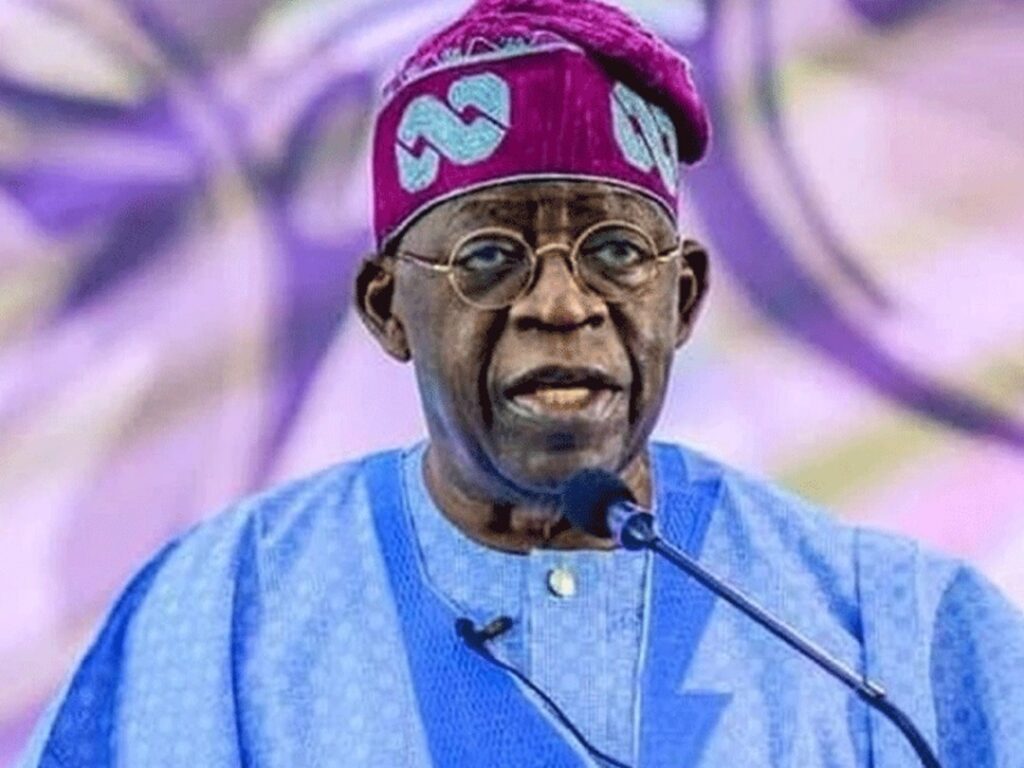
The Nigerian government has entered final negotiations with the World Bank for a $1.25 billion loan. This facility is designed to stimulate job creation and investment through the “Nigeria Actions for Investment and Jobs Acceleration” program. Expected for board presentation on June 26, 2026, the credit represents the second-largest standalone package under the current administration. It follows the $1.5 billion stabilization financing secured in June 2024 to support fiscal reforms. The Federal Ministry of Finance will coordinate the loan’s implementation. Key beneficiaries include the Central Bank of Nigeria and the Ministry of Power, focusing on lowering agricultural costs and expanding national digital infrastructure. This move follows a recent ultimatum from the Accountant-General of the Federation, Dr. Shamseldeen Ogunjimi. He warned that Nigeria may cancel loan agreements if the World Bank delays disbursements beyond a six-month window. The fresh borrowing could push Nigeria’s total external debt toward $53 billion. Despite this, the national debt-to-GDP ratio is projected to remain relatively stable, hovering around 34.5% for the 2026 fiscal year. World Bank documentation classifies the operation as “high risk.” Analysts suggest that potential political pressures leading into the 2027 election cycle could impact the long-term sustainability of the economic reforms linked to this funding. If approved, this facility will bring total World Bank commitments to Nigeria since mid-2023 to approximately $10.6 billion. This reinforces the institution’s position as the nation’s primary multilateral financier for infrastructure projects.
Nigeria’s economic chiefs meet World Bank president to bolster reform support
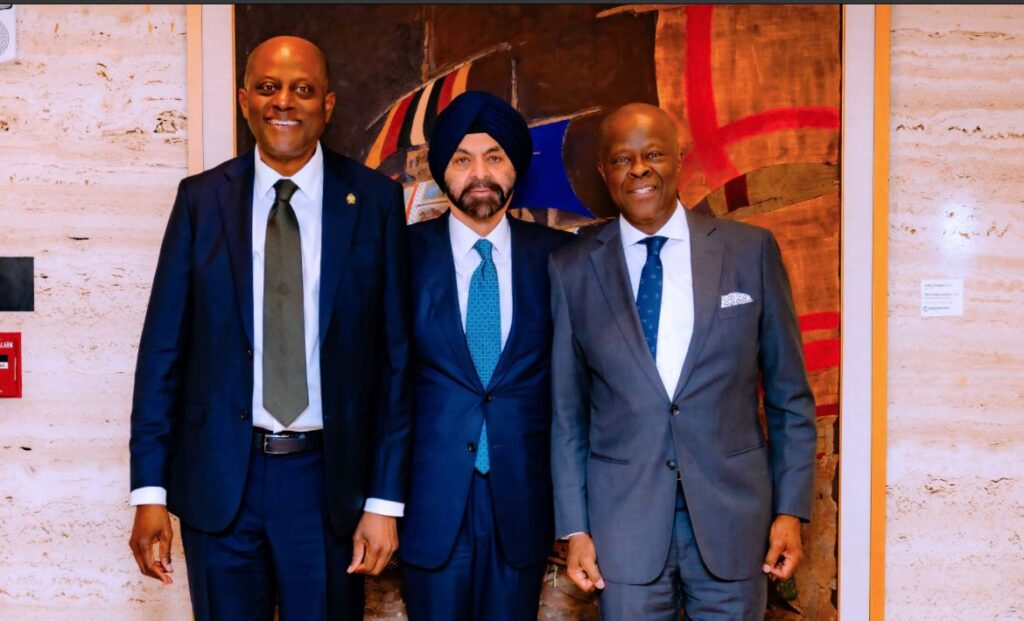
Nigeria’s top economic team met with World Bank President Ajay Banga on Tuesday to solidify strategic partnerships and seek support for the nation’s ongoing macroeconomic reforms during the 2026 IMF/World Bank Spring Meetings. Central Bank of Nigeria (CBN) Governor Olayemi Cardoso and the Minister of Finance and Coordinating Minister of the Economy, Wale Edun, held the high-level talks at the World Bank headquarters to align Nigeria’s fiscal and monetary trajectories with international development goals. The engagement comes at a critical juncture as Nigeria manages a projected debt-to-GDP ratio of 34.5% and continues its push for currency stability. The meeting focused on deepening cooperation in areas of infrastructure financing, technical support for monetary policy, and social safety nets designed to cushion the impact of recent economic shifts. While specific financial commitments were not immediately disclosed, the presence of both the CBN Governor and the Finance Minister underscores a unified front in addressing Nigeria’s liquidity challenges and inflation targets. Discussions are believed to have touched upon Nigeria’s industrial expansion and the institutionalization of regional real estate and energy markets, which remain central to the government’s growth agenda for 2026. By engaging directly with Banga, the delegation aims to boost investor confidence and de-risk the Nigerian debt capital market for global institutional players. Same Tuesday, Wale Edun, chairing the Group of Twenty-Four (G24) Ministerial Meeting on the sidelines of the World Bank Group Spring Meetings, demanded urgent multilateral support to shield developing nations from heightening global economic instability and geopolitical shocks. The Spring Meetings continue through the week, with the Nigerian delegation expected to participate in further sessions regarding private sector activity across West Africa and global energy benchmarks.
World Bank: Nigeria’s growth stays on track despite Iran War and price hikes
LAGOS — the World Bank on Tuesday projected that Nigeria’s economy will remain resilient and achieve growth through the first half (H1) of 2026, even as the escalating conflict involving Iran threatens global market stability. In its latest economic assessment, the Washington-based lender noted that while the country’s macroeconomic foundations are strengthening, rising fuel costs and “persistently high” inflation risk stalling poverty reduction efforts. Despite the geopolitical volatility in the Middle East, the World Bank maintained a positive outlook for Nigeria’s GDP, citing the continued impact of structural reforms and improved fiscal management. The report suggests that Nigeria’s position as a non-Middle Eastern oil producer has allowed it to partially buffer the shocks that have disrupted other emerging markets. “Overall business activity has been expanding over the past few months, suggesting the impact on growth has been relatively contained. But the shock is still being felt through higher inflation.” Fiseha Haile, World Bank Nigeria lead economist said during a presentation in the capital Abuja. However, the bank warned that this growth remains fragile. The conflict has driven global energy prices higher, which has translated into a sharp spike in domestic pump prices and logistics costs. The most significant headwind remains the “inflationary squeeze.” Although sound monetary policies from the Central Bank of Nigeria (CBN) had previously cooled prices to 15.1% in February 2026, the “second-round effects” of the Iran war are now pushing food and energy costs back into a high-risk zone. “Inflation is still elevated and under increasing pressure, and that poses risks to incomes and poverty reduction,” Haile said. “The gains made in stabilizing the economy are being tested by external shocks,” “Without targeted interventions, the rise in living costs will likely offset the benefits of recent growth for the most vulnerable populations.” On the fiscal side, the World Bank highlighted a stabilized debt-to-GDP ratio and a significant jump in non-oil revenue collection, which has now reached 8.5% of GDP. This improvement is credited to the successful N4.65 trillion banking sector recapitalization completed in March. To sustain this momentum, the bank urged Nigerian policymakers to resist a return to broad-based subsidies. Instead, it recommended “saving the windfall” from current high oil prices to build a sovereign buffer.
World Bank: climate resilience and private investment key to Zambia’s economic future
Zambia can overcome escalating climate threats and achieve inclusive, private-sector-led growth through strategic investments and policy reforms, according to a new World Bank Group report released Thursday. The Zambia Country Climate and Development Report (CCDR) warns that extreme weather—specifically recurrent droughts—is no longer a future threat but a present constraint on the nation’s development, disrupting agriculture, hydropower, and household incomes for the most vulnerable rural populations. Building a “Climate-Smart” Economy The report argues that by prioritizing cost-effective investments, Zambia can safeguard its growing young population and stabilize its economy against climate-related shocks. “Climate risks are no longer in the distant future for Zambia—they are already shaping development outcomes today,” said Achim Fock, World Bank Country Manager for Zambia. He emphasized that targeted reforms would not only protect citizens but also accelerate job creation and economic expansion. The Four Pillars of Strategy To navigate these challenges, the World Bank recommends a strategic pathway focused on four priority areas: Unlocking Private Sector Potential A central theme of the report is the necessity of mobilizing private sector participation. Analyst note that a predictable policy environment and stronger institutions are essential to “crowding in” the private investment needed to supplement development finance. Dominick de Waal, Senior Economist at the World Bank, noted that Zambia’s primary challenge lies in institutional reform. Success, he suggests, depends on the country’s ability to manage natural resources and translate reforms into higher living standards that reduce household vulnerability. The report concludes that by aligning development goals with global climate targets, Zambia can transform its climate challenges into an opportunity for modern, sustainable growth.