By: ThinkBusiness Africa
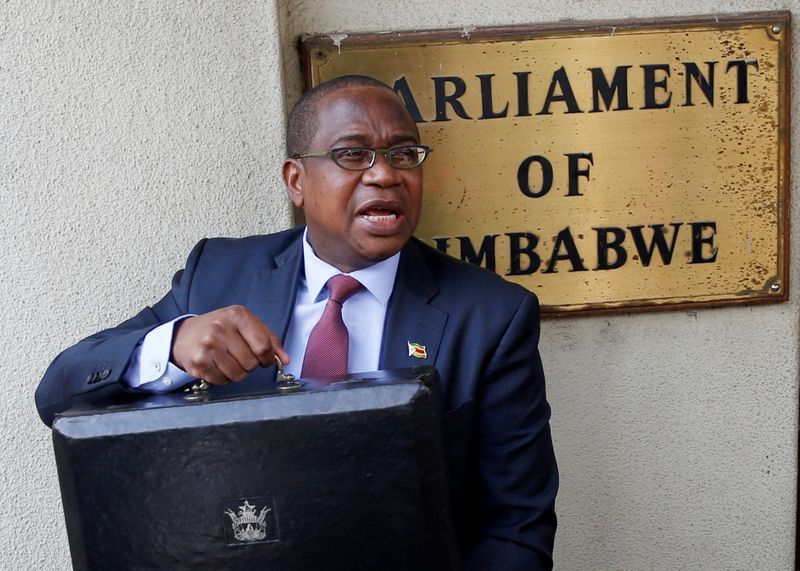
Zimbabwe’s Finance Minister, Mthuli Ncube, projected modest economic growth for 2026 in his budget presentation on Thursday, acknowledging that the country’s recovery efforts will be tempered by persistent external headwinds. The conservative outlook follows a year marked by a severe drought and ongoing currency volatility, challenges the government is actively trying to mitigate.
Minister Ncube indicated that while domestic economic activity is showing resilience, global factors will limit the pace of expansion next year. The exact growth figure for 2026 was not immediately specified, but it is expected to be lower than the revised 2025 projection, which the IMF recently noted was stronger than anticipated due to a rebound in agriculture and solid mining performance.
Last month Zimbabwe’s government announced a significant upward revision of its economic growth forecast for 2025, projecting a robust 6.6% growth, a notable increase from earlier 6% projection.
The external headwinds cited include slowing global demand for commodities and tighter international financial conditions, which impact Zimbabwe’s crucial export earnings from sectors like mining and tobacco.
Inflation, which currently sits at 19.0% year-on-year in November, is forecast to fall closer to 10% by year-end and reach single-digit levels by early 2026 due to exchange rate stability.
In an effort to boost state revenue and support the stability of the new Zimbabwe Gold (ZiG) currency, Ncube announced several key fiscal and tax policy changes in the 2026 budget:
- The government plans to increase royalties on gold producers to capitalize on recent record-high bullion prices. Gold miners will pay a 10% royalty if prices exceed a specified threshold (reported to be $2,501 per ounce), up from previous rates. This aims to ensure the mining sector contributes a “fair share of revenue” during boom periods.
- To promote the use of the local currency, the Intermediated Money Transfer Tax (IMTT) on ZiG-denominated electronic transactions will be reduced from 2% to 1.5% effective January 1, 2026. The 2% IMTT on foreign currency transactions will remain unchanged.
- To partially offset the revenue loss from the IMTT reduction, the Value Added Tax (VAT) rate will be increased by 0.5 percentage points to 15.5%, also effective January 1, 2026. This move aims to maintain fiscal stability while incentivizing local currency use.
The Finance Minister stressed that the economy is still recovering from the dual pressures of a major El Niño-induced drought, which severely impacted agricultural output, and chronic currency volatility.
The drought significantly contracted the agricultural sector in 2025, a critical component of the country’s GDP and food security. The 2026 outlook hinges on improved rainfall forecasts and continued government support for enhanced irrigation infrastructure.
The new ZiG currency, introduced earlier this year, is intended to stabilize the exchange rate and ease inflation. The budget measures, particularly the tax concessions on ZiG transactions, are central to the government’s strategy to build confidence in and encourage the adoption of the local currency as part of its de-dollarization roadmap by 2030.
The International Monetary Fund (IMF), which recently concluded a staff visit to Harare, noted that while the 2025 economic rebound was stronger than anticipated, sustaining momentum into 2026 will require a deeper commitment to fiscal discipline and structural reforms. The budget framework is seen as a crucial step toward addressing the policy issues needed for Zimbabwe to potentially secure a Staff Monitored Program with the IMF.