
Juba has moved to calm fears that foreign nationals must quit the country after a county official sought to bar them from small-scale retail.
The Ministry of Foreign Affairs and International Cooperation said on Thursady there is no national government directive requiring foreign nationals to leave South Sudan, according to a statement posted by the official government account on X.
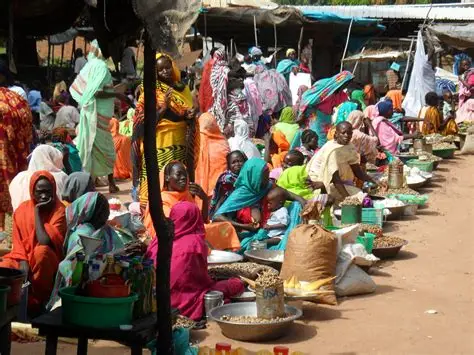
The clarification followed remarks by Juba County Caretaker Commissioner Kalisto Lado at Kubri Haboba Market on 5 October.
Lado told traders that foreigners should not run retail stalls selling chapati, onions, tomatoes or charcoal, nor operate motorcycle taxis, and should instead focus on wholesale trade and factories.
Social media later cast the comments as a seven-day expulsion order. Lado denied that, saying a county commissioner lacks authority to remove foreigners.
South Sudan’s envoy in Kampala also said the remarks did not represent official policy.
The distinction matters for regional trade. Uganda’s foreign ministry said bilateral trade has risen to about $700 million to $800 million, with Ugandan exports near $700 million, up from $490 million in 2024.
Bank of Uganda data put June 2026 exports to South Sudan at $73.6 million, versus $49.6 million in May.
Oil still dominates South Sudan’s economy, accounting for more than 80% of GDP and about 95% of exports, the African Development Bank has reported.
IMF figures put 2026 GDP near $6.1 billion, with growth around 4.1% and inflation near 14%.
National elections are scheduled for December 2026, the first since independence in 2011, after repeated delays.
A Uganda–South Sudan business forum opens in Kampala on 13 October, aimed at cutting the cost of trade just as market access rules remain contested.