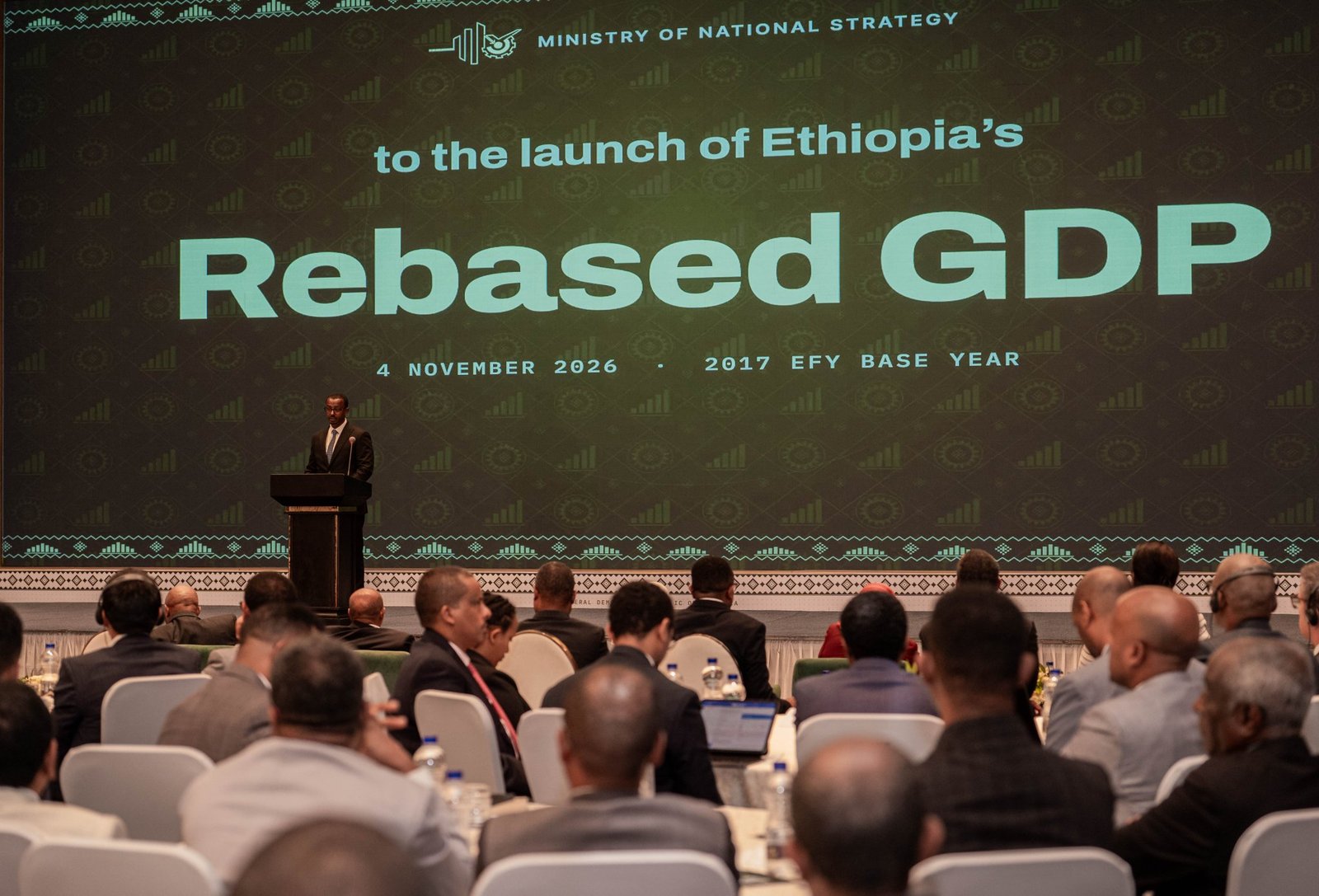
Ethiopia has rebased its gross domestic product, lifting the 2025/26 figure to 31.86 trillion birr ($210.7 billion), and the 2024/25 base-year total to 24.03 trillion birr ($201.4 billion).
The Ministry of National Strategy released the revised series on Thursday, stating it now ranks the country fifth in Africa and third in sub-Saharan Africa.
The revision expands measured output by 59.2% from the previous 15.09 trillion birr estimate for 2024/25, without any rise in actual production or tax collections.
Officials attribute the increase to the new 2017 Ethiopian fiscal year base, which replaces 2015/16 and incorporates agriculture and establishment censuses plus household surveys.
The updated accounts capture digital finance, capital markets, dry-season irrigation, corridor projects, mining, manufacturing and previously omitted informal activity, aligning with the 2008 System of National Accounts.
Sector shares in the base year stand at roughly 36% services, 32% agriculture and 30% industry, with industry recording the largest upward adjustment.
Real growth for 2025/26 is estimated at 7.7% under the new series.
The larger denominator cuts public debt from about 45% of GDP to 27 percent and tax revenue from roughly 9% to 5.5%, while absolute debt and revenue stocks remain unchanged.
Finance Minister Fitsum Assefa said the figures will support debt sustainability assessments, fiscal policy and domestic revenue efforts amid an ongoing IMF-backed reform programme.
Ethiopia floated the birr in July 2024 under a $3.4 billion Extended Credit Facility, causing its dollar GDP to fall sharply and allowing Kenya to overtake it in recent IMF rankings near $127 billion.
The country remains in debt distress while restructuring obligations, including a $1 billion Eurobond, even as real growth has run near 9% in prior years.
Per-capita income rises toward $1,500 on the new base, shifting Ethiopia into the World Bank’s lower-middle-income range from low-income status.
Analysts note the timing improves every creditor ratio just as IMF staff prepare the sixth programme review, though rankings depend on comparable data from peers.