
By: Chidozie Nwali
Nigeria’s economy recorded a real Gross Domestic Product (GDP) growth rate of 3.98% year-on-year in the third quarter of 2025, according to the latest report released by the National Bureau of Statistics (NBS) on Monday; marking a slight improvement from the 3.86% growth rate recorded in the corresponding period of 2024.
However, the Q3 2025 growth rate is a moderation when compared to the 4.23% posted in the second quarter of the year. In real terms, the aggregate GDP for the 3 months period (July, August, and September) stood at a massive N57.03 trillion, while in nominal terms it’s N113.59 trillion representing a year-on-year nominal growth of 18.12%.
The non-oil sector continued to drive the nation’s economic output, growing by 3.91% in real terms during the quarter; an increase of 0.11 percentage points from the 3.79% recorded in Q3 2024, and higher than the 3.64% recorded in the immediate past quarter, Q2 2025.
NBS noted that the non-oil sector contributed 96.56% to the total real GDP. Growth within this crucial sector was primarily powered by: Agriculture, particularly Crop Production; Information and Communication, led by Telecommunications; Real Estate; Financial and Insurance (Financial Institutions). Trade, Construction, and Manufacturing also contributed positively to the GDP expansion.
Overall, the Services sector accounted for the largest share of the GDP at 53.02% in Q3 2025, despite its year-on-year growth rate slowing to 4.15% from 4.97% in Q3 2024.
The Agriculture sector grew by 3.79% in real terms, a strong improvement from the 2.55% recorded in Q3 2024. Agriculture’s contribution to real GDP stood at 31.21%, with Crop Production alone driving 65.99% of the sector’s nominal value.
The Industry sector also saw accelerated growth, expanding by 3.77%, significantly higher than the 2.78% recorded in the third quarter of 2024.
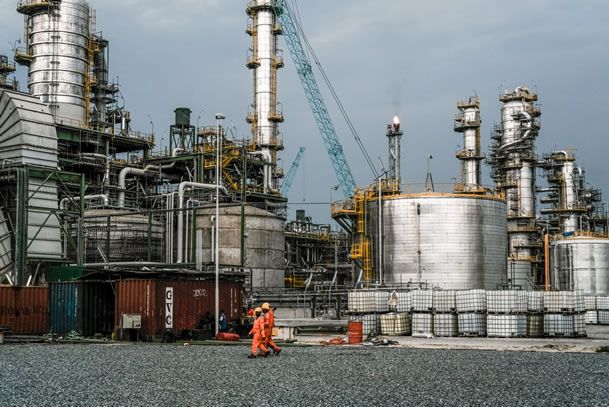
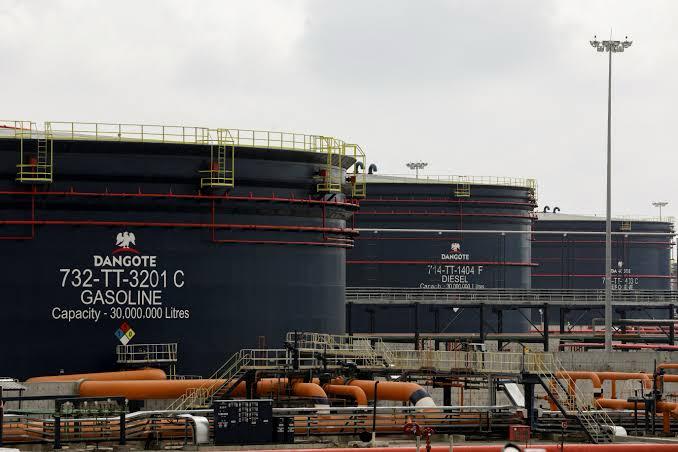
The Oil sector’s real growth stood at 5.84% year-on-year, a slight increase of 0.18 percentage points from the 5.66% recorded in Q3 2024. However, the sector experienced a sharp deceleration when compared to the preceding quarter, Q2 2025, which saw growth of 20.46%.
NBS highlights that average daily crude oil production for the quarter was 1.64 million barrels per day (mbpd). This production volume is higher by 0.17 mbpd when compared to Q3 2024 (1.47 mbpd) but lower than the Q2 2025 output of 1.68 mbpd. The Oil sector’s contribution to the total real GDP was 3.44%.
This positive overall GDP growth recorded is largely attributed to the economic reforms initiated by the president Bola Ahmed Tinubu-led administration, specifically the liberalization of the Naira’s exchange rate and the removal of the costly fuel subsidy. While these actions initially triggered a sharp depreciation of the currency and a cost-of-living crisis, they have since boosted investor confidence, aiding economic acceleration.
The Q3 growth rate of 3.98% aligns closely with the International Monetary Fund’s (IMF) upwardly revised full-year projection of 3.9% for Nigeria, suggesting the economy is responding positively to the policy adjustments.
Despite the GDP growth, the economy continues to grapple with elevated inflation, particularly concerning Nigerian households.
While headline inflation had started a gradual deceleration, from peak 24% in January, falling to 16.05% by October 2025, it remained far above the Central bank of Nigeria (CBN) single-digit inflation target range.