
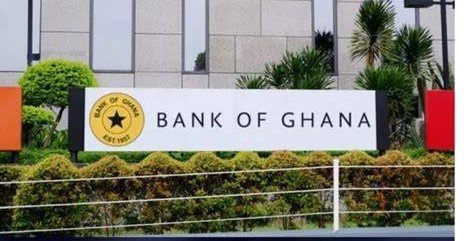
The Bank of Ghana cut its benchmark interest rate by 300 basis points to 11.0% on Wednesday, ending a three-meeting pause to align monetary policy with collapsing market yields.
Governor Dr. Johnson Pandit Asiama announced the decision following the 133rd Monetary Policy Committee (MPC) meeting in Accra, marking the lowest benchmark borrowing rate in decades.
The central bank held rates at 14.0% across its May, July, and September meetings while money market rates tumbled, with 91-day Treasury bills falling to roughly 4.5% and interbank rates hitting 10.20%.
“The adjustment represents a necessary rate alignment,” Asiama noted during the briefing, pointing out that market yields had already decoupled sharply below the previous 14.0% policy ceiling.
Headline inflation ticked up slightly to 5.5% in October from 5.2% in September, driven by utility tariff hikes, though price growth remains well below the bank’s 6% to 10% target band.
Lower policy rates are already filtering into credit markets, with average commercial lending rates dropping to 15.8% in October from 22.2% a year earlier, fueling 37.2% year-on-year private sector credit growth.
External buffers remain robust to absorb potential capital outflows, as gross international reserves reached $12.1 billion—or 4.4 months of import cover—while banking sector non-performing loans fell to 13.1%.
Ghana’s aggressive easing mirrors a broader continental pivot toward cheaper credit, occurring just one day after Angola’s central bank trimmed its benchmark rate for a fourth consecutive time to a 10-year low of 14%.
In neighboring Nigeria, the Central Bank of Nigeria slashed its policy rate by 350 basis points to 23.0% in September ahead of its upcoming November 23–24 MPC meeting, though Egypt bucked the trend with a 100-basis-point hike to 20%.
With Ghana’s real interest rate still positive at 5.5 percentage points, analysts expect cheaper credit to accelerate domestic business expansion heading into 2027.