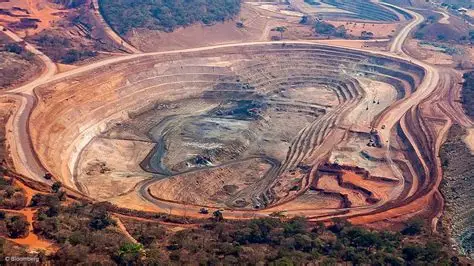
The Democratic Republic of Congo is tightening state control over geological data, aiming to steer billions in mining investments and expand influence over future critical mineral discoveries.
The National Geological Survey of Congo (SGNC) confirmed that a comprehensive national geological databank is slated to become fully operational by late 2026.
A $180 million airborne mapping contract with Spain’s Xcalibur, initiated in January, is currently surveying over 700,000 square kilometers to reduce exploration risk across the resource-rich nation.
Despite housing the world’s largest cobalt reserves and vital copper and lithium deposits, only about 20 percent of the Central African country has been systematically explored.
Beyond Xcalibur, the DRC has forged active partnerships with U.S.-backed KoBold Metals, France’s BRGM, and South Africa’s Council for Geoscience to accelerate regional mapping initiatives.
Exploration spending in the country recently reached $130.7 million, ranking as the highest in Africa, though most capital remains tightly clustered within established southern provinces.
Unlike open-source mining jurisdictions, Kinshasa plans a tiered, fee-based data access model. This strategic move unfolds amid intense competition between global powers like the US and China.
The state views these proprietary geoscientific insights as critical economic leverage, ensuring domestic resource control mirrors aggressive moves seen across global critical mineral supply chains.