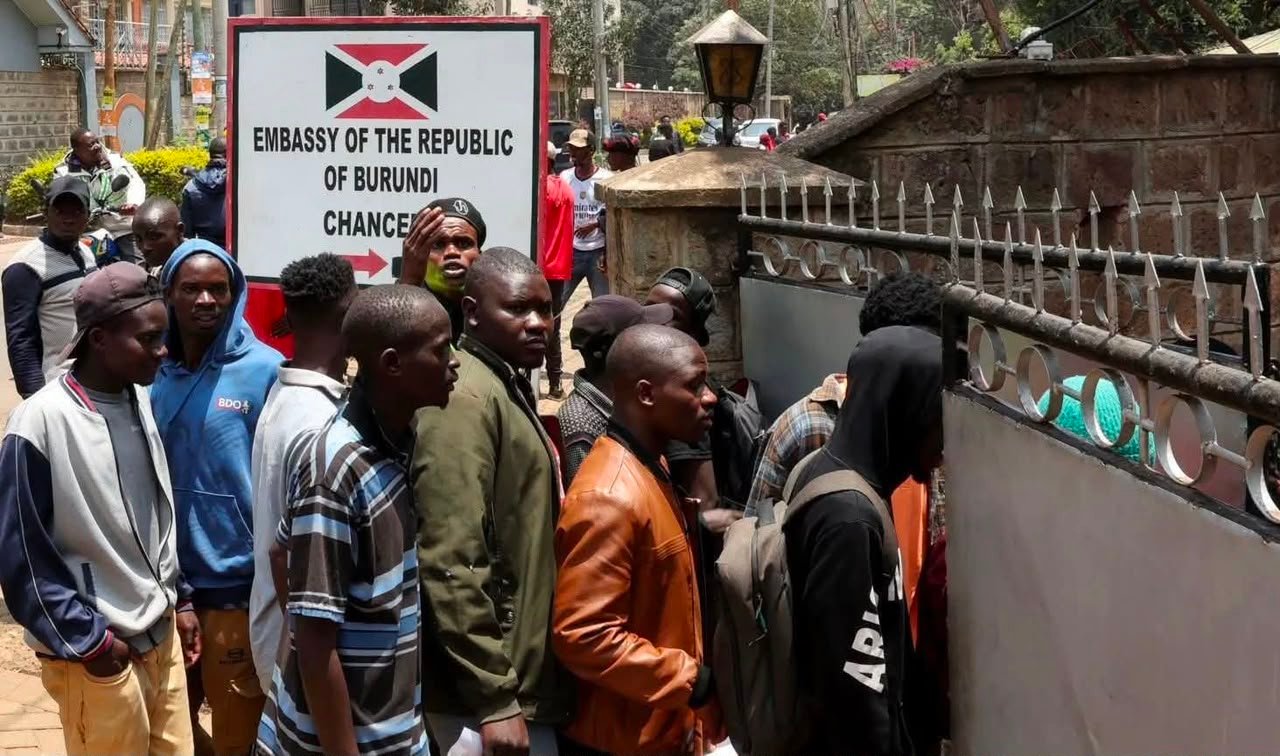
Clutching heavy brown envelopes and plastic bags piled high against the concrete walls of Denis Pritt Road, hundreds of Burundian nationals crowded outside their country’s embassy in Nairobi on Monday, desperate for emergency travel documents.
Following President William Ruto’s sweeping executive directive ordering the immediate shutdown of small-scale businesses operated by foreign nationals, a wave of panic rippled through migrant communities.
Echoing the harrowing scenes of displacement seen thousands of miles away in South Africa, the sudden crackdown has exposed deep structural fissures in East Africa’s integration project.
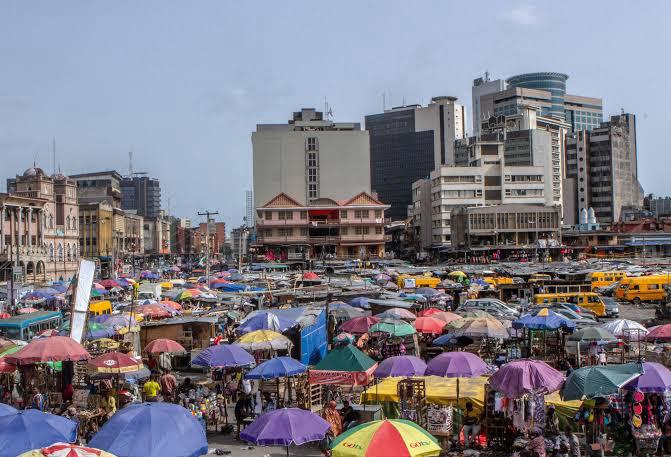
Just like South Africa, Kenya’s latest policy pivot targets the most vulnerable layer of the informal economy: micro-traders, street vendors, and small shop owners.

Kenya’s vast Micro, Small, and Medium-Sized Enterprise (MSME) sector accounts for over 80% of total employment and serves as the primary absorber of a rapidly growing urban workforce facing soaring living costs and persistent youth unemployment.
When macroeconomic pressures mount, foreign migrant traders—including an estimated community of thousands of Burundians leveraging East African Community (EAC) protocols—become a convenient political lightning rod.
President Ruto’s decree, which fast-tracks the restrictive Local Content Bill through Parliament, insists that low-capital retail and hawking must be exclusively reserved for Kenyan citizens.
The economic data underpinning this political calculus reveals a familiar narrative of scarcity.
In South Africa, the systemic targeting of foreign-owned “spaza” shops is routinely justified as a defense of indigenous livelihoods amid sluggish GDP growth and a stubbornly high unemployment rate hovering above 30%.
Similarly, Kenya’s fiscal tightening, heavy sovereign debt servicing obligations, and biting tax reforms have shrunk domestic consumer purchasing power. By framing foreign micro-traders as structural competitors rather than regional partners, Nairobi risks undermining the very framework of the Common Market Protocol that underpins the EAC.
While senior Kenyan diplomats have scrambled to clarify that fully documented major investors and compliant migrant workers remain legally protected, the chilling effect on regional trade is already tangible.
Ambassador Evelyne Habonimana’s urgent appeal to EAC chairperson Yoweri Museveni for an emergency regional summit underscores how quickly localized populist protectionism can metastasize into diplomatic friction.
“The Embassy of Burundi in Kenya is with much concerns on how Burundians are being mistreated, harassed and thrown out like chickens. We call upon the chairperson of East African Heads of State, H.E. @KagutaMuseveni, to immediately call for a summit to tame @WilliamsRuto,” the notice, signed by Ambassador Habonimana, read.
When national economic policies fail to generate immediate domestic relief, governments across the continent increasingly reach for the same restrictive playbook, proving that economic nationalism spares no region—and that regional integration remains dangerously fragile when put to the test.