
At the Lokoja Dialogues in Lagos, investors and water developers argued that Nigeria does not merely need more money for water. It needs projects that money can actually invest in.
For years, the standard diagnosis of Nigeria’s infrastructure problem has been simple: there is not enough money.
The inaugural Lagos dialogue of Lokoja Dialogues suggested a more complicated answer.
In the water sector, at least, the problem may be that Nigeria has not yet built enough investable projects. That distinction could determine whether the country’s enormous water infrastructure deficit becomes an economic burden or an investment opportunity.
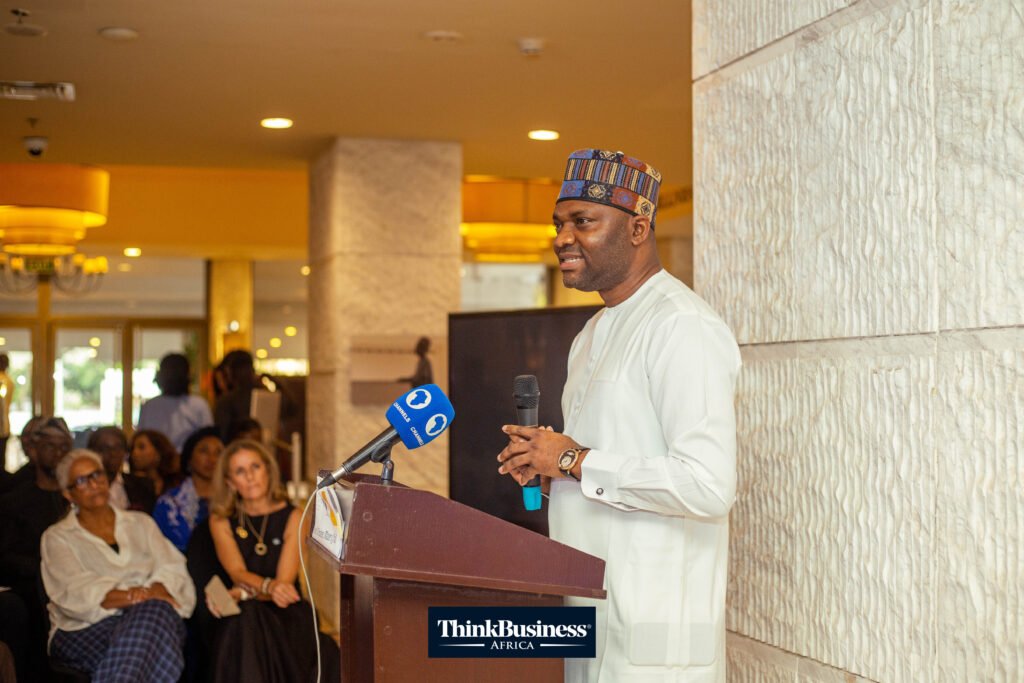
Aminu Umar-Sadiq, Managing Director of the Nigerian Sovereign Investment Authority, made clear that capital can be mobilised for water — but only when projects are properly prepared, structured and governed.
His institution is already developing financing mechanisms involving guarantees, project preparation facilities and viability-gap financing.
But perhaps the most revealing contribution came from private water developer Norbert Shelsuk. His message to investors was blunt: a government guarantee does not automatically make a water project bankable.
The three problems investors must solve
Shelsuk identified three critical components for successful water projects. First is the offtaker — someone credible who will purchase the water. Second is the tariff — a pricing structure that allows the project to recover its costs. Third is development capital — the money required to take a project from an idea to something that financiers can actually assess and fund.
The third problem is particularly important. Infrastructure investors typically prefer projects that are already sufficiently developed to allow them to assess risks, costs, revenues and returns.
But getting to that stage itself requires money. Engineeringstudies, environmental assessments, lega; work, financial modelling, governmnet engagements, and land and technical costs all costs money.
The paradox is that investors often want a bankable project before providing the money needed to make it bankable.
Shelsuk said his own project has been in development since 2014, illustrating the time and cost involved in moving a major water project through the development process. That is not merely a financing problem. It is a project-preparation problem.
The NSIA model
Umar-Sadiq explained that the authority is combining project-preparation support with viability-gap financing, financing facilities and guarantees to make large infrastructure projects capable of attracting capital.
The objective is straightforward: take projects that are economically important but commercially difficult, improve their structure, reduce risks and create a pathway for private capital.
NSIA is also involved in the Green Guarantee Company, established alongside international partners. According to Umar-Sadiq, the facility had recently attracted an additional $30 million, bringing its capitalisation to $130 million and enabling it to provide guarantees of up to $4 billion.
That points towards an important evolution in infrastructure finance. Government and development institutions do not necessarily need to fund the entire cost of water infrastructure. They can instead help de-risk projects sufficiently for institutional and private investors to participate.
The tariff dilemma
But finance cannot solve a business model that does not work. And water pricing remains one of the sector’s most difficult questions.
Shelsuk challenged the conventional understanding of affordability. He argued that Nigerians are already paying significant amounts for privately supplied water, even while formal public tariffs remain insufficient to support investment.
The argument raises an uncomfortable question: Is cheap formal water actually expensive for Nigeria when it results in unreliable service, private household spending and underinvestment in infrastructure?
The answer requires more than simply raising tariffs. A commercially viable water market must also protect vulnerable consumers. That suggests the policy challenge is not simply to subsidise water.
It is to design subsidies intelligently.

Damilola Ogunbiyi, the Special Representative of the Secretary General for Sustainable Energy for All and Co – Chair of UN – Energy, speaking during the dialogue, offered an example from the electricity sector.
Under a decentralised energy model, she explained, government can support private providers through targeted subsidies while ensuring that subsidies are tied to actual delivery and measurable connections.
The lesson for water is potentially significant. Instead of subsidising inefficient systems indefinitely, government could support verified service delivery, while allowing private operators to build sustainable businesses around it.
The carbon opportunity
Another layer of the investment equation is emerging through carbon markets.
Umar-Sadiq argued that Nigeria’s environmental projects can potentially generate carbon credits that attract hard-currency investment — but only where the regulatory framework gives investors confidence about ownership and monetisation.
The Lokoja Dialogues chairman, Olu Adeosun, took the argument further. He pointed to the possibility of combining properly designed borehole projects with carbon-credit mechanisms.
The logic is that replacing firewood use with cleaner water systems can reduce pressure on forests and potentially generate environmental value.
This turns a basic water intervention into something potentially capable of attracting multiple forms of financing. The opportunity is to structure water, climate, infrastructure, carbon, and community development together.
The NSIA investment test
The final question, of course, is whether NSIA itself sees water as investable. In an interview after the session, Umar-Sadiq was unequivocal.
NSIA has an infrastructure fund, he said, and water is one of its focus sectors alongside healthcare and agriculture. If opportunities emerging from Lokoja Dialogues meet NSIA’s bankability criteria, the authority would be willing to co-invest.
And what determines bankability? His answer is revealing: “Well prepared, well managed, well governed” projects with a clear offtake and capacity to scale.
That may be the central lesson from Lagos. Nigeria does not simply need more water projects. It needs a pipeline of well-prepared, commercially structured and investment-ready water projects.
The opportunity is potentially enormous. But the money will not come simply because the need is enormous. It will come when Nigeria can demonstrate that solving the water problem can also produce sustainable economic value.