


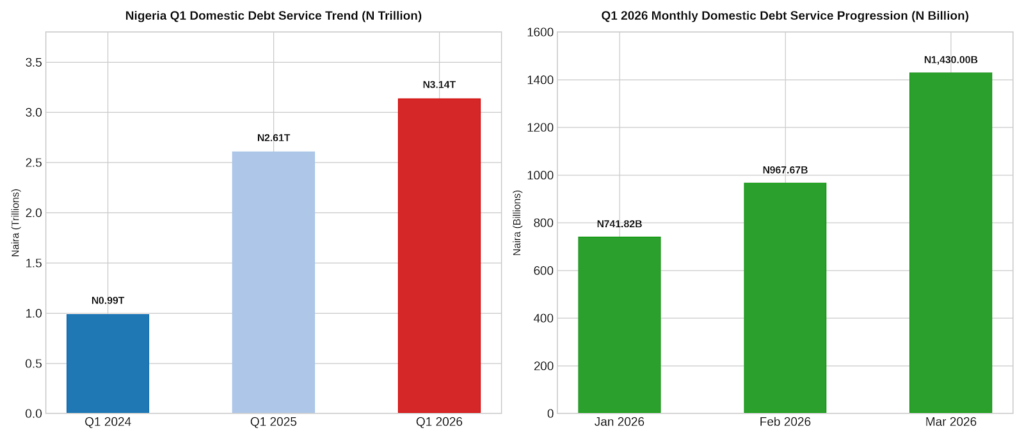
Nigeria’s domestic debt servicing bill soared 217% to N3.14 trillion in the first quarter of 2026, driven by elevated interest rates and aggressive local borrowing.
Official figures published by the Debt Management Office show interest obligations consumed N2.97 trillion during the quarter, rising sharply from N902.68 billion recorded in the corresponding period of 2024.
A breakdown reveals interest payments accounted for 94.6% of total domestic debt service, with FGN Bonds absorbing N1.96 trillion while Treasury Bills accounted for N1 trillion.
Monthly expenditure accelerated steadily across the quarter, rising from N741.82 billion in January to N967.67 billion in February, before peaking at N1.43 trillion in March.
In contrast, principal debt redemptions fell 29.9% year-on-year to N169.68 billion, confirming that compounding borrowing costs rather than debt principal, are driving the fiscal strain.
The quarterly outlay represents a 20.3% increase from N2.61 trillion in Q1 2025 and a 37.5% rise from N2.28 trillion in Q4 2025.
Elevated yields reflect tight monetary policy implemented to curb persistent inflation, as the federal government prioritizes domestic borrowing over foreign currency instruments to mitigate exchange rate exposure.