

Nigeria Sells N700bn Treasury Bills in August as Foreign, Local Investors Eye Yields
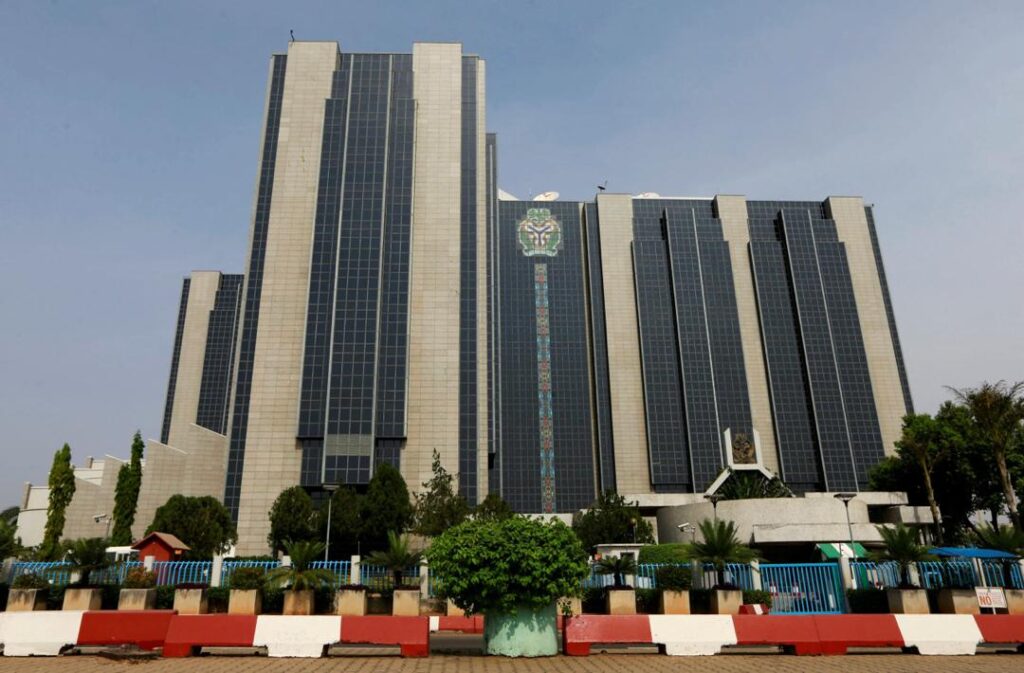
The Central Bank of Nigeria (CBN), acting for the Debt Management Office (DMO), has opened subscription for N700 billion ($437.5 million) in Nigerian Treasury Bills to manage liquidity and cover budget deficits. According to an official auction circular released by the central bank, the primary market offer for its first August auction spans 91-day, 182-day, and 364-day tenors, with allotments scheduled for Wednesday. The offer is heavily weighted toward the one-year paper, with the 364-day tenor accounting for N500 billion, while the 91-day and 182-day tenors account for N100 billion each. Institutional investors, including pension funds and commercial banks, are expected to aggressively oversubscribe the 364-day instrument as market participants seek to lock in elevated yields amid lingering macroeconomic pressures. The N700 billion issuance comes as the CBN continues deploying open market operations and high-yield debt sales to mop up excess banking system liquidity and stabilize foreign exchange reserves. Foreign portfolio investors have maintained keen interest in long-dated Nigerian government paper, bolstered by recent monetary policy tightening aimed at reining in sticky headline inflation. The auction follows previous high-demand primary sales where long-end stop rates surged, reflecting investor demand for inflation-hedged returns and the government’s accelerating domestic borrowing drive. Results from the settlement auction will set key benchmark yields across secondary money markets and shape short-term interest rate projections for the remainder of the quarter.
Nigeria Central Bank Cools Open Market Liquidity Mop-Up to $4.7B as Auction Frequency Halves
The Central Bank of Nigeria (CBN) sterilized N7.18 trillion ($4.7 billion) from the banking system via Open Market Operations (OMO) in July. The total marked a 48.57% decline from June mop-ups. According to official central bank market operation reports, the sharp drop in total liquidity drained was driven by a steep decline in auction frequency rather than a reduction in investor appetite. The apex bank conducted only three OMO sales in July compared to seven auctions held in June. However, average allotment sizes expanded by 20.10% to reach N2.39 trillion per session. Parallel primary market auctions for Nigerian Treasury bills recorded heavy oversubscription in late July, with 364-day stop rates easing 35 basis points to 17.35% as investor demand topped N3.38 trillion. The reduced operational frequency coincides with the Monetary Policy Committee holding its benchmark interest rate at 26.5% in late July, following a slight moderation in headline inflation to 15.91%. Consolidating liquidity drains into larger, less frequent issuances allows monetary authorities to minimize short-term borrowing costs while preserving elevated yield appeal for foreign portfolio investors and domestic institutions.
Global Economic Order Is Changing; Africa Needs to Trade More with Itself – Cardoso
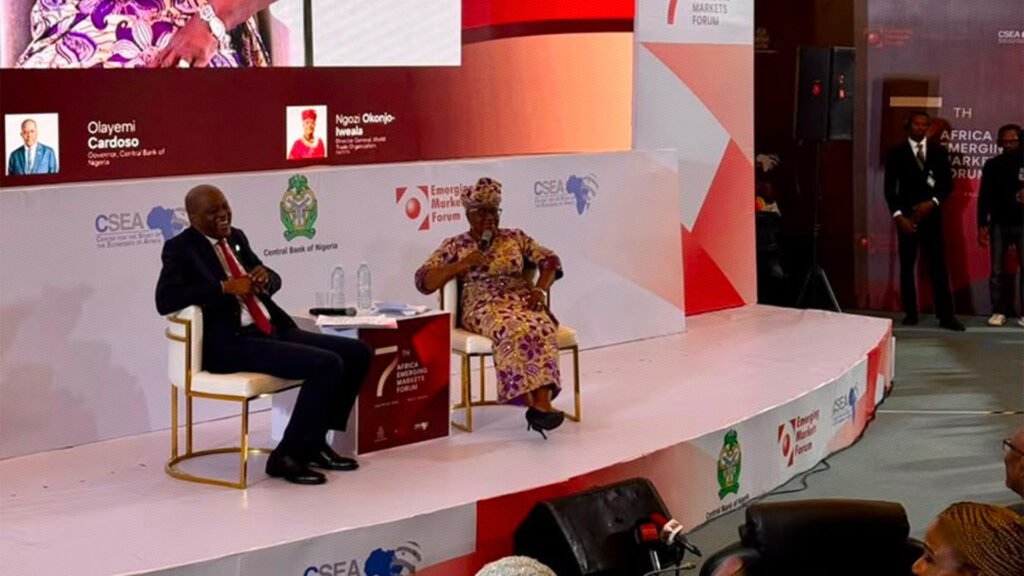
Governor of the Central Bank of Nigeria (CBN), Olayemi Cardoso, has warned that the global order is fast changing and Africa needs to see opportunity in the crisis and diversify its market inwardly by trading more with itself through the African Continental Free Trade Area (AfCFTA). The Apex Bank Chief made the call on Wednesday while delivering a keynote address at the 7th Africa Emerging Markets Forum co-hosted by the CBN in Abuja, under the theme “Building Resilience Amidst Geoeconomic Uncertainty.” He emphasized that the global system, which has historically shaped economic development, is currently undergoing significant changes, necessitating a strategic response from African nations. “For Africa this change is both a warning and an opportunity. With Intra African trade still Accounting for 16% of our total trade we must build stronger regional value chains, Produce more of what we consume and trade more with one another.” Cardoso said. “The African Continental Free Trade Area (AfCFTA) provides the platform and the opportunity to turn this global shift to an African advantage,” he added; while also urging the removal of barriers within the AfCFTA, which include transportation, customs, and implementing faster cross-border payments. Still on the global changes, Cardoso emphasized that capital has become “selective and impatient” and should be channeled towards “productive domestic investments.” Despite the continent’s vast market potential, intra-African trade remains among the lowest in the world, accounting for roughly 14% to 16% of Africa’s total global trade volume, a stark contrast to Europe’s 68% and Asia’s 59%. Supply Chains insight from WTO DG, Dr. Ngozi Okonjo-Iweala Dr. Ngozi Okonjo-Iweala, Director-General of the World Trade Organization (WTO), during a fireside chat with the CBN Governor, said that geo-economics is leading to changes in the way supply chains are configured. She highlighted that the shipping sector and pharmaceuticals are looking for markets to diversify, and Africa needs to see the opportunity in these changes and take advantage of them. “We have built up an over dependency….these leading supply chain CEOs in different sectors from automobile to pharmaceuticals, even furniture are looking to diversify and that’s where we in Africa can do better to attract this supply chains.” Dr. Okonjo-Iweala said in response to the question asked by the CBN Governnor on opportunities for Africa amid changing global landscape. She highlighted that Africa should be able to attract critical mineral supply chains linked to renewable energy, like lithium, which is majorly processed in China and the United States for Electric car batteries. “we have some of the critical mineral and rare earth between us (referring to Nigeria) and Ghana, Guinea…all along the west African coast.” “I don’t think it should be just a country to country affairs..we need to think of sub regional supply chain.” She added. According to data from UN Trade and Development (UNCTAD) and Afreximbank, over 80% of African exports are shipped outside the continent, consisting largely of unprocessed raw commodities. Regarding African emerging markets, Dr. Okonjo-Iweala encouraged African nations to think strategically about the types of trade agreements they seek, both at the WTO level and through regional or bilateral channels, to capture more market share beyond their current low percentage of global trade. The WTO DG said the continent’s progress over the next decade will depend on leaders who are able to implement policies that will ease and support regional trade.
Demand for Nigeria’s One-Year Debt Soars to $2.2bn as Yields Cool
LAGOS – Investors poured a massive N3.38 trillion ($2.21 billion) into the 364-day Nigerian Treasury Bill at the Central Bank of Nigeria’s (CBN) primary market auction on Wednesday, July 29, 2026, nearly seven times the N500 billion on offer. According to official auction results from the CBN, total subscriptions across all tenors reached N3.62 trillion. The Debt Management Office allotted N1.25 trillion against the original N700 billion overall offer. Heavy demand for the one-year paper drove its stop rate down to 17.35%, falling 31 basis points from the 17.66% recorded at the previous auction on July 15. The central bank capitalized on deep market liquidity to oversell the 364-day maturity, allotting N1.02 trillion to successful bidders while lowering borrowing costs for the federal government. Institutional investors directed over 93% of total demand toward the one-year instrument, seeking to lock in elevated yields for a longer horizon amid expectations of future rate cuts. Short-dated papers recorded subdued appetite, as the 91-day bill attracted N135.74 billion with N130.72 billion allotted. Stop rates for the 91-day paper closed at 16.30%. The 182-day tenor received subscriptions of N104.74 billion against N100 billion offered, resulting in allotments of N99.18 billion at an unchanged stop rate of 16.50%. The aggressive bidding follows the CBN Monetary Policy Committee’s decision on July 21 to retain the benchmark interest rate at 26.50%, balancing moderating June inflation of 15.91% against global risks.
Nigerian Consumer Credit Drops 19.89% to N3.78 Trillion as Personal Loans Plummet
LAGOS – Consumer credit outstanding in Nigeria fell 19.89% to N3.78 trillion in 2025 from N4.72 trillion in 2024. The N939.53 billion contraction marks the first annual decline since December 2019. According to the Central Bank of Nigeria (CBN) 2025 Annual Report, consumer credit’s share of total private sector loans dropped to 6.60% from 7.98% recorded in the preceding year. A sharp plunge in personal loans to N1.85 trillion drove the contraction. Conversely, retail loans jumped 63.77% to N1.94 trillion, making up 51.16% of total consumer borrowing. Short-term debt dominated bank portfolios at 51.60%, down 7.71 percentage points. Meanwhile, long-term credit rose 7.82 percentage points to 34.94% as lenders restructured facility maturities. Persistent interest rate hikes pushed benchmark borrowing costs above 26%, severely dampening retail demand. Concurrently, commercial lenders shifted liquidity into high-yielding public securities, further tightening private sector lending access.
Cardoso, Okonjo-Iweala, Gill headlines Africa Emerging Markets Forum 2026

Governor of the Central Bank of Nigeria (CBN) Olayemi Cardoso and World Trade Organization (WTO) Director-General Dr. Ngozi Okonjo-Iweala will headline the 7th Africa Emerging Markets Forum in Abuja. World Bank Chief Economist Indermit Gill is also a key participant. The two-day hybrid event opens on Wednesday at the CBN Headquarters. It runs under the theme “Building Resilience Amidst Geoeconomic Uncertainties.” “Two global leaders. One important conversation,” the Central Bank of Nigeria stated. The dialogue will explore “practical strategies for strengthening Africa’s resilience, deepening regional integration and unlocking sustainable, long-term economic growth.” Nigeria’s recent economic reforms, including improved foreign reserves, add immediate relevance. The forum seeks coordinated solutions amid global uncertainties. Finance Minister Taiwo Oyedele and Science Minister Kingsley Udeh will deliver keynote addresses. They will highlight fiscal, monetary, and innovation policies. The event, hosted by the CBN with the Emerging Markets Forum and Centre for the Study of the Economies of Africa, convenes policymakers, economists, and business leaders from Africa and beyond. “The 7th Africa Emerging Markets Forum is set to convene some of the world’s foremost policymakers, economists and development leaders to explore practical solutions for building resilient economies,” CBN added. High-level fireside sessions dialogue will address macroeconomic stability, cross-border payments, fintech, infrastructure, and responses to external shocks. Attendance is by invitation, with live streaming on CBN platforms. This gathering comes as Africa navigates trade tensions, inflation pressures, and shifting global finance. It aims to chart practical pathways for long-term economic transformation.
Nigeria’s Central Bank to Auction N700B Treasury Bills to Wrap Up July Debt Issuance
LAGOS – The Central Bank of Nigeria (CBN) will conduct a N700 billion primary market auction for short-term government debt on Wednesday, July 29, 2026, on behalf of the Debt Management Office (DMO). According to an official invitation to tender, the issuance marks the third and final primary market Treasury Bills auction scheduled for the month of July. Allocations will be determined through a Dutch auction mechanism across three standard tenors: the 91-day, 182-day, and 364-day instruments. The transaction is designed to part-refinance maturing obligations while funding the federal government’s budget deficit. Market liquidity remains robust, supported by recent Open Market Operation (OMO) maturities, which financial market analysts expect will drive substantial oversubscription, particularly on the one-year paper. The auction follows the Monetary Policy Committee’s decision on July 21 to hold the benchmark interest rate at 26.5%. Central bank officials maintained a cautious monetary stance to anchor inflation expectations despite a slight moderation in headline inflation to 15.91% in June. Investors are closely tracking stop rates across all three tenors to gauge how the central bank balances cost-effective debt service against elevated yields required by institutional investors.
Nigeria’s Private Sector Credit Rebounds to N83.26 Trillion in June
LAGOS — Latest data from Central Bank of Nigeria (CBN) shows, credit extended to Nigeria’s private sector rose by 2.74% month-on-month to N83.26 trillion in June 2026, up from N81.04 trillion in May, highlighting the effectiveness of CBN policy recalibrations. The N2.22 trillion expansion signals a successful rebound following Q2 market adjustments, reflecting renewed banking sector liquidity and growing lender confidence in enterprise portfolio stability under current monetary guidelines. Also, the CBN data noted that credit to the government fell slightly to N40.03 trillion from N40.38 trillion. Strategic policy coordination by the CBN has effectively restored orderly credit expansion after figures briefly dipped from earlier peaks, demonstrating the resilience of commercial bank lending frameworks despite necessary tight monetary stances. With the benchmark Monetary Policy Rate maintained at 26.5% to rein in headline inflation, the June rebound demonstrates that commercial lenders are successfully adapting to restrictive cash reserve requirements without curtailing business productivity. Furthermore, balanced liquidity management strategies by the central bank continue to ensure that necessary government financing needs are met alongside sustained growth in private sector working capital allocations. This positive credit trajectory reinforces broader macroeconomic stability goals, establishing a sustainable lending foundation as the central bank balances inflation control with real-sector economic support.
Nigeria’s Central Bank Holds Benchmark Rate at 26.5% as Inflation Eases
LAGOS — The Central Bank of Nigeria’s Monetary Policy Committee retained the Monetary Policy Rate at 26.5% on Tuesday after its 306th meeting. All other key parameters remained unchanged. The committee kept the standing facilities corridor at +50/-450 basis points around the MPR. Cash Reserve Ratio stays at 45% for deposit money banks, 16% for merchant banks, and 75% for non-TSA public sector deposits. This decision reflects continued caution amid easing but persistent inflationary pressures. Headline inflation moderated to 15.91% in June. Policymakers aim to lock in gains on price and exchange rate stability. Analysts had widely expected the hold. The MPC cited resilient domestic indicators and external risks, including Middle East tensions that could affect energy prices. The vote was unanimous. Nigeria’s economy has seen gradual disinflation this year following aggressive rate hikes. The MPR was last cut to the current level in prior meetings. High rates have supported the naira but increased borrowing costs. Governor Olayemi Cardoso’s team continues to prioritise inflation control over immediate growth stimulus. The next MPC meeting is set for September. Markets will monitor signals on possible future policy easing.
Nigeria Digitizes Forex Oversight To Curb Street-Market Dollar Speculation
LAGOS —The Central Bank of Nigeria has launched a digital platform to track every official dollar purchase made by licensed Bureau De Change operators from banks, tightening regulatory oversight. Known as the FX BDC Purchase Tracker, the system grants regulators near real-time visibility into retail foreign exchange transactions. It represents a decisive effort to improve transparency and rebuild investor confidence. The apex bank’s new framework issued on the 15 July introduces stricter compliance rules, prohibits third-party settlements, and mandates that any unused dollars be sold back into the official market within 24 hours. Under the guidelines, commercial banks must act as primary gatekeepers. They are required to verify the beneficial ownership of operators and vet compliance before finalizing any foreign currency sales. The digital oversight system builds upon earlier major reforms. These include a policy allowing licensed operators to buy up to $150,000 weekly from authorized banks to meet retail demand. The initiative marks a massive shift from decades of lax, paper-based reporting. Previously, loopholes allowed operators to buy dollars from multiple banks simultaneously, fueling aggressive parallel market speculation. The central bank previously excluded retail operators from official foreign exchange windows for over two years. It only permitted a select group of licensed operators back into the official market. This automated system targets double-dipping and speculative hoarding. The apex bank aims to stabilize the naira and ensure a transparent, market-driven exchange rate system by channeling transactions into formal pipelines.