

Nigeria: On the Back of $52B Reserves, Cardoso Projects Unprecedented Foreign Investment Surge

LAGOS — Central Bank of Nigeria (CBN) Governor Olayemi Cardoso has expressed confidence that foreign investors will commit huge sums to Nigeria’s economy following restored stability “We sit in a particular place where we see enormous amounts of interest from outside, they watch very keenly. You will hear huge investments being made into our economy as a result of the stability that has been accomplished,” Cardoso said at a BusinessDay Conference in Lagos on Thursday. His optimism aligns with recent economic gains. External reserves reached approximately $52 billion by July 2026. Inflation has declined from over 34% at its peak to around 15.91%. Foreign capital inflows have accelerated. Total inflows hit $23.22 billion in 2025 and $10.37 billion in the first quarter of 2026. FDI doubled to about $4 billion last year, largely in oil and gas Reforms introduced since 2023 underpin the progress. These include foreign exchange unification, clearance of FX backlogs, and banking recapitalization that raised N4.65 trillion Cardoso has received international recognition for these efforts. He was named Central Bank Governor of the Year 2026. Multilateral institutions have noted improved market confidence and policy credibility Yet everyday challenges remain. High food costs and naira pressures continue to affect households. Portfolio investments dominate inflows, raising concerns about volatility Governor Cardoso’s comments reinforce a narrative of turning the corner after inherited distortions. Real impact will depend on translating stability into visible, inclusive growth. As officials project continued disinflation and growth in 2026.
Nigeria’s External Reserves Hit $51.86 Billion, Outpacing Central Bank’s Projections
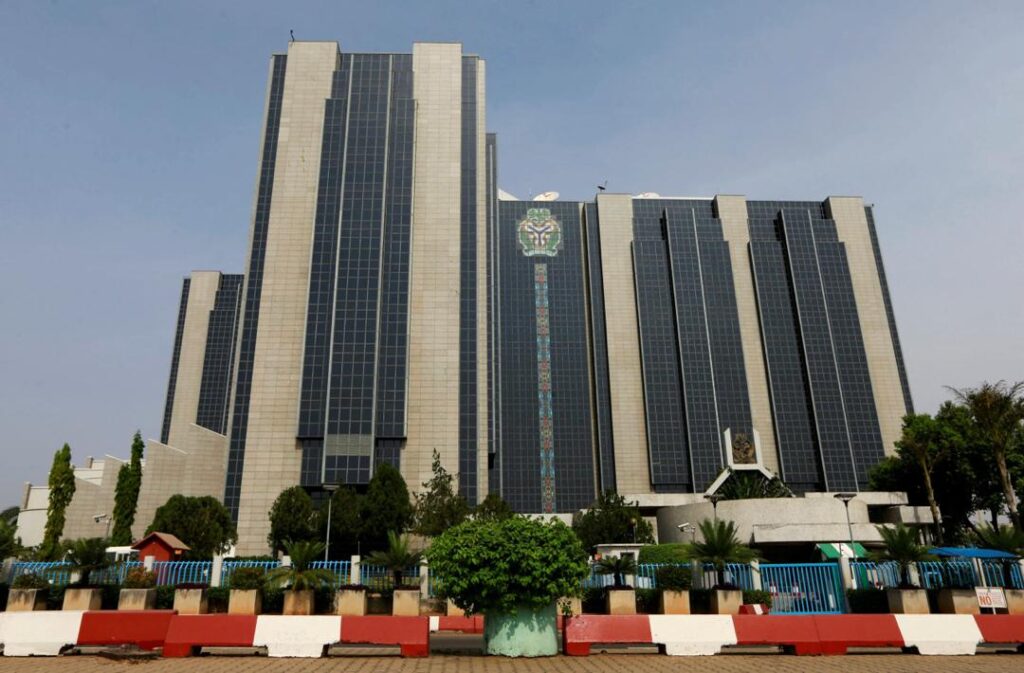
LAGOS – Nigeria’s gross external reserves have climbed to a historic $51.86 billion, marking their highest level in over 17 years and officially surpassing the central bank’s year-end target. Data released by the Central Bank of Nigeria (CBN) confirms the new figure, which beats the apex bank’s macroeconomic outlook projection of $51.04 billion set for the entirety of 2026. The rapid accumulation represents a significant 38.6% year-on-year expansion compared to the $37.33 billion recorded during the corresponding period in 2025, heavily bolstering the country’s external balance sheet. Financial analysts attribute this accelerated growth to robust foreign portfolio inflows, sustained global crude oil prices, and deep regulatory reforms targeting formal foreign exchange channels and remittances. The reserve surge has strengthened the naira’s standing, with the local currency maintaining relative stability at N1,379.65 per dollar at the official Nigerian Foreign Exchange Market (NFEM). This milestone comes amid recent calls from the International Monetary Fund (IMF) advising Nigeria to moderate its aggressive dollar stockpiling to allow for a healthier, market-driven adjustment of the naira. The enhanced liquidity buffer provides the CBN with substantial leverage to defend the local currency, boost investor confidence, and shield the domestic economy against anticipated second-half global market shocks.
Fitch Warns Nigerian Banks Face Deep Structural Credit Risks From Evolving Climate Crisis

LAGOS – Nigerian banks face structural credit profile and asset quality threats over the next few decades due to high concentrations in climate-sensitive sectors, according to a new report by Fitch Ratings titled “African Banks Have Structural Exposure to Climate Risk; Credit Implications Evolving”. Fitch predicts that by 2050, Nigeria will score between 50 and 55 out of 100 for combined climate vulnerability, matching the high-risk profiles of South Africa, Kenya, and Egypt. “Climate risk is becoming a structural consideration for African banks’ credit profiles,” Fitch stated, noting that recurrent environmental shocks and policy shifts will inevitably weaken borrower repayment capacity and hit asset quality. Lenders are heavily exposed to transition risks in carbon-intensive hydrocarbons, alongside physical risks like severe flooding and droughts that threaten collateral values in the domestic agriculture and real estate markets. The agency expects these environmental pressures to become financially material to bank balance sheets by the mid-2030s, ultimately translating into higher non-performing loans through weakened borrower cash flows. The warning arrives as local lenders navigate a fragile macroeconomic landscape, marked by the central bank’s withdrawal of regulatory forbearance on oil exposures that recently pushed sector non-performing loans to 8%. However, the system remains resilient. Over 30 Nigerian financial institutions successfully met the Central Bank of Nigeria’s mandatory trillion-naira recapitalization deadline to cushion their balance sheets against immediate credit shocks. Fitch noted that while green financial instruments offer a buffer for banks to diversify funding, high local borrowing costs and underdeveloped markets will limit their near-term mitigation potential.
Nigeria’s Forex Turnover Hits Record $3.05B as Weekly Liquidity Surges 7.7%
LAGOS — Nigeria’s foreign exchange market recorded its strongest weekly liquidity of the current quarter, with total turnover jumping 7.67 percent to hit $3.053 billion in the week ended July 3, 2026. The significant surge in aggregate market activity reflects an influx of transactions across both the FX Spot and Derivatives windows, reversing previous periods of sluggish capital inflows. Data tracks a robust increase from the $2.835 billion transaction volume recorded in the preceding week ended June 26, 2026, marking a critical milestone for official trading platforms. The crossing of the three-billion-dollar threshold signals a major boost for investor confidence, following months of acute dollar scarcity and severe exchange rate volatility across local windows. This liquidity expansion follows aggressive foreign exchange market reforms implemented by the Central Bank of Nigeria aimed at unifying trading segments and eliminating speculative parallel market premiums. Recent policy adjustments, including high-yield monetary tightening and enhanced transparency in official interventions, have successfully stimulated autonomous capital inflows from foreign portfolio investors. Market analysts project that the sustained momentum in the spot and derivatives segments will help stabilize the local currency, relieving ongoing import cost pressures on businesses nationwide.
Nigeria Central Bank Revokes 46 Microfinance Licenses Amid Liquidation Wave
LAGOS — The Central Bank of Nigeria (CBN) has revoked the operating licenses of 46 microfinance banks effective July 1, 2026, triggering an immediate shutdown and liquidations by federal deposit insurers. The regulatory crackdown, authorized by CBN Governor Olayemi Cardoso, targets institutions facing severe undercapitalization, unauthorized operational closures, and prolonged cessation of financial intermediation across 18 states and the Federal Capital Territory. “The revocation of the licenses is part of the Bank’s ongoing efforts to safeguard the stabilityof the financial sector, protect depositors, and ensure that licensed institutions comply withcurrent laws and regulatory requirements,” CBN stated in statement on Wednesday. Macroeconomic Pressures Trigger Structural Failures The mass closures come as Nigeria’s microfinance sub-sector battles persistent macroeconomic headwinds, including elevated inflation and high borrowing costs that have severely eroded asset quality and impaired minimum capital thresholds. The Nigeria Deposit Insurance Corporation (NDIC) said on Wednesday it has assumed control as the official liquidator, sealing physical premises and commencing automated verification systems to disburse insured funds to displaced depositors. Geographic data reveals Kano State suffered the highest casualty rate with 13 revoked licenses, closely followed by commercial hub Lagos State with 8 closures, reflecting regional vulnerabilities. Official List of Affected Microfinance Banks The full regulatory list encompasses Tier 1, Tier 2, and State-level microfinance institutions (MFBs): S/N Microfinance Bank (MFB) Category State Location 1 Minji-Se Churchill MFB Tier 1 Rivers 2 Merchant MFB Tier 2 Abia 3 Janmaa MFB Tier 1 Kwara 4 Busu MFB Tier 2 Niger 5 Gold MFB Tier 1 Lagos 6 Zain MFB (formerly Dawakin Tofa) Tier 2 Kano 7 Bompai MFB Tier 1 Kano 8 Ajwa MFB (formerly Gezawa) Tier 2 Kano 9 Now Now Digital MFB Tier 2 Kano 10 Crystabel Microfinance Bank Tier 1 Bayelsa 11 Chanelle MFB State Lagos 12 Abia SME MFB Tier 1 Abia 13 Kamba MFB Tier 2 Kebbi 14 Iwade MFB Tier 2 Ogun 15 Winview MFB Tier 1 FCT (Abuja) 16 Zuru MFB Tier 2 Kebbi 17 Minjibir MFB Tier 1 Kano 18 Shanono MFB Tier 2 Kano 19 Sumaila MFB Tier 2 Kano 20 Rimin Gado MFB Tier 2 Kano 21 Mwaghavul MFB State Plateau 22 Sycamore MFB Tier 2 Kano 23 TOFA MFB Tier 2 Kano 24 Safegate MFB Tier 1 Lagos 25 Creekline MFB Tier 2 Delta 26 Bestar MFB Tier 1 Oyo 27 Livingspring MFB Tier 1 Cross River 28 Apple MFB Tier 2 Ogun 29 Stanford MFB State Akwa Ibom 30 Frontline MFB Tier 2 Anambra 31 Zafec MFB Tier 2 Kaduna 32 Supreme MFB Tier 1 Lagos 33 Bejin-Doko MFB Tier 2 Niger 34 Kanopoly MFB Tier 1 Kano 35 Bellbank MFB (formerly Tsanyawa) Tier 2 Kano 36 Yeneng MFB Tier 2 Plateau 37 Creditville MFB Tier 1 Lagos 38 MBAG MFB Tier 1 Lagos 39 Straight Sahara MFB Tier 1 Benue 40 Ourpass MFB Tier 2 Ondo 41 Verdant MFB Tier 1 Lagos 42 Basawa MFB Tier 2 Kaduna 43 Casha MFB Tier 2 FCT (Abuja) 44 Esteem MFB Tier 2 Kano 45 Entrepreneur MFB Tier 1 Lagos 46 Avantus MFB Tier 2 Osun Regulatory Warning: The NDIC has strongly advised the public against unauthorized transactions with these entities. Interference with records or asset removal remains a statutory violation punishable under federal banking laws.
Nigeria FX Turnover Surges to $2.84B as Central Bank Interventions Fuel Liquidity Boost
LAGOS – The Nigerian Foreign Exchange market recorded a total turnover of $2.84 billion in the week ended June 26, 2026, driven by a sharp rise in trading activity across both spot and derivatives segments. This massive volume underscores a significant surge in market liquidity, reflecting heightened participation from institutional investors, corporate treasuries, and global portfolio managers navigating shifting global economic indicators. Both the immediate spot transactions and longer-term derivatives desks witnessed accelerated momentum, providing deep liquidity blocks that helped stabilize exchange rate volatility throughout the five-day trading window. Market analysts attribute this aggressive transaction volume to strategic central bank interventions alongside a sustained influx of foreign capital seeking optimal yields within local debt instruments. The market momentum is heavily backed by surging external buffers, with the country’s gross foreign reserves recently hitting a 17-year high of $51.04 billion following aggressive structural reforms. Complementing this growth, net foreign reserves—adjusting for short-term liabilities and swaps—surged sevenfold over the last two fiscal years, stabilizing at a robust baseline of $34.80 billion. The derivatives segment particularly excelled as corporate entities aggressively locked in forward rates, utilizing hedging mechanisms to mitigate potential future currency exposure and operational risks. This liquidity expansion marks a robust recovery compared to previous monthly averages, signaling renewed macroeconomic confidence and improved structural efficiency within the nationwide clearing system. The massive weekly aggregate solidifies the market’s current bullish trajectory, positioning the financial ecosystem for sustained capital inflows and tighter bid-ask spreads moving into the next fiscal quarter.
FX Inflows Push Nigeria’s External Reserves to $51.04bn, 17-Year High
LAGOS – Nigeria’s gross external reserves climbed to $51.04 billion on Thursday, marking their highest level in roughly 17 years due to robust foreign exchange inflows and improved market conditions. Data from the Central Bank of Nigeria (CBN) confirmed that gross reserves reached $51,035,544,733.65. This represents the apex bank’s highest reserve stockpile since January 20, 2009, when buffers touched $51.07 billion. The aggressive dollar accretion provides the CBN with substantial ammunition to defend the local currency. Analysts project the current balance guarantees an import cover well exceeding nine months of domestic demand. This milestone follows a significant macroeconomic validation in May 2026, when S&P Global Ratings upgraded Nigeria’s sovereign credit rating to ‘B’ from ‘B-‘, citing a doubling of net foreign currency flows. The reserve accumulation aligns with aggressive monetary tightening. High-yield Treasury bills, featuring effective yields tracking above 19%, continue to attract significant foreign portfolio investments into the fixed-income market. Nigeria’s total capital importation surged to $10.37 billion in the first quarter of 2026, with foreign portfolio investment (FPI) accounting for over 95% ($9.86 billion) of that figure. Underlying structural shifts have further alleviated pressure on the liquid buffer. Increased domestic refining output from the Dangote Refinery has drastically reduced autonomous foreign exchange demand for petroleum imports. The CBN previously anticipated this recovery in its 2026 macroeconomic outlook, projecting reserves would hit $51.04 billion on the back of sustained structural reforms and enhanced non-oil revenue mobilization.
Nigeria’s Current Account Surplus Soars 255% to $4.98 Billion in Q1 2026 As Fuel Imports Plummet
LAGOS — Nigeria’s current account surplus jumped 255.71% quarter-on-quarter to $4.98 billion in the first quarter of 2026, driven by a dramatic collapse in refined petroleum imports, Central Bank of Nigeria (CBN) statistics show. The surplus rose from $1.40 billion in the fourth quarter of 2025, representing a significant turnaround for Africa’s largest economy as domestic refining capacity heavily displaced foreign fuel dependencies. The external balance looks even stronger compared to the first quarter of 2025, when the country recorded a lower current account surplus of $3.41 billion, according to provisional balance of payments data. The primary catalyst for the expansion was the goods account surplus, which surged 236.16% to $5.95 billion from $1.77 billion in the previous quarter, bolstered by steady crude oil and gas revenues. Crucially, Nigeria’s refined petroleum imports plummeted by 87.50% to $0.31 billion in the first quarter, down from $2.48 billion in the final three months of 2025, rewriting traditional trade dynamics. Crude oil export earnings climbed nearly 20% to $8.11 billion from $6.77 billion in the preceding quarter, while gas exports rose 12.95% to $2.53 billion, reinforcing top-line trade growth. Away from Q1 2026, supply disruption in the Middle-East has continued to bolster Nigeria’s oil earnings; with net windfall of over $6.51 billion (approximately N9.77 trillion) above the federal government’s 2026 national budget, between February to May 2026. However, The CBN noted that the sharp drop in fuel imports follows the full commercial scaling of local mega-refineries, (particularly the Dangote refinery) which have systematically reduced the nation’s historical reliance on imported petrol and conserved scarce foreign exchange. Higher trade receipts helped push Nigeria’s gross external reserves up to $48.35 billion at the end of March 2026, compared to $45.75 billion recorded at the close of December 2025. However, the services account deficit widened to $3.71 billion from $3.32 billion, while diaspora remittances moderated slightly to $5.30 billion from $5.72 billion in the previous quarter. “The increase in net out payments for services was largely due to increases in net debits in travel and other business services.” CBN noted. Net errors and omissions also widened to negative $7.49 billion, indicating that substantial unrecorded capital outflows continue to mask the full extent of the country’s formal trade recovery.
Nigeria Reserves Hit $50.8B as Africa’s Top Economy Bolsters FX Buffers
LAGOS – Nigeria’s gross external reserves increased by more than $1 billion in the first half of June 2026, extending previous macroeconomic gains and significantly strengthening the country’s foreign exchange buffers. Data from the Central Bank of Nigeria (CBN) showed that the reserves rose from $49.80 billion on June 1 to $50.81 billion by June 15, representing a two-week surge of $1.01 billion. The recent spike follows a strong recovery cycle. The reserves previously peaked at a 13-year high of $50.45 billion in February before a marginal, temporary moderation to $49.49 billion in mid-May. This financial accumulation bolsters Nigeria’s import cover well beyond the international standard of 4.3 months, giving the apex bank more leverage to defend the local currency and stabilize volatile foreign exchange markets. The reserve growth is propelled by rising diaspora remittance inflows through licensed operators, sustained non-oil export receipts, and the phased implementation of the strategic Nigeria Tax Act to boost autonomous state revenue. Furthermore, heightened local refining capacity has structurally minimized foreign exchange demand for petroleum imports, allowing the monetary authority to retain more liquid dollars within the state’s sovereign balance sheet. The steady accumulation positions the apex bank within arm’s reach of its official year-end macroeconomic target of $51.04 billion, defying more conservative year-end projections from international rating agencies. The International Monetary Fund recently acknowledged Nigeria’s aggressive fiscal reforms, noting that structural policy adjustments have successfully built economic resilience and dramatically improved overall external outcomes despite lingering global uncertainties.
Nigeria moves to protect banks with strict limits on affiliate exposure
LAGOS – The Central Bank of Nigeria (CBN) has proposed strict limits on loans, asset transfers, and financial exposures between banks and their affiliates to prevent financial distress from spreading across corporate banking groups. Under the new draft guidelines, banking subsidiaries are prohibited from extending credit or guaranteeing obligations of closely linked entities, including financial holding companies, without prior written approval from the apex bank. Any authorized loan granted by a commercial bank to its parent holding company will be deducted from the bank’s core capital, directly impacting its regulatory Capital Adequacy Ratio. Furthermore, cross-board memberships are capped at 20 percent, while holding companies must maintain a regulatory capital buffer exceeding the combined minimum capital of their subsidiaries by at least 20 percent. The policy forbids banks from purchasing low-quality assets from struggling sister companies. It also bans the unconsented sharing of customer data and the utilization of depositor funds for affiliate operations. This structural ring-fencing follows the conclusion of Nigeria’s 24-month banking recapitalization exercise. The CBN is shifting focus toward risk containment as financial institutions aggressively expand into fintech and regional markets. Stakeholders and financial institutions have until July 9, 2026, to submit feedback on the draft framework before full implementation and enforcement under the Banks and Other Financial Institutions Act.