

Currency outside Nigerian Banks Plunges to N4.8 Trillion, Hitting Nine-Month Low
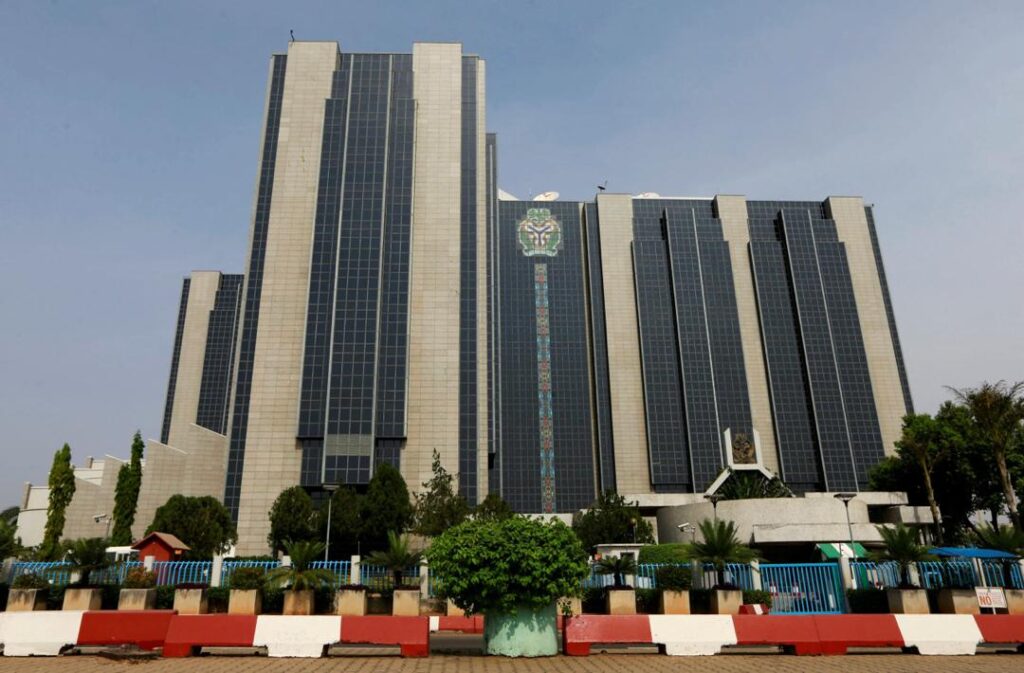
Currency held outside Nigerian banks fell to N4.8 trillion in July 2026, reaching its lowest level since November 2025 as physical cash circulating outside the banking system declined for a second consecutive month. Latest money and credit data from the Central Bank of Nigeria revealed that high benchmark interest rates and targeted liquidity mop-ups successfully encouraged economic agents to return idle physical cash into high-yielding bank accounts. The consecutive monthly reduction marks a notable reversal from earlier liquidity surges, returning cash metrics toward levels last observed in late 2025 amidst aggressive policy adjustments by the apex bank. Broader adoption of digital payment channels, instant transfers, and agent banking rails also significantly reduced the necessity for physical cash in daily commercial transactions across urban and rural trading hubs. The shift enhances the central bank’s policy transmission efficiency, giving authorities firmer control over broad money supply dynamics as they work to rein in inflation and maintain overall macroeconomic stability. Commercial banks stand to benefit from the growing deposit pool, which bolsters institutional liquidity ratios and lowers funding costs while drawing more of Nigeria’s massive informal economy into trackable financial channels.
Inside Nigeria’s $53 Billion FX Buffer: Why Cardoso’s Strategy Is Working

The panic that gripped Nigeria’s foreign exchange markets just a few years ago seems to be firmly in the rearview mirror. Data from the Central Bank of Nigeria (CBN) confirms that the nation’s gross foreign exchange reserves crossed the $53.11 billion mark in late August 2026. This is not just a nominal victory; it is the highest reserve buffer Africa’s most populous nation has recorded since January 2009. More importantly, it signals that the orthodox monetary policy framework championed by CBN Governor Olayemi Cardoso is yielding tangible macroeconomic dividends. To understand the magnitude of this recovery, one must look at the trajectory. Opening the year at $45.56 billion, the reserves have seen a year-to-date accretion of over $7.5 billion, a 16.5% expansion that has pushed the apex bank past its initial 2026 baseline projection of $51.04 billion a full four months early. Today, the liquid component of this buffer provides upwards of 11 months of import cover, dwarfing the international benchmark of three months and significantly de-risking Nigeria’s external debt servicing capacity. But the real story for financial markets is not just the total sum; it is the strategic pivot in how these dollars were accumulated. Halting the Naira Artificial Defense For years, the CBN bled foreign reserves in a costly, attempt to artificially peg the naira. Cardoso’s most critical reform was stepping back from the market. By allowing the currency to find its market-clearing rate, the CBN effectively ended the era of subsidizing foreign exchange for arbitrageurs. Official interventions now account for a fraction of total FX turnover—hovering near a mere 1.2% in 2025—which immediately plugged the structural leak that had previously drained the nation’s buffers. The result? The naira has found relative stability around the N1,338 – N1,349/$1 band, with the spread between the official window and the parallel market virtually collapsing. The Remittance Pivot Rather than relying solely on crude oil receipts which remain vulnerable to global price shocks and localized production shut-ins, the CBN engineered a deliberate diversification of dollar inflows. By cleaning up the regulatory framework for International Money Transfer Operators (IMTOs) and ensuring market-reflective pricing, the apex bank successfully redirected diaspora flows from shadow channels back into the official system. The CBN is currently capturing roughly $600 million monthly in remittance inflows, aggressively tracking toward a $1 billion monthly target. Orthodox Tightening and Yield-Hungry Capital By holding the Monetary Policy Rate (MPR) at elevated levels—currently at 26.5%—the CBN has systematically mopped up excess naira liquidity while making local fixed-income assets incredibly attractive. This orthodox tightening has reversed years of capital flight. Yield-hungry Foreign Portfolio Investment (FPI) has flooded back into government securities and short-term debt instruments, injecting fresh foreign exchange liquidity directly into the interbank market. By holding spot yields on 364-day Open Market Operations (OMO) bills and Treasury Bills between 19.8% and 22%+, the apex bank created a compelling carry-trade environment for offshore investors. The market response was immediate: Foreign Portfolio Investment into local debt securities surged to $4.95 billion in Q4 2025, more than doubling the $2.11 billion recorded in the previous quarter, before total portfolio inflows expanded by another $6.03 billion in Q1 2026. This foreign appetite has consistently played out in primary market sales, where offshore accounts frequently commanded up to 79% of foreign allocations in single auctions. A prime example occurred in August 2026, when a N1.0 trillion OMO offering triggered a staggering N4.4 trillion in aggregate bids. This 400% oversubscription allowed the CBN to mop up N1.9 trillion in excess system liquidity while funneling organic, market-driven dollar inflows directly into interbank trading channels. The Recapitalization Catalyst Adding to this accretion was the successful conclusion of the 24-month banking recapitalization exercise on March 31, 2026. The policy yielded N4.65 trillion in total fresh capital across 33 fully compliant lenders. Crucially for the CBN’s foreign exchange balance sheet, 27.5% of those funds—roughly $707 million—came via direct foreign equity and portfolio investment. This delivered a non-debt, organic influx of dollar liquidity straight into the financial system. Combined with the concurrent expansion of domestic refining capacity, which dramatically stripped away the structural demand for petroleum-import dollars, the apex bank was able to retain its reserve gains rather than fighting structural leaks. Looking Ahead “When we were building the reserves, there was a lot of cynicism,” Cardoso recently noted, reflecting on the days when external obligations mounted and market confidence evaporated. “We said we needed to diversify our reserves, and we went into remittance inflows.” The $53 billion milestone proves that orthodox macroeconomics, driven by transparent data and disciplined monetary policy, works. However, the ultimate test for the CBN will be sustainability. Maintaining this 17-year high will require holding the line on liquidity tightening, resisting the political temptation to revert to aggressive market interventions, and continuing to deepen the transparency of the official FX window. For now, the data is unequivocal: Nigeria’s macroeconomic buffers are back.
Nigeria Net Foreign Exchange Inflow Hits $4.94 Billion as Central Bank Policy Reforms Yield Results
Nigeria’s net foreign exchange inflows expanded 38% year-on-year to reach $4.94 billion in March 2026, up from $3.58 billion in March 2025, validating deliberate Central Bank of Nigeria policy measures. Official data from the CBN Q1 2026 Statistical Bulletin showed that despite this strong annual surge, net flows eased 29% month-on-month compared to February 2026 under controlled liquidity interventions. The intentional monthly moderation aligns with the apex bank’s monetary management strategy, balancing short-term market stabilization against foreign debt servicing commitments and foreign exchange market smoothing interventions. The 38% annual expansion reflects the structural success of the central bank’s ongoing policy recalibrations, including interest rate adjustments and unified operational frameworks designed to boost investor confidence. Supported by these monetary policy frameworks, Nigeria’s gross foreign exchange reserves recently crossed $52 billion, offering unprecedented operational backing for external obligations and domestic liquidity stability.
Nigerian Central Bank Absorbs $1.6 Billion in Record OMO Auction Demand
The Central Bank of Nigeria mopped up N2.603 trillion at its Thursday Open Market Operations auction after total investor demand surged past N4.93 trillion, significantly exceeding the N600 billion on offer. Official auction results published by the Central Bank of Nigeria revealed an overall subscription rate exceeding 820%, driven by massive liquidity across the domestic banking system. Investors displayed a strong preference for longer-dated paper, placing N3.657 trillion in bids for the 138-day bill, which cleared at a stop rate of 20.01%. Demand for the 103-day tenor reached N1.268 trillion against a N300 billion offer. The central bank allotted N449.74 billion for the shorter bill at a 20.39% stop rate. The aggressive allotment expands the apex bank’s liquidity mop-up following its recent policy overhaul, which reopened OMO bill participation to retail, corporate, and non-bank institutional investors for the first time in seven years. The policy shift also dismantled discount window restrictions on primary market operations, empowering monetary authorities to absorb excess systemic liquidity ahead of anticipated election-related fiscal spending.
Nigeria: CBN Lifts Discount Window Restrictions in 10th Major Cardoso Policy Shift
The Central Bank of Nigeria has cleared access to its Discount Window for FX and government debt dealers, marking the tenth major policy reform under Governor Olayemi Cardoso. The directive, issued in an August circular, removes long-standing penalties that barred active market makers from emergency central bank liquidity. Under the revised rules, financial institutions active in the Nigerian Foreign Exchange Market and primary Treasury Bill auctions can now access the Standing Lending Facility without restriction. The regulator also lifted its suspension on Tenored Repurchase Operations, restoring collateralized borrowing across tenors ranging from four to 90 days to ease interbank funding pressure. To broaden market participation, the central bank expanded Open Market Operations (OMO) primary and secondary auctions to non-bank financial institutions, corporate entities, and individual retail investors through commercial banks. However, the CBN retained its strict prohibition against accessing the Discount Window and participating in OMO auctions on the same day to prevent systemic arbitrage and speculative borrowing. This liquidity overhaul represents the tenth structural policy pillar deployed by the Cardoso administration since taking charge of the apex bank in September 2023. It follows previous landmark initiatives, including FX market unification, clearing the $7 billion currency backlog, raising bank capital thresholds, and overhauling Bureau De Change operational guidelines. Earlier reforms focused on orthodox inflation targeting, standardizing Cash Reserve Ratio debits, streamlining diaspora remittances, and enforcing anti-money laundering frameworks to exit international high-risk monitoring. Financial analysts view this latest move as a transition from early emergency stabilization toward fine-tuning money market infrastructure and unfreezing commercial bank balance sheets. By removing trading friction for FX dealers and primary debt bidders, the central bank aims to deepen liquidity and improve price discovery across local capital markets. Simultaneously, opening OMO debt paper to retail and corporate investors allows the central bank to mop up excess systemic liquidity more effectively from non-bank pools. The circular took immediate effect, applying to all Deposit Money Banks, authorized dealers, and institutional participants in Nigeria’s financial markets.
Naira Rallies to N1,360/$ as Nigeria’s FX Liquidity Boosts Official Market
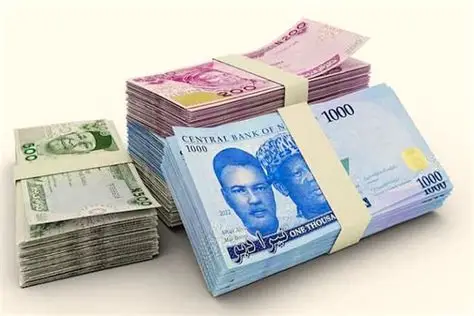
The Nigerian naira strengthened against the U.S. dollar on Monday, extending recent gains as increased foreign exchange liquidity and robust external reserves continued to support the local currency. According to official data published by the Central Bank of Nigeria, the spot rate at the Nigerian Foreign Exchange Market appreciated by 0.41% from Friday’s close of N1,365.69 per dollar to settle at N1,360.14 per dollar. Trading dynamics at the official window reflected broad-based strength, with the intraday high rate improving to N1,364.25 per dollar while the intraday low rate touched N1,358.50 per dollar. The latest gain builds on a sustained firming trend from late July, when the currency traded near N1,368.22 per dollar, underscoring reduced volatility across the official market. Market sentiment has been buoyed by Nigeria’s growing foreign exchange buffers, which reached a 17-year high above $52 billion following surging domestic portfolio inflows and strategic apex bank policy interventions. Analysts attribute the exchange rate stability to elevated domestic yields, attractive carry trade opportunities, and steady crude oil production, which continue to temper systemic foreign currency demand.
Nigerian Naira Holds Firm at N1,365 as FX Liquidity Surges
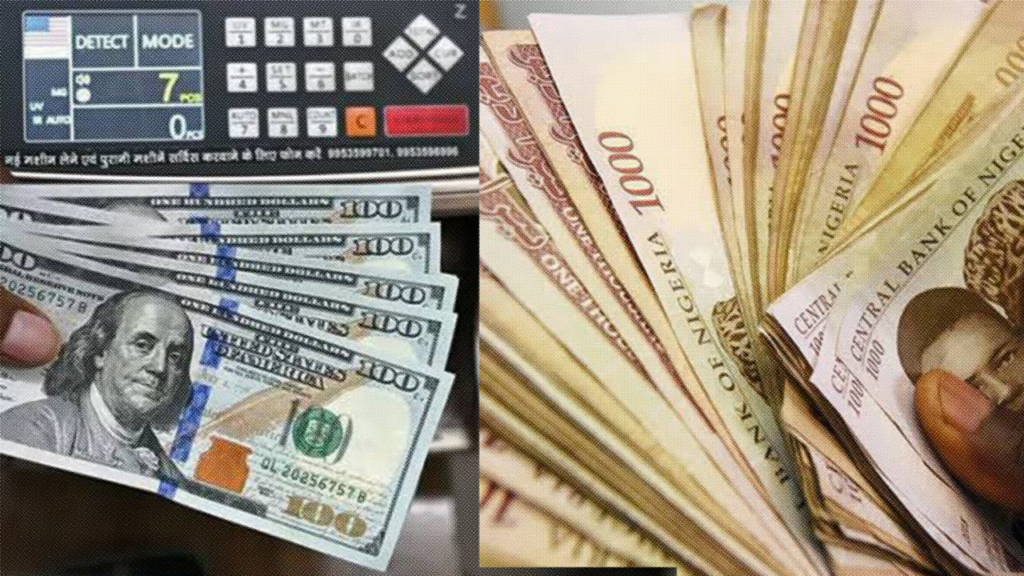
The Nigerian Naira ended the trading week on a strong footing, stabilizing at N1,365 per US Dollar despite widespread foreign exchange volatility across emerging markets. On Thursday, the spot exchange rate closed at N1,365.10 per dollar as daily market turnover surged to a weekly peak of $878.55 million. Friday’s trading session saw the currency move to close at N1,365.69 per dollar, reflecting balanced order flow as market liquidity normalized. Official data from the FMDQ Exchange revealed that market liquidity surged mid-week, driven by heightened interbank trading. Daily FX turnover reached a peak of $878.55 million on Thursday, up significantly from earlier sessions, underscoring resilient local supply and strong institutional participation in the official window. This liquidity cushion follows record market activity in the first half of 2026, during which secondary market turnover on the FMDQ platform exceeded N362 trillion. Offshore interest remains supported by attractive yields on Open Market Operation bills, while national gross foreign reserves hover near $52 billion, insulating the local currency against external shocks.
Nigeria Business Sentiment Holds Firm Despite Severe Triple-Headwind Pressure
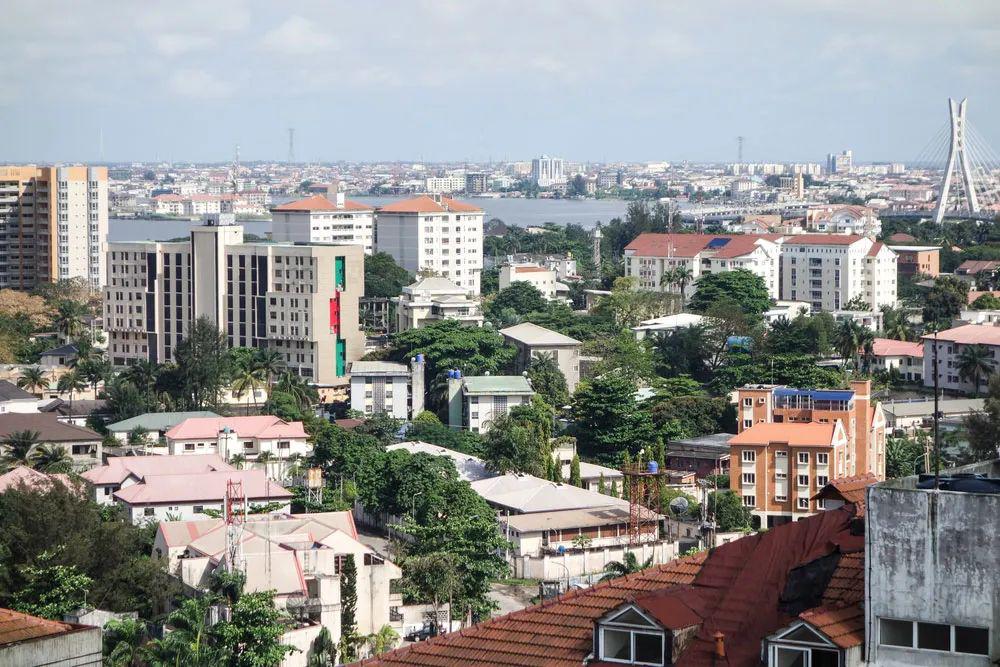
Multiple taxation, insecurity, and high interest rates are the top three business constraints in Nigeria, severely dampening corporate activity across sub-Saharan Africa’s key industrial hubs. According to the Central Bank of Nigeria July 2026 Business Expectations Survey, taxation ranked highest at 70.8 points, followed closely by insecurity at 69.7 points and prohibitive borrowing rates at 66.3 points. Despite these structural impediments, overall corporate sentiment maintained positive momentum, recording a overall Business Confidence Index of 5.7 points for the current month. Sector-by-sector confidence varied markedly across the economic landscape. Industry recorded solid sentiment at 11.5 index points, while Services posted 3.6 points and Agriculture moderated sharply to 3.4 points. Internal operational confidence was highest in the Electricity, Gas, and Water Supply sector at 59.4 points, followed by Mining & Quarrying at 50.0 points. The utility sector also demonstrated the strongest operational capacity, leading expansion expectations for August 2026 with 85.7% of surveyed firms planning business growth. Medium-term macro expectations remain robust across all sectors, rising to 20.0 points for August, 27.8 points over three months, and 35.3 points across six months. This sectoral optimism is driven by rising consumer demand and economic diversification, offsetting concerns over double-digit inflation, elevated energy costs, and persistent geopolitical uncertainty. The findings emerge as the government pursues tax simplification and structural reforms, while monetary policy maintains tight liquidity to stabilize regional exchange rates.
Nigerian Banks Expand Credit Supply as Loan Defaults Decline in Q2 2026

Nigerian commercial banks expanded credit availability across major lending categories in the second quarter (Q2) of 2026 as loan default rates declined and borrowing demand strengthened. According to the Central Bank of Nigeria (CBN) Q2 2026 Credit Conditions Survey, lenders increased credit supply across secured, unsecured, and corporate segments following improved economic expectations and enhanced bank liquidity. Secured lending availability led the expansion with a net index of 24.2 points. Corporate credit availability rose to 20.4 index points, while unsecured lending supply grew moderately to 10.5 index points. Corporate loan demand grew to 15.2 index points, driven primarily by balance sheet restructuring at 24.0 index points and capital investments at 17.0 index points. Secured credit demand reached 15.1 index points. Conversely, unsecured consumer loan demand contracted to -1.2 index points due to reduced credit card usage. Participating financial institutions simultaneously recorded lower default rates across secured, unsecured, and corporate borrower categories. Lending spreads relative to the benchmark interest rate compressed to 7.8 index points for unsecured household loans, 4.7 index points for large corporations, and 5.0 index points for medium enterprises. The credit expansion coincided with the CBN retaining its Monetary Policy Rate at 26.5% in July 2026, while adjusting its corridor to +50/-450 basis points to encourage bank lending. For businesses, expanding credit supply and narrowing spreads lower real-sector borrowing costs, creating a favorable window for medium and large enterprises to refinance expensive debt and fund long-term capital projects.
Nigeria Private Sector PMI Rises in July as Agriculture, Services Expand
Nigeria’s private sector sustained its expansionary momentum in July 2026 as the Central Bank of Nigeria (CBN) Purchasing Managers’ Index (PMI) rose to 51.1 points, driven by Agriculture and Services. The latest figure represents a 1.0-point gain from June’s 50.1 reading, strengthening the composite index further above the 50.0-point threshold that separates economic expansion from contraction. Growth was anchored by resilient agricultural output and a recovery in the services sector, which offset elevated operating costs and structural pressures within industrial manufacturing. Agriculture maintained its expansion streak supported by seasonal harvests and food staple demand, while Services rebounded on higher order volumes across financial services, telecommunications, and freight logistics. The positive reading follows the central bank’s decision to retain the benchmark Monetary Policy Rate at 26.5% to combat lingering price pressures. National headline inflation eased slightly to 15.91% in June from 15.93% in May, bringing modest input cost relief to commercial enterprises. Sub-indices showed softening input price growth and steady raw material procurement, positioning the domestic economy for a cautiously optimistic third-quarter macroeconomic outlook.