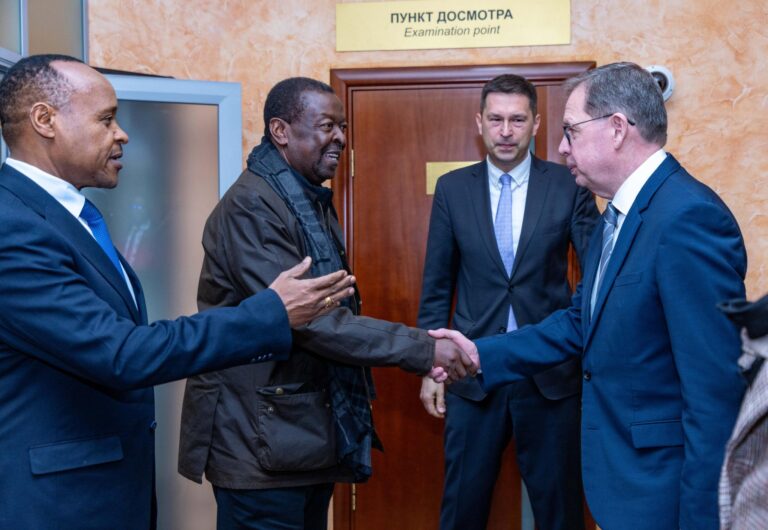


Between the 8th and 22nd of October at the UNFPA Office in Copenhagen, Lokoja Dialogues, Nigeria’s foremost Non Governmental Organisation working on expanding water access in the country, had an exhibition “Stories of a Broken Water Cycle,” bringing together community realities, policy perspectives and investment questions to show why water insecurity is not merely an environmental problem, but a threat to health, livelihoods, economic development and national security.
ThinkBusiness Africa Weekly Reports.
Water is often discussed as a resource. But what happens when the systems that make water available, safe and affordable stop working? That question ran through Stories of a Broken Water Cycle, an exhibition organised by Lokoja Dialogues in Copenhagen in October 2026. Bringing together art, community experiences and conversations with policymakers, development practitioners and private-sector leaders, the exhibition sought to make visible a crisis that is frequently treated as a collection of separate problems. The central message was simple: when water systems fail, the consequences extend far beyond the tap.
The hidden cost of water insecurity
The conversation on water infrastructure and financing challenged the assumption that communities without reliable public water services are not paying for water. They are paying in other ways: through medical bills, time spent searching for water, lost productivity and the consequences of unsafe supplies. “Behind every infrastructure investment are people whose well-being depends on whether the services work,” said Temitope Akinyemi, Special Adviser to NIgeria’s Honourable Minister of Finance on climate finance..
Irede Ajala, Managing Partner at DMCB global investment services, reinforced the point: “The question isn’t whether Nigerians pay for water. They already do. We are all paying for water.” The real question, therefore, is whether society pays to build and maintain functioning infrastructure or continues to bear the recurring costs of its absence. The solution is therefore not construction alone but the focus on the entire life cycle of water services. Infrastructure must be maintained, funded and managed long after commissioning ceremonies have ended.
Sustainable financing also requires viable revenue arrangements, effective regulation and coordination between federal, state and local governments. According to Ajala, it requires that we “fix the revenue before we raise capital.”
Water and energy are inseparable
Another theme at the exhibition was the relationship between water and energy. Pumping, treating and distributing water require reliable power. Where electricity is expensive or unavailable, water services become equally unreliable or unaffordable. Olu Adeosun, chairman of Lokoja Dialogues captured this relationship succinctly: “Water and energy succeed together, and they fail together because inherently they are actually one system.”
Solar power and decentralised energy systems offer opportunities, particularly for communities poorly served by conventional electricity infrastructure. But technology alone is not the solution. The appropriate intervention must reflect local conditions, available water resources, maintenance capacity and the ability to finance operations over time. The emphasis must be on reliable service delivery rather than sophisticated technology for its own sake. Solutions should be affordable, locally appropriate and capable of operating years after launch.
It is also a national security issue
The exhibition also examined water insecurity as a national security concern. Folarin Kuku, CEO CEFO premium logistics ltd. warned against viewing water as an isolated sector. “Water is not one sector; it sits beneath every sector.” Agriculture depends on reliable water supplies. Communities need water to sustain livelihoods. Competition over land and water can intensify existing tensions, while mining and other economic activities can threaten water quality through pollution.
These connections matter in a country where agriculture supports livelihoods on a large scale and where communities face overlapping pressures from climate variability, infrastructure deficits and insecurity. The implication is that water policy cannot be separated from economic planning, food security, public health, environmental protection or conflict prevention. Water security is part of the infrastructure of national resilience.
We must put women at the centre of all water solutions
Women’s participation in water governance was another defining theme. Women and girls often carry a disproportionate burden when water is distant, unsafe or unreliable, yet their everyday experiences do not always translate into influence over public decisions and investment priorities. Sarah Brun of the UN Women Nordic Liaison Office in Copenhagen argued that “What remains invisible remains unfunded.”
The point is not simply to increase women’s attendance at meetings. It is to ensure that women have decision-making power, access to relevant data, financing and sustained support for leadership. Patricia Akhigbe, assistant director, Nigeria’s federal ministry of budget and economic planning, expressed the challenge directly: “We cannot fix the broken water cycle with half the population excluded from the solution.” Women who collect water, manage households, support local economies and understand the practical realities of community water access should help shape the systems intended to serve them.
From stories to solutions
The Copenhagen exhibition brought together several dimensions of the same challenge: financing, energy, infrastructure maintenance, national security, gender, urban planning and community participation. Its broader contribution is to connect these issues rather than treat them as separate policy conversations. Water infrastructure must be technically appropriate, financially sustainable, responsive to communities and supported by effective institutions.
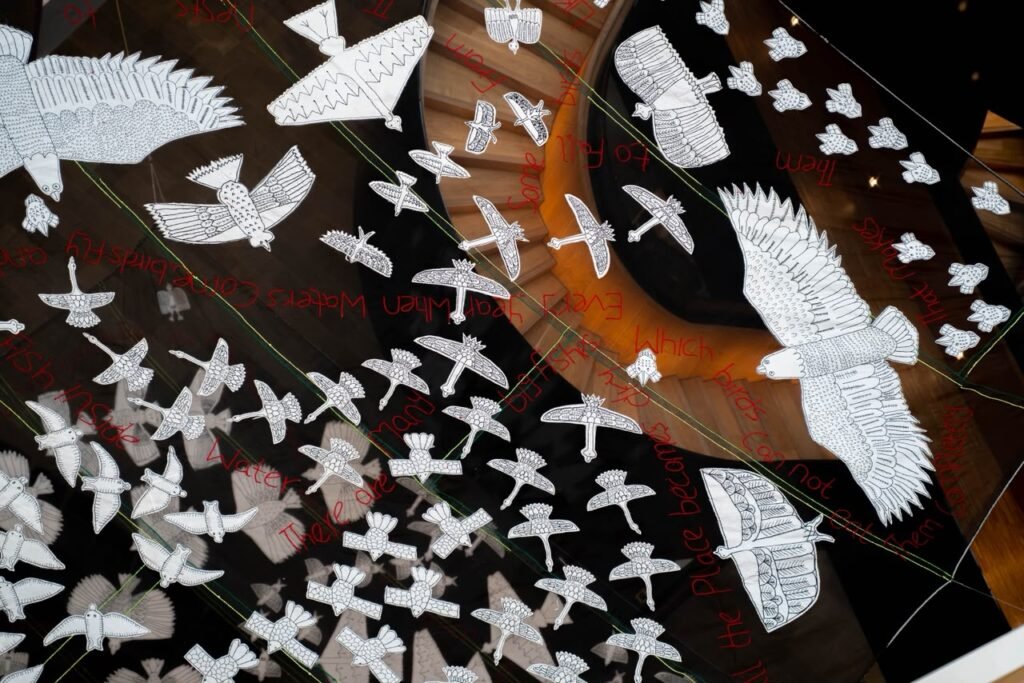
Lokoja Dialogues seeks to build that connection between lived experience and practical action. The task is to move from listening to communities, to understanding the problem, designing workable interventions, mobilising finance and delivering services that can be sustained and scaled. The stakes are considerable. Water is essential to health, education, food production, industry, livelihoods and social stability. A failure in the water cycle can therefore become a failure across many parts of society.
The challenge is no longer simply to acknowledge that water matters. It is to organise public institutions, investment and community participation around the reality that when the water cycle breaks, everything connected to it begins to break.