

Nigeria: Cardoso Snags Global ‘Central Bank of the Year’ Award in London as Reforms Pay Off

LAGOS — Central Bank of Nigeria (CBN) Governor Olayemi Cardoso formally received the prestigious 2026 Central Banking Central Bank of the Year Award here on Wednesday, signaling strong international approval of Nigeria’s aggressive monetary reforms. The award committee recognized the CBN’s swift return to orthodox monetary policy, decisive inflation-targeting measures, and foreign exchange market liberalization since Cardoso assumed office in late 2023. Accepting the honour, Cardoso framed the award as validation for institutional resilience, calling it an encouragement to sustain painful but necessary macroeconomic adjustments rather than a final destination for the apex bank. “According to the Governor, the Bank’s reform agenda has been guided by a clear objective: restoring confidence, strengthening institutional resilience and policy credibility, and laying a solid foundation for sustainable economic growth.” CBN stated in a post on X. The global recognition comes as Nigeria’s external reserves recently hit a ten-year high of $50 billion, providing a critical buffer for the volatile local currency amid ongoing monetary tightening. Foreign investors have lauded the bank’s structural transparency tools, including the Electronic Foreign Exchange Matching System, which effectively compressed the parallel market premium from over 60% to under 2%. Furthermore, investor sentiment improved dramatically after the CBN successfully cleared years of trapped foreign exchange forward obligations and secured Nigeria’s strategic exit from the Financial Action Task Force grey list. Crucially, the award closely follows the smooth conclusion of the CBN’s rigorous 24-month banking sector recapitalization program in March, which successfully shored up the capital bases of 33 commercial banks. Analysts note that this international endorsement gives the regulatory bank significant leverage as it continues to raise interest rates to curb sticky core inflation and stabilize domestic commodity prices. The London ceremony was attended by global financial policymakers, institutional investors, and central bank governors, highlighting Nigeria’s re-integration into the mainstream global financial ecosystem after years of unconventional interventions.
Nigeria Targets 95% Financial Inclusion by 2028 in Africa’s Largest Cashless Push
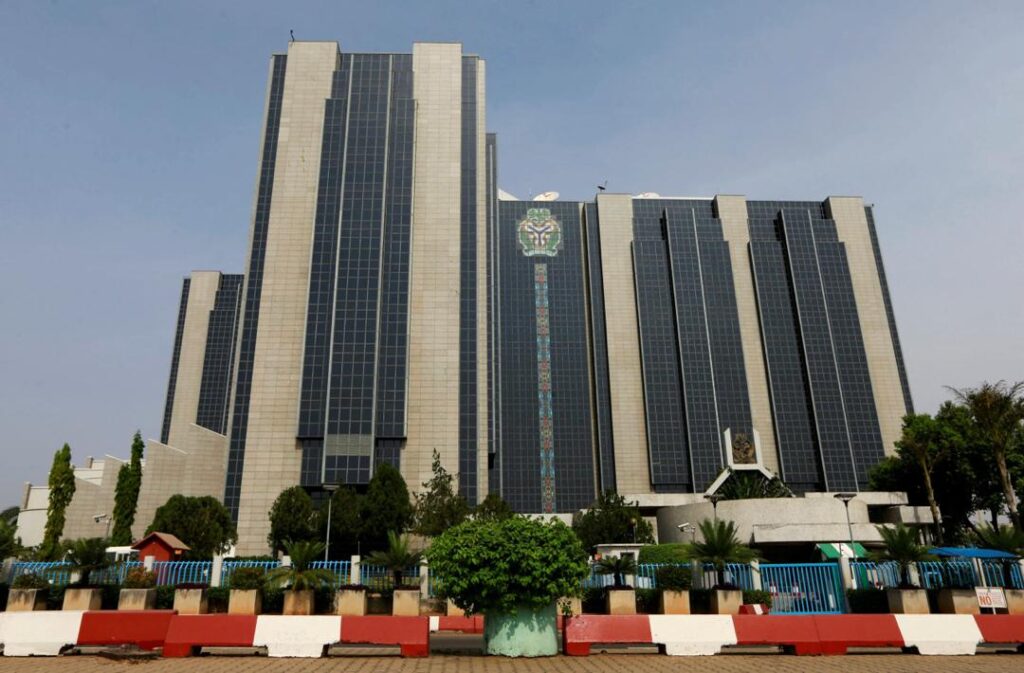
The Central Bank of Nigeria (CBN) targets 95% financial inclusion in Vision 2028, aiming to bring millions of unbanked citizens into the formal economy through aggressive infrastructure and digital identity reforms over the next 36 months. This target represents a significant leap from current tracking metrics. According to Enhancing Financial Innovation & Access (EFInA) latest financial access findings, Nigeria’s formal financial inclusion rate stands at 64%, leaving a multi-million citizen gap. The continental benchmark places Nigeria behind several regional peers. World Bank Findex metrics indicate that East and Southern African leaders like Kenya and South Africa boast formal inclusion rates exceeding 80% and 90% respectively, powered by mature mobile money ecosystems. The policy shift addresses persistent bottlenecks. Despite domestic electronic transactions exceeding 600 trillion naira in recent years, formal financial access remains starkly concentrated across urban centers, deeply marginalizing rural populations. To bridge this gap, the apex bank’s newly released Payment System Vision 2028 blueprint mandates that licensed financial operators achieve a 95% transaction success rate while strictly maintaining system uptimes of 99.999%. The strategy forces a pivot toward alternative transaction technologies. The central bank is mandating the deployment of offline-capable payment rails, utilizing Bluetooth and Near Field Communication to bypass rural network deficits. Gender disparities are also targeted. The CBN is rolling out a “Women Agent 2.0” pilot program to build trust and achieve gender parity across its nationwide network of two million banking agents. To protect grassroots consumers, the roadmap enforces automated identity verification. Moving forward, the apex bank requires systematic, real-time harmonization of Bank Verification Numbers (BVN) and National Identification Numbers (NIN) across all wallets. Furthermore, the framework introduces a centralized National Consumer Redress Portal. This ombudsman structure binds financial institutions to automated service level agreements, targeting a mandatory 90% dispute resolution rate to restore public trust. The aggressive rollout follows recent regulatory challenges. Over the past year, the CBN faced severe public scrutiny regarding cash availability, network downtime during currency transitions, and rising multi-channel fintech fraud. In response, the document outlines an auxiliary goal targeting a 70% reduction in financial fraud losses, supported by a newly established 24/7 National Payment Security Operations Centre for automated threat monitoring. Execution occurs across three distinct phases. The apex bank will initiate joint technical working groups immediately, moving into predictive artificial intelligence fraud analytics and full cross-border payment integration by 2028.
Nigeria: CBN Hikes Interest Rates to Raise N1.46 Trillion Amid Surging Demand
LAGOS – Nigeria’s central bank raised N1.457 trillion at its latest treasury bills auction, aggressively hiking yields across all tenors despite receiving overwhelming investor subscriptions that more than doubled its initial target. The Central Bank of Nigeria (CBN) capitalized on robust market liquidity, drawing N2.160 trillion in total bids against an initial N1.00 trillion offer size during Monday’s primary market auction. Result of the Auction published by CBN showed yields on the benchmark 364-day paper jumped 20 basis points to clear at 16.35%, reflecting aggressive central bank efforts to mop up banking system liquidity and defend the volatile naira. The 91-day and 182-day stop rates also increased, clearing at 16.05% and 16.19% respectively, as institutional investors successfully demanded higher premiums to lock in short-term capital. Investor demand was heavily skewed toward long-dated debt, with the one-year paper attracting N1.946 trillion in subscriptions, representing roughly 90% of total market interest during the session. The aggressive rate hikes signal a sharp reversal from May’s brief easing trend, re-aligning the CBN with a hawkish monetary stance to combat persistent domestic inflationary pressures. The central bank’s monetary policy committee previously raised its benchmark interest rate to a record 26.5% to curb persistent inflation and stabilize the macroeconomic environment
FDI $135m, FPI $9.8b: Nigeria records $10 billion foreign capital inflow in Q1
LAGOS – Nigeria’s total capital importation surged to $10.37 billion in the first quarter of 2026, marking an 83.83% year-on-year increase from the $5.64 billion recorded in Q1 2025. The National Bureau of Statistics (NBS) revealed that Foreign Portfolio Investment (FPI) dominated the inflows, accounting for 95.09% at $9.86 billion, with money market instruments taking a major share of $6.50 billion. Conversely, Foreign Direct Investment (FDI) remained low, capturing just 1.30% of the total inflows at $135.08 million, while Other Investment brought in $374.48 million, primarily driven by loans. The banking and financing sectors absorbed the vast majority of the capital, together securing over 96% of the total inflows, driven largely by UK and US investors. This dramatic tilt toward portfolio capital matches recent actions by the Central Bank of Nigeria, which maintained its benchmark interest rate at a high 26.5% to attract external liquidity buffers. Nigeria’s external reserves jumped by approximately $1.22 billion in May 2026, closing the month at a robust $49.58 billion, according to the latest data released by the Central Bank of Nigeria (CBN). The significant accumulation marks a major milestone in the apex bank’s ongoing defense of the local currency, boosting investor confidence and pushing liquid foreign assets closer to a historic $50 billion threshold. Economic analysts trace this momentum back to late 2025 reforms. The CBN’s strategic interventions have successfully choked off currency speculation and consolidated foreign exchange liquidity into the official banking ecosystem.
Defying Easing Signals, Nigerian Bank Reserves Surge as Informal Cash Drops 2%
LAGOS – Cash held outside Nigeria’s banking system declined by N104.76 billion between February and April 2026, defying expectations following the Central Bank of Nigeria’s decision to cut interest rates at its first annual policy meeting in February. Latest data from the apex bank reveals that currency outside bank vaults dropped 2.02% from N5.19 trillion in February—when the Monetary Policy Rate was reduced to 26.5%—down to N5.08 trillion in April. The contraction indicates a surprise tightening of cash liquidity within the formal economy, moving away from informal channels despite a lower benchmark interest rate that traditionally encourages spending over saving. Concurrently, total currency in circulation fell by N63.46 billion to N5.65 trillion in April, meaning currency held outside banks now accounts for 90.03% of total cash, down from 94.33% in December 2025. The Central Bank did not publish money and credit statistics for March 2026, preventing a month-on-month comparison, but the two-month aggregate trend underscores a clear structural shift. Meanwhile, commercial bank reserves held at the central bank spiked 5.68% during the review period, expanding by N1.86 trillion to hit N34.60 trillion by April 2026. This liquidity shift aligns with broader macroeconomic realities, as recent data puts Nigeria’s headline inflation rate at 15.69% for April 2026, keeping real interest rates firmly positive. Market analysts note that aggressive open market operations by the apex bank alongside stricter digital transaction compliance frameworks have continuously forced informal capital back into the formal banking system. However, cash dominance persists long-term; currency outside banks is up 11.29% year-on-year from the N4.57 trillion recorded in April 2025, showing the informal sector’s enduring grip.
Nigeria Reserves Strong Enough to Withstand Middle East Crisis – Central Bank Governor

LAGOS – The Central Bank of Nigeria (CBN) has built sufficient financial armor to shield the domestic economy from escalating geopolitical shocks and commodity market disruptions in the Middle East. Central Bank Governor Olayemi Cardoso confirmed after the conclusion of the 305th Monetary Policy Committee (MPC) meeting on Tuesday, that despite recent external friction, Nigeria’s macroeconomic indicators demonstrate structural resilience capable of handling international supply chain vulnerabilities. The country’s gross external reserves rallied to $49.49 billion by mid-May, offering a substantial defense line against imported inflation and global energy spikes. “We believe that what we have now is something that has resulted from external shocks. But notwithstanding that, we have been able to create buffers that have protected us during this period,” Governor Cardoso stated. According to the apex bank, the current reserve position provides roughly 9.04 months of import cover. This robust liquidity pool continues to anchor the foreign exchange market. The central bank insists the macroeconomic environment remains strong, treating recent price hikes as transitory disturbances rather than structural failures. National Bureau of Statistics (NBS) data reveals headline inflation ticked up slightly to 15.69 percent in April from 15.38 percent in March, disrupting an eleven-month disinflationary run. The price acceleration was heavily influenced by food inflation climbing to 16.06 percent, driven by rising transport and global maritime logistics costs. Crucially, core inflation managed to moderate to 15.86 percent. This divergence suggests underlying domestic demand pressures are responding well to existing monetary tightening frameworks. The apex bank governor expressed that the uptick in inflation is temporary and the disinflation trend will return. “We have consistently been on the path of disinflation. This, we believe, is temporary, and in due course we should go back to the trend we had embarked upon,” he said. Institutional validation arrived alongside the governor’s remarks. Earlier in May, S&P Global Ratings upgraded Nigeria’s sovereign credit rating to B from B- with a stable outlook, the first upgrade from the agency in 14 years following aggressive economic reforms. The rating agency cited Nigeria’s improved external position, market-driven exchange rate environment, and enhanced fiscal oil revenue centralization as core pillars for the positive adjustment. However, market analysts maintain that consumer prices remain heavily tied to global crude benchmarks. This exposure keeps domestic fuel distribution vulnerable to prolonged shipping disruptions.
Nigeria Inflation Hits 5-Month High as Middle East Crisis Pressures Food Prices

LAGOS — Nigeria’s headline inflation rose to 15.69% in April, marking a second consecutive monthly increase as the National Bureau of Statistics (NBS) reported a slight uptick on Friday from the 15.38% recorded in March. The current annual rate is substantially lower than the 26.82% seen in April 2025, yet the steady climb from February’s 15.06% low suggests a reversal of the disinflationary trend seen late last year. Month-on-month figures provided a different perspective, with price growth slowing to 2.13% in April. This is a significant deceleration from the 4.18% monthly spike observed just one month earlier in March. According to NBS Food inflation remains the primary pressure point, accelerating to 16.06% year-on-year. Analysts attribute this momentum to the pass-through effects of recent global fuel price shocks linked to ongoing Middle East conflicts. Core inflation, which excludes volatile energy and agricultural products, stood at 15.86% annually. Its monthly momentum slowed dramatically to 1.03%, suggesting that underlying inflationary pressures outside of food are beginning to stabilize. Geographically, rural consumers faced higher annual costs at 16.36%, while urban centers saw an inflation rate of 15.40%. Both sectors saw a reduction in the speed of monthly price increases in April. The report comes as the Central Bank of Nigeria prepares for its May Monetary Policy Committee meeting. Policymakers are currently balancing a benchmark interest rate of 26.5% against these rising annual figures. Financial analysts expect the central bank to hold rates steady next week, as the deceleration in monthly momentum suggests previous aggressive tightening is still effectively curbing broader liquidity.
Ex-IMF Economist Lamido Yuguda Assumes Role as Nigeria Central Bank Deputy Governor
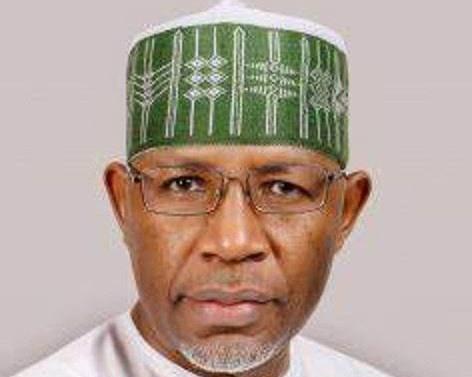
LAGOS — Nigeria Central bank announces the assumption of Lamido Yuguda as new CBN deputy governor, effective on Monday. The move signals a push for greater technical depth within the apex bank’s executive leadership team. Yuguda, a former IMF economist, transitions from his recent role as Director-General of the Securities and Exchange Commission. He replaces Bala Bello, who recently moved to the Presidency as a political economy advisor. The appointment follows Yuguda’s confirmation by the Nigerian Senate on April 29, 2026. Lawmakers fast-tracked his clearance, citing his thirty-year career at the bank where he previously managed external reserve portfolios.
Nigeria Central Bank Warns Regions Against Debt Spree as Risks Mount
LAGOS — Nigeria’s central bank cautioned sub-national governments against short-term massive borrowing as debt rises, warning that fiscal indiscretion at the state level could undermine national monetary stability and fuel persistent inflationary pressures as states control 50% of the federation revenue. The Central Bank of Nigeria (CBN) Deputy Governor, Muhammad Abdullahi, issued the warning to state governors during a fiscal-monetary session in Abuja. He noted that excessive state borrowing often bypasses productive investment, complicating efforts to transition toward a formal inflation-targeting framework. The apex bank’s stance comes as state-level debt profiles expand despite increased federal revenue allocations. High-interest short-term loans and overdrafts are reportedly being used by governors to fund recurrent expenditures and administrative costs. “He urged States to reduce reliance on overdrafts and short‑term financing, ensure that borrowing decisions align with debt sustainability thresholds, improve budget realism and revenue forecasting, prioritize expenditure, and better synchronize fiscal calendars with prevailing macroeconomic conditions.” Deputy Governor Muhammad Abdullahi said in a statement on Sunday. Official data shows sub-national domestic debt has risen significantly, threatening the national target of a 34.5% debt-to-GDP ratio for 2026. Data from the Nigerian debt office shows external debt owed by 32 Nigerian states and the Federal Capital Territory (FCT) rose by a combined $944.12 million in 2025. Experts warn that unpredictable state spending undermines the bank’s price stability goals. The CBN recently trimmed the benchmark interest rate to 26.5% as inflation showed signs of cooling. However, officials emphasized that uncoordinated state spending could force a return to aggressive monetary tightening. Regional governments are now urged to explore long-term financing like infrastructure bonds or strengthen internally generated revenues. This shift aims to align state activities with the federal government’s broader 2026 fiscal consolidation strategy. The warning follows a surge in Nigeria’s foreign reserves to $49 billion in April, a 13-year high. Despite this buffer, the central bank maintains that state-level fiscal discipline is crucial for long-term economic resilience; as It now pressures states to boost internally generated revenue rather than relying on expensive, short-term commercial bank facilities.
Investors Bet on Nigeria’s Long-Term Reforms as Central Bank T-Bill Demand Surges
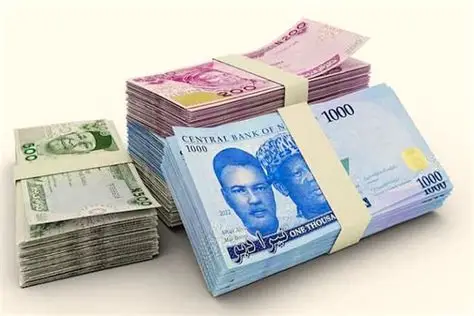
LAGOS — Investors are ramping up bets on Nigeria’s long-term economic reforms, staking heavily on long-tenor debt instruments as the Central Bank of Nigeria (CBN) continues its aggressive push to mop up excess liquidity. The CBN allotted ₦731.75 billion at its Treasury Bills Primary Market Auction on Wednesday, May 6, 2026. The move followed a massive ₦2.41 trillion subscription, reflecting robust confidence in the nation’s fiscal trajectory. Investor demand remained overwhelmingly skewed toward the 364-day instrument. This preference highlights a strategic shift among institutional players to lock in double-digit yields amid expectations of a stable macroeconomic environment. Despite the heavy demand, stop rates across all maturities witnessed marginal declines. The apex bank capitalized on the high subscription levels to lower borrowing costs while effectively managing money supply. The 364-day bill saw its rate drop to 16.15 percent, down from 16.20 percent in the previous auction. The 182-day and 91-day papers also trended lower, signaling a gradual easing of interest rate pressure. Market analysts say the oversubscription, particularly in the one-year paper, underscores trust in Governor Olayemi Cardoso’s orthodox monetary policies. These measures aim to curb inflation and stabilize the naira through consistent market transparency. The successful auction also coincides with positive sentiment following the IMF/World Bank Spring Meetings. International observers have praised Nigeria’s commitment to painful but necessary structural reforms, further boosting the appeal of domestic debt. With total subscriptions exceeding the initial ₦700 billion offer by over 240 percent, the Nigerian capital market remains a primary destination for both local and foreign portfolio investors seeking high-yield opportunities.