

Kenya Forecasts Narrower Budget Deficit of 3.6% for FY 2027/28

Kenya expects its fiscal budget deficit to shrink to 3.6% of gross domestic product (GDP) during the July 2027 to June 2028 fiscal year. The forecast signals a sharp drop from the 5.5% deficit targeted for the 2026/27 financial year. Kenyan Finance Ministry Principal Secretary Chris Kiptoo announced the updated projections during a public hearing kick-off meeting on Wednesday. “We remain committed to fiscal consolidation because it is in the country’s best interest to reduce debt and sustain economic stability,” Kiptoo stated. East Africa’s largest economy is forecast to grow by 5.1% in 2027 and 5.2% in 2028, Kiptoo noted. Annual real GDP expansion for 2026 is currently estimated at 5.0%. The National Treasury is advancing its budget calendar earlier than usual. The move accommodates Kenya’s upcoming general elections scheduled for August 2027, accelerating standard June parliamentary deadlines. The projected 3.6% target advances a multi-year fiscal consolidation plan. Fiscal policy aims to stabilize domestic debt servicing obligations while maintaining key public investments. Recent efforts follow economic pressures from rising energy prices and global market uncertainties. Official data shows domestic inflation cooled to near 4.4%, helping stabilize the local currency over recent months. Under national medium-term guidelines, the finance ministry targets further deficit reductions down to 3.3% of GDP by FY 2028/29. Revenue strategies emphasize expanding tax collections via the Kenya Revenue Authority.
World Bank Cuts Kenya’s Growth Forecast to 4.3% Citing Middle East War Fallout

Kenya’s economy is expected to expand by 4.3% this year and 4.4% in 2027, according to a World Bank report released Thursday. The 2026 forecast marks a 0.6 percentage point reduction from the lender’s November predictions. Economists attribute this downgrade directly to global trade disruptions caused by the U.S.-Israeli war on Iran. “In the short term, higher global energy prices and increased uncertainty are expected to raise production costs,” the bank stated in its latest economic update. The conflict has heavily disrupted shipping around the Strait of Hormuz. The Washington-based lender warned that rising commodity costs heavily impact households. The crisis threatens to push an additional 1 million to 2.4 million Kenyans below the $3 per day poverty line. This decelerated pace follows a 4.6% growth rate recorded last year. The downgraded 4.3% expansion projection represents Kenya’s weakest economic performance since the coronavirus pandemic slowdown of 2020. Compounding international constraints, domestic private investment is slowing down. Investors are increasingly hesitant to commit capital ahead of Kenya’s upcoming general elections scheduled for August 2027. “Approaching elections may delay private investment decisions [and] increase policy uncertainty,” the World Bank noted, warning that pre-election spending pressures could also weaken fiscal discipline. However, adequate agricultural harvests, a stable shilling exchange rate, and easing monetary policy are preventing a sharper downturn. This follows a $750 million budget-support loan approved by the World Bank last month.
Cost Squeeze Drags Kenya’s Private Sector into Third Month of Contraction
Kenya’s private sector activity shrank for a third consecutive month in May as a relentless surge in operating costs forced businesses to cut jobs and pass expenses to struggling consumers. The headline Stanbic Bank Kenya Purchasing Managers’ Index plummeted to a multi-month low, tracking well below the 50.0 neutral threshold that separates economic growth from contraction. A sharp combination of domestic fuel price hikes, increased transport levies, and lingering global supply disruptions drove total corporate input costs up at the fastest pace seen since late last year. Faced with eroding margins, companies aggressively raised their own output charges. This triggered severe customer resistance, causing new orders and domestic sales books to collapse at an accelerating rate. Compounding the downturn, firms trimmed their workforces for the first time in over a year. Businesses primarily axed temporary and casual contracts to rein in overheads amid the demand slump. The downturn hits as the government targets aggressive tax collection to manage public debt, a fiscal strategy that analysts warn could further depress consumer spending power through the second half of the year.
Kenya Headline Inflation Hits 29-Month High of 6.7% as Fuel Shocks Bite
Kenya’s headline inflation accelerated sharply to 6.7% in May 2026 from 5.6% in April, driven by domestic fuel price hikes linked to the ongoing Middle East conflict, the statistics office reported Friday. The Kenya National Bureau of Statistics (KNBS) confirmed that consumer prices reached their highest level since January 2024, pushing inflation dangerously close to the government’s upper target ceiling of 7.5%. Aggressive price surges across key non-discretionary sectors fueled the spike. Transport costs led the momentum with a 16.5% jump, while food and non-alcoholic beverages increased by 9.4% over the 12-month period. Housing, water, electricity, gas, and other fuels also ticked up by 3.4%. Collectively, these three heavy-weight categories comprise over 57% of the total national consumer inflation basket. The rapid cost-of-living acceleration comes despite aggressive state interventions. The government previously cut petroleum VAT from 16% to 8% and deployed 6.2 billion shillings ($40 million) via the fuel stabilization fund. This persistent, supply-side inflationary pressure now leaves the Central Bank of Kenya (CBK) in a complex position ahead of its upcoming Monetary Policy Committee interest rate review scheduled for June 9. Monetary policymakers previously held the benchmark Central Bank Rate steady at 8.75% during their April meeting, but this two-month inflationary surge heavily tables the prospect of a hawkish policy turnaround.
Nairobi Court Stalls Plan For U.S. Ebola Quarantine Facility At Kenyan Air Base
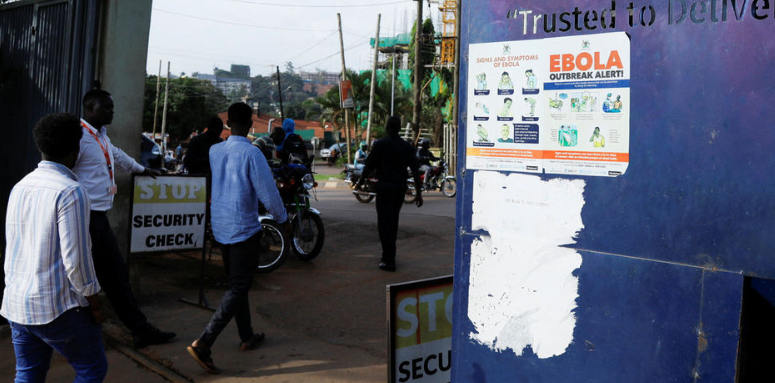
A Kenyan High Court judge temporarily suspended a United States government plan to establish a 50-bed Ebola quarantine facility at Laikipia Air Base in central Kenya following intensive legal pushback. High Court Judge Patricia Nyaundi issued conservatory orders blocking Kenya from admitting individuals exposed to or infected by Ebola under the U.S. agreement until petitions are heard and determined on June 2. Senior U.S. officials stated the facility, located at an air force base in Nanyuki, was scheduled to become operational immediately to serve asymptomatic Americans exposed to the deadly virus while responding abroad. Instead of repatriating exposed citizens directly to domestic biocontainment units, the administration planned to isolate high-risk individuals in Kenya and forward infected patients to a third country if they developed symptoms. The World Health Organization recently declared the Bundibugyo Ebola strain an emergency of international concern, tracking 1,077 suspected cases, 121 confirmed infections, and 246 suspected deaths in neighboring Democratic Republic of Congo. Medical experts and human rights organizations launched immediate legal challenges against the bilateral project, citing significant domestic public health vulnerabilities and a complete lack of transparent democratic oversight. “The secretive, unilateral establishment of an Ebola quarantine facility raises grave constitutional concerns regarding the rights to life, health, fair administrative action, public participation, and parliamentary oversight,” the Katiba Institute stated. The Law Society of Kenya and the Katiba Institute filed separate lawsuits, while the Kenya Medical Practitioners, Pharmacists and Dentists Union issued a strict 48-hour strike notice demanding details. The State Department confirmed Secretary of State Marco Rubio discussed the response with Kenyan President William Ruto, pledging $13.5 million to bolster the East African nation’s broader Ebola preparedness infrastructure. U.S. public health experts strongly condemned the external isolation strategy, warning that blocking citizens from returning home undermines global humanitarian deployments and risks accelerating localized transmission. “There are profound ethical concerns with this approach,” said Jennifer Nuzzo, director of the Pandemic Center at Brown University. “I fear these facilities could amplify the spread of the virus.”
Global Cocoa Prices Surge 24% As West African Supply Strains Trigger May Rally

Cocoa futures surged 24% month-to-date in May, reclaiming the $4,400-per-tonne threshold. This rally effectively reverses the aggressive downturn recorded in January 2026, driven by renewed supply anxieties across West African corridors. The recovery marks a significant shift from the $2,888 lows seen earlier this year. Prices are now reacting to logistical bottlenecks in Ivory Coast and worsening weather forecasts threatening the mid-crop harvest stability. Supply chains are tightening as Ivorian farmer cooperatives stage protests over unpaid deliveries from the main-crop season. These blockades in key regions like Daloa have physically restricted bean movement to international export ports. Simultaneously, below-average rainfall in Ghana and Ivory Coast has fueled fears of a structural deficit. Analysts warn that dry conditions are undermining yield projections for the remainder of the 2025/26 cocoa cycle. Market volatility is further exacerbated by Ghana’s Cocobod seeking $1 billion in domestic financing. This move comes as debt restructuring continues to complicate the board’s traditional access to international credit for crop purchases. The $4,400 breach signals a technical breakout. After months of bearish sentiment following the January glut, speculators are returning to the market, viewing the current supply disruptions as a long-term price floor. This 24% jump highlights the fragility of global soft commodity markets in 2026. While early-year forecasts predicted a surplus, political and climatic variables in West Africa remain the primary arbiters of global pricing.
Kenyan Businesses Shrinks as Fuel Price Surge Hits Demand – PMI

Kenya’s private sector activity contracted for a second consecutive month in April as record-high fuel prices drove up operating costs and stifled consumer spending across the country, Stanbic bank said on Wednesday. The Stanbic Bank Purchasing Managers’ Index (PMI) rose to 49.4 in April from 47.7 in March. While the pace of decline slowed, any reading below 50.0 indicates a contraction. Middle East geopolitical tensions triggered a mid-April fuel price hike of up to 24.2%. This surge forced businesses to pass higher transport and logistics costs directly to their customers. Consumer demand weakened as a result, particularly in the agriculture and retail sectors. High inflation, which hit a two-year high of 5.6% in April, further eroded household purchasing power. Input cost inflation reached its highest level since late 2023. About 18% of surveyed firms reported rising expenses, though many increased inventory levels to hedge against future supply disruptions. “Concerns about rising costs, tied to higher transport costs, and the ability to secure supplies, especially from the Middle East and Asia, weighed on output and new orders in sectors such as wholesale and retail trade, agriculture, and services, Christopher Legilisho, Economist at Standard Bank commented. Despite the downturn, employment grew for the 15th straight month. Companies continued hiring casual workers to support ongoing expansion projects and product diversification efforts amidst the challenging environment. The government recently cut VAT on petroleum products to 13% and deployed 6.2 billion shillings in subsidies. However, analysts warn that persistent energy price volatility remains a significant risk. The East African tea and coffee exporter maintains a 2026 growth forecast of 4.9%. Achievement of this target depends heavily on the stabilization of global oil markets and regional trade routes.
Kenya’s Economic Growth Slows Slightly to 4.6% in 2025
Kenya’s economy grew by 4.6% in 2025, according to data released by the Kenya National Bureau of Statistics on Wednesday, representing a marginal deceleration from the 4.7% recorded in 2024. The statistics office attributed the performance to sustained activity in the services sector and a recovery in agricultural output, which helped offset the impact of high interest rates and inflation. Despite the 0.1% dip, the figures suggest the East African powerhouse is maintaining stability while navigating fiscal consolidation measures and significant external debt repayment obligations that characterized the last fiscal year. Economists note that the resilience of the shilling and improved tea and horticultural exports provided the necessary buffers to keep the growth rate near the 5% medium-term target. This performance comes as the Central Bank of Kenya monitors cooling inflation, which averaged 5.2% in late 2025 and 4.4% in march 2026 providing a platform for potential monetary easing to stimulate private sector credit. However, In March, Kenya’s private sector slid into contraction for the first time in seven months, with Purchasing Managers’ Index (PMI) dropping to 47.7, down from 50.4 in February. It was driven by the geopolitical tensions in the Middle East and a sharp rise in domestic costs stifled new orders and production. With the 2026 outlook currently projected at 4.5%, the government is expected to prioritize infrastructure and digital economy investments to accelerate growth beyond the current marginal slowdown.
Kenya rejects UN claims of sexual abuse by Haiti mission officers

The Kenyan government has formally disputed a United Nations report that substantiated four allegations of sexual exploitation and abuse involving members of the multinational security mission in Haiti, marking a significant diplomatic rift over the conduct of the Kenyan-led police contingent. In a formal protest to UN Secretary-General António Guterres on Wednesday, Kenyan Foreign Minister Musalia Mudavadi rejected the findings, asserting that Nairobi’s own impartial investigations found no evidence of wrongdoing. The dispute centers on a UN Human Rights Office report, dated Feb. 16 and made public this month, which details four cases of abuse involving personnel from the Multinational Security Support (MSS) mission, recently restructured as the Gang Suppression Force (GSF). According to the UN report, three of the victims were children, including a 12-year-old, while the fourth was an 18-year-old. The UN referred the findings to the mission’s leadership for remedial action, noting it lacks direct legal jurisdiction over the force because it is a UN-backed mission rather than a formal peacekeeping operation. “The investigations conducted by Kenya were impartial and shared with all relevant stakeholders, including UN human rights offices and Haitian authorities,” Mudavadi stated. He accused the report of “misrepresenting findings” and maintained that Kenyan officers have strictly adhered to the Status of Forces Agreement and operational frameworks since their deployment in June 2024. The clash highlights ongoing concerns regarding accountability in international interventions in Haiti. The previous UN mission, MINUSTAH, was severely tarnished by widespread sexual abuse scandals and a cholera outbreak before its conclusion in 2017. The current dispute arrives at a critical juncture for the GSF. This week, the mission began incorporating new personnel from contributing nations, including an advance team from Chad, to bolster the approximately 1,000 Kenyan officers tasked with reclaiming Port-au-Prince from powerful criminal gangs. While the UN has called for “maximum transparency and no impunity,” legal experts note that under the current mandate, the power to prosecute individual officers remains solely with their home countries. Kenyan authorities reiterated their commitment to Haitian stability but insisted that their sovereign legal processes have cleared their personnel of the specific allegations cited by the UN.
Kenya central bank ends 22nd-month easing streak as 40-day Iran war sends oil shocks to Nairobi

The Central Bank of Kenya (CBK) on Wednesday abruptly halted its historic streak of interest rate cuts, freezing the benchmark lending rate at 8.75% as the 40-day-old conflict in the Middle East threatens to spill over into Kenyan fuel pumps and grocery aisles. The decision by the Monetary Policy Committee (MPC) marks the first time in nearly two years that the bank has not lowered borrowing costs. Since June 2024, the CBK had been on a aggressive “easing” path to stimulate the economy, but the outbreak of the Iran War on February 28, 2026, has forced a tactical retreat. “The Committee observed that the surge in global oil prices, now approaching $100 per barrel, presents a clear and present danger to our inflation targets,” Governor Kamau Thugge stated. “By holding the rate steady, we are building a buffer against ‘second-round effects’—where high transport costs begin to hike the price of everything from maize meal to manufactured goods.” The pause effectively signals the end of the “cheap credit” era that saw the Central Bank Rate (CBR) tumble from a high of 13.0%. While headline inflation currently sits at a manageable 4.4%, the bank warned that non-core inflation has already spiked to 10.8%, reflecting the immediate pain felt by transporters and energy-intensive businesses. Market analysts noted that the move was also likely a defensive play for the Kenyan shilling. The currency has buckled under the weight of an expensive oil import bill, recently sliding past the 130-mark against the U.S. dollar. A higher interest rate generally helps prop up a currency by making local assets more attractive to investors. Despite the geopolitical headwinds, the CBK remains optimistic about domestic resilience, projecting a 5.3% GDP growth for 2026. However, the message to markets on Wednesday was unmistakable: the era of easy money is on hold until the smoke clears in the Middle East.