

Middle East Conflict Escalation Drives Brent Crude to Six-Week High Near $97.50

Oil prices extended gains on Tuesday as geopolitical risks intensified across the Middle East. Tehran threatened retaliation against new U.S. asset strikes, severely heightening market anxieties over potential crude supply disruptions. According to market data, Brent crude futures climbed 49 cents to reach $97.49 a barrel by 0400 GMT. Simultaneously, U.S. West Texas Intermediate advanced $1.44 to trade at $92.92 per barrel. The sharp upward pressure follows a violent weekend of tit-for-tat maritime engagements near the Strait of Hormuz. U.S. forces struck multiple Iranian oil tankers near key export hubs following regional skirmishes, triggering immediate supply jitters. Shipping analytics indicate that vessel traffic through the critical Persian Gulf chokepoint has plunged to multi-month lows. Major financial institutions have responded by revising their commodity forecasts upward, warning of prolonged energy shortages.
OPEC+ Pauses Production Hikes, Freezing October Quotas Amid Market Pressures
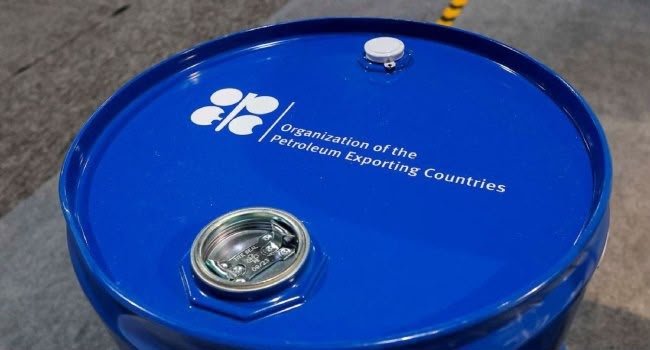
Seven OPEC+ nations—Saudi Arabia, Russia, Iraq, Kuwait, Kazakhstan, Algeria, and Oman—have halted four consecutive monthly output hikes, keeping crude production quotas completely unchanged for October. According to official communiqué disclosures released following Sunday’s virtual ministerial meeting, seven voluntary member nations agreed to freeze supply additions to stabilize volatile global energy markets. This decisive pause follows a vigorous phase of supply restorations that successfully unwound 1.65 million barrels per day of voluntary curbs initially instituted back in 2023. Persistent physical trade disruptions across the Strait of Hormuz have restricted actual crude exports, keeping output levels depressed well below official targets and fueling supply anxiety. Consequently, benchmark Brent crude prices have surged significantly, steadily approaching the psychological threshold of $100 per barrel amid tightening physical market fundamentals. Member states are scheduled to reconvene online on October 4 to reassess evolving market conditions and evaluate true production capacities for upcoming baseline quotas.
Global Oil Prices Surge Near $100 on Escalating Middle East Tensions
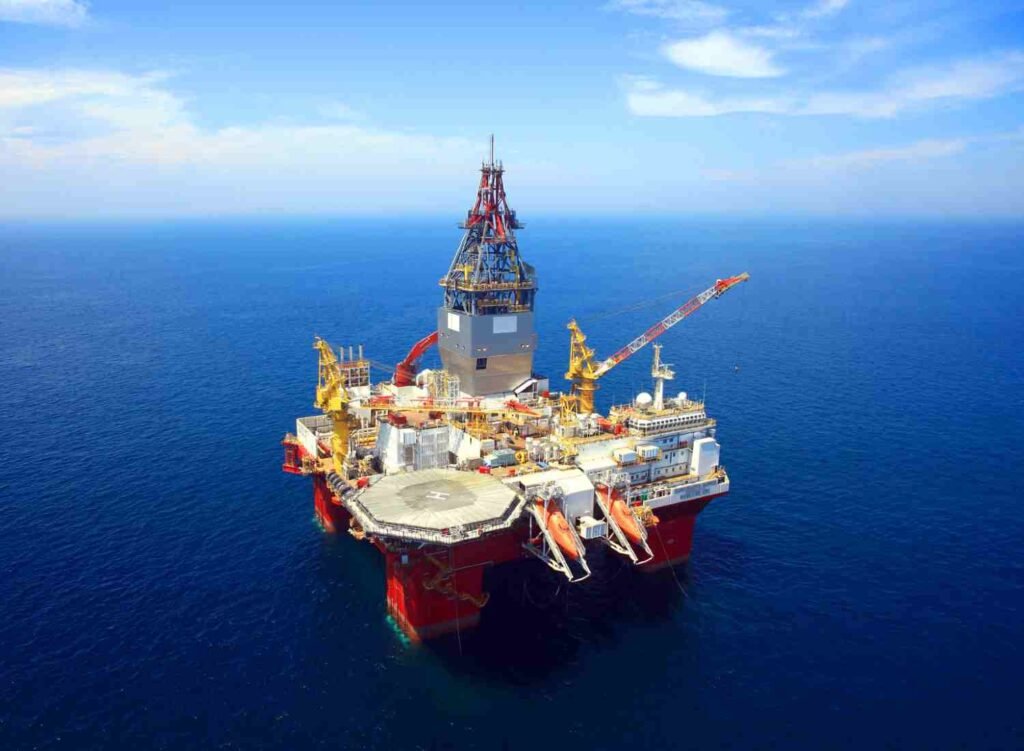
Global crude benchmarks are charging toward the $100-a-barrel threshold this week. Brent futures climbed to $96.98, while West Texas Intermediate hovered firmly above $91 following renewed geopolitical shocks. According to market data, the aggressive rally follows fresh United States airstrikes against Iran, threatening vital crude flows through the strategic Strait of Hormuz. The ongoing conflict, now in its seventh month, has sharply restricted commercial vessel movements. Energy analysts warn that prolonged disruptions could push energy costs past the psychological $100 ceiling. Both major benchmarks are currently pacing for their strongest weekly gains since July. Downstream petroleum product markets are already feeling intense inflationary pressure globally.
Oil Dips as Traders Gauge Middle East Supply Risks

Global crude benchmarks retreated slightly on Thursday morning as market participants balanced lingering supply disruption concerns against fresh uncertainties surrounding military escalations between the United States and Iran. According to market data reported early Thursday, Brent crude futures fell 43 cents, or 0.45 %, to $95.20 a barrel at, while U.S. West Texas Intermediate dropped 24 cents, or 0.26%, to $90.77. The modest decline comes following a sharp multi-session rally that pushed prices to multi-week highs, driven by fear that escalating strikes could throttle commercial shipping throughput in the critical Strait of Hormuz waterway. The brief pull-back reflects immediate profit-taking after crude surged more than $4 earlier in the week, marking the largest single-day gain since late July for both major benchmarks. Uncertainty remains elevated across global markets as persistent maritime risks through the Gulf offset broader macroeconomic headwinds, keeping energy prices volatile while traders continuously evaluate physical supply security.
Global Oil Surge 2.8% Amid Direct U.S.-Iran Military Clash
Brent crude futures jumped 2.8% to $90.60 a barrel following fresh military clashes between U.S. and Iranian forces in the Strait of Hormuz on Sunday, re-igniting fears of critical energy supply disruptions. American forces struck two Iranian missile launchers on Larak Island to prevent sea mine deployment. In response, Iran attacked U.S. positions stationed in Jordan with ballistic missiles, according to Fox News reports. U.S. defense batteries intercepted the incoming barrage aimed at airbases in Jordan. Jordanian military authorities confirmed that at least eight incoming missiles were successfully destroyed over their national airspace during the confrontation. The escalation drove U.S. West Texas Intermediate crude up 2.5% to $85.53 per barrel. Energy traders quickly factored in elevated transit risks across the Strait of Hormuz, a vital bottleneck for global petroleum. This engagement marks the first direct U.S. strike against Iranian targets in a month. It follows a temporary lull where Washington prioritized economic sanctions over active military strikes to constrain Tehran’s revenues. With roughly one-fifth of global oil consumption passing through the Strait, any renewed military friction threatens to sustain higher risk premiums across commodity markets as geopolitical volatility returns to the Gulf.
Oil Prices Fall Ending Two-Week Rally Despite Escalating U.S.-Iran Tensions
Crude oil prices slid early Friday, putting both major benchmarks on track to break a two-week winning streak. Brent crude fell 0.3% to $89.45 a barrel, while WTI dropped 0.3% to $83.31. The retreat follows reports indicating market participants are taking profits despite an earlier boost from U.S. policy stances. The news comes after crude settled higher in Thursday’s session. Thursday’s gains were sparked by reports that U.S. President Donald Trump is unwilling to return to previous diplomatic terms with Iran. That development raised temporary supply disruption concerns across energy markets. However, the rally was short-lived. Brent is now positioned to finish the week down 5.3%, while WTI is tracking toward a 4.3% weekly loss as macroeconomic headwinds offset geopolitical risk premiums. The price pullback reflects growing market skepticism over whether escalating rhetoric between Washington and Tehran will lead to actual physical crude supply outages from the Middle East. Traders are turning their attention toward broader macroeconomic pressures. High interest rates and signs of slowing industrial demand are keeping a firm lid on sustained price rallies.
Crude Oil Extends Losses on Diplomacy Hopes in Hormuz Strait
Oil prices dropped on Thursday, continuing a multi-day slide as speculative markets reacted to diplomatic talks between Iran and Qatar aimed at easing Persian Gulf shipping tensions and reopening the crucial Strait of Hormuz. Brent crude futures fell 41 cents, or 0.5%, to $87.43 a barrel, marking a fourth straight decline, while West Texas Intermediate slipped 37 cents to $81.86. The price erosion underscores growing trader confidence that regional mediation will mitigate severe supply shocks caused by Middle East hostilities, easing the war premium embedded in global benchmark contracts. Diplomatic efforts follow months of extreme volatility, during which Brent surged near $100 per barrel after military escalation disrupted tanker traffic through the narrow waterway, which carries 20% of global crude. Subsequent high-level negotiations in Doha—paired with parallel Oman-brokered maritime talks—have gradually restored partial tanker movement, prompting energy analysts and investment banks to trim their near-term price forecasts. Despite the recent downward momentum, crude benchmarks remain elevated compared to historical averages, supported by lingering geopolitical risks and constrained baseline output across major Middle Eastern producers.
Oil Slips 2% as Iran-Oman Diplomacy Eases Strait Of Hormuz Supply Concerns
Global crude benchmark prices dropped nearly 2% in early Asian trading on Wednesday, extending a sharp sell-off from the prior session. Energy traders pulled back risk premiums following diplomatic breakthroughs regarding the strategic Strait of Hormuz. According to market data reported, international benchmark Brent crude futures dropped $1.78, or 2.0%, to $86.80 a barrel. Concurrently, U.S. West Texas Intermediate (WTI) fell $1.49, or 1.8%, to $80.87. The downward movement follows Tuesday’s steep session where both benchmark contracts plunged over 3%. Momentum shifted rapidly after Tehran confirmed it had reactivated bilateral negotiations with neighboring Muscat to secure a maritime management protocol. Preliminary discussions focus on establishing a temporary joint navigational corridor through the waterway, which handles roughly 20% of the world’s daily petroleum supply. Both regional powers also agreed to initiate mine-clearing operations. Market sentiment was further weighed down by broader macroeconomic context, including API reports indicating a surprise 4.2 million barrel build in U.S. crude inventories, alongside softer-than-expected Washington sanctions that omitted secondary penalties on major Asian importers. Despite the two-day decline, analysts note that price floors remain supported. Bargain hunting and lingering structural volatility are expected to hold crude within a tight consolidation channel short-term.
Why Nigeria Cannot Afford to Go Back on the Fuel Subsidy Regime – Ogho Okiti

Nigeria is once again locked in a high-stakes economic tug-of-war. What was widely declared a closed fiscal chapter—the removal of the decades-long premium motor spirit (PMS) subsidy—continues to dominate public discourse as rising inflationary pressures and living costs stoke debates around policy reversal. While the west African oil producer moves closer to its January 2027 general election, Atiku Abubakar, Former Nigerian vice president and presidential candidate for the opposition party, the Africa Democratic Congress (ADC), is promising to return fuel subsidy to the country upon being elected. However, delivering a robust macroeconomic reality check during a featured appearance on Channels Television’s, renowned economist and Chief Executive Officer of ThinkBusiness Africa, Dr. Ogho Okiti, issued a clear warning: returning to fuel subsidies would be disastrous for Nigeria’s economic future. The Most Consequential Economic Epoch Contextualizing the structural shifts recorded since mid-2023, Dr. Okiti characterized the past three to four years as the most critical period in Nigeria’s modern economic history. Across multiple administrations and spanning nearly four decades, successive governments grappled with the unsustainable fiscal burden of PMS subsidies. Yet, key political leadership repeatedly shrank back from decisive market correction out of fear of social backlash and political fallout. Okiti observed that much of the public and political discourse remains trapped in a narrow, short-term perspective. By focusing exclusively on immediate pain, many fail to recognize the severe opportunity cost of the subsidy era—a system that systematically drained national revenue and crippled foundational infrastructure. “For over 40 years that we had that subsidy, what we did not know was the counterfactual… We destroyed our education system, we destroyed our healthcare system, we destroyed our roads and critical infrastructure because money that should have gone into these vital sectors was consistently siphoned to subsidize petrol consumption.” Dr. Ogho Okiti said during the interview. For more than four decades, artificial price caps systematically starved the domestic energy landscape of essential private capital. National refineries deteriorated into complete operational paralysis, converting Nigeria—Africa’s leading crude oil producer—into a total importer of refined petroleum products. Shielding Industrial Investments & Local Refining A central pillar of Dr. Okiti’s thesis is that reinstating fuel subsidies would immediately compromise major domestic energy investments—most notably multi-billion-dollar private refining assets like the Dangote Petroleum Refinery. He emphasized that commercial operators could not have survived or expanded under a price-controlled regime. Structural Alignment: FX & Energy Deregulation Addressing the critical interplay between foreign exchange dynamics and fuel pricing, Dr. Okiti underscored that energy market deregulation cannot be separated from exchange rate unification. In an open economy, fuel pump prices naturally adjust to international crude oil benchmarks and currency valuations. Re-imposing subsidies would force the Central Bank of Nigeria back into artificial currency allocation, recreating market distortions and multi-tier FX windows. Key Policy Takeaways The Path Forward: Sustaining Reforms for Long-Term Growth While acknowledging the real economic pain currently felt by households and small enterprises, Dr. Okiti insisted that policy reversal is not the solution. Instead, government should be more fiscal disciplined and strategic interventions must focus on targeted social safety nets, mass transit infrastructure expansion, and boosting domestic productivity. “It is that indisciplined fiscal process that is the reason why, whether it is subsidy or exchange rate reforms, if we keep increasing government revenue without fixing how we spend, we will not see the effect on ordinary Nigerians.” He said. Rebuilding Nigeria’s economic foundation requires steadfast commitment to structural reforms. Returning to fuel subsidies would sacrifice long-term sovereign solvency for short-term relief, undoing hard-won progress toward a self-sustaining economy.
Dangote Fuel Surge Reverses Atlantic Trade as Nigeria’s European Exports Jump 767%
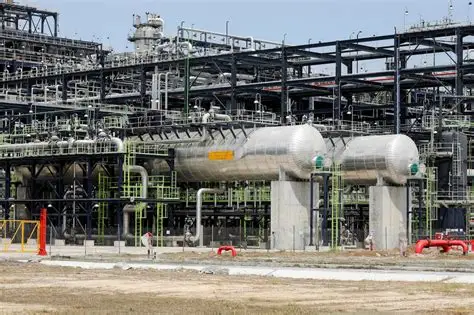
Nigeria’s seaborne refined petroleum exports to Europe surged by nearly 767% to 130,000 barrels per day (b/d) in the second quarter of 2026, up from just 15,000 b/d recorded in 2023. Data released by the U.S. Energy Information Administration (EIA), based on Vortexa shipping analytics, confirms that expanded output from the 650,000 b/d Dangote refinery is rapidly reshaping historic Atlantic Basin trade flows. Overall Nigerian refined fuel exports reached 350,000 b/d in Q2 2026, rising dramatically from an annual average of 46,000 b/d in 2023, while intra-African shipments climbed to nearly 120,000 b/d. Concurrently, domestic seaborne deliveries surged to 211,000 b/d, driving down national petroleum imports from 400,000 b/d in 2023 to under 130,000 b/d, solidifying the nation’s transition toward domestic energy self-sufficiency. “Products shipments expanded notably twice: first after operations at Dangote began and again following the completion of maintenance and expansion in February 2026, coinciding with supply constraints out of the Strait of Hormuz.” EIA noted in its report. The supply expansion follows the successful completion of debottlenecking and maintenance operations at the Lekki mega-refinery in February 2026, which unlocked full operational capacity across its distillation and secondary processing units. This operational milestone follows official central bank data showing Nigeria’s gross foreign exchange reserves crossed the $52 billion threshold, bolstered by reduced foreign exchange outflows previously allocated toward offshore fuel imports. European refiners now face tightening margin pressures as high-spec Nigerian gasoil and gasoline compete directly for market share across Northwest Europe and the Mediterranean basin.