

Nigeria Advances $21 Billion Deepwater Oil Project with Shell toward Final Investment Decision

Nigeria’s state oil firm NNPC Limited and partners Shell SNEPCo, Esso and Nigerian Agip Exploration executed Production-Sharing Contract (PSC) and Dispute Settlement Addenda (DSA) on Monday for the Bonga Southwest/Aparo project. The milestone, announced by NNPC Group Chief Executive Officer Bashir Bayo Ojulari, moves the long-delayed deepwater development in Oil Mining Lease 118 closer to a final investment decision The project is projected to attract $15 billion to $21 billion in investment over its life and deliver peak output of 175,000 barrels of oil per day plus 140 million standard cubic feet of gas daily. It is expected to rank among Nigeria’s largest deepwater developments, boosting national production, government revenue, foreign exchange and local jobs. “The execution of the BSWAp PSC and DSA Addenda demonstrates the effectiveness of President Tinubu’s reforms in translating policy into investment,” Ojulari said. “This is about unlocking a major deep-water project and demonstrating that Nigeria has a competitive fiscal framework.” The agreements give effect to fiscal terms enabled by the Deep Offshore Oil and Gas Projects Incentives (Tax Remission) Order, 2026, signed by President Bola Tinubu earlier this month. The order introduces production tax credits and a clearer framework aimed at unlocking up to $50 billion in broader deepwater investments and supporting Nigeria’s push toward higher output. Discovered more than two decades ago, Bonga Southwest/Aparo had faced prolonged delays from fiscal uncertainty and commercial disputes. Presidential incentives approved in March 2026 helped clear key obstacles, positioning the asset as a potential first major deepwater PSC final investment decision since 2008. Partners have completed the pre-front-end engineering design phase and identified a preferred floating production storage and offloading contractor, subject to further approvals. The project is now set to advance into detailed front-end engineering design, strengthening Nigeria’s appeal to international capital in a competitive global energy landscape
Oil Slips as Trump’s ‘Economic D-Day’ Prompts Sanctions Delay
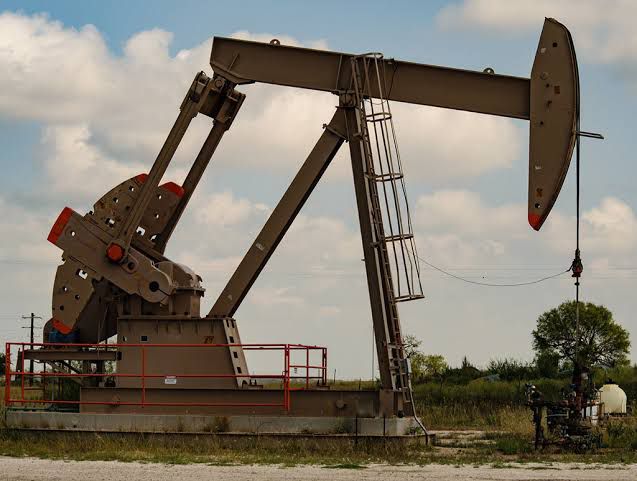
Energy markets calmed Tuesday after the Trump administration’s long-promised “economic D-Day” against Iran resulted in broad secondary sanctions warnings rather than immediate enforcement actions, signaling a tactical delay in financial penalties. Global benchmark Brent crude futures stabilized at $92.08 a barrel after dipping 0.1%, while U.S. West Texas Intermediate edged 0.1% higher to $85.09, according to market data. The modest movements followed a sharp 2% overnight sell-off triggered when the U.S. Treasury Department stopped short of levying specific economic sanctions against foreign third parties. Treasury Secretary Scott Bessent unveiled “Operation Economic Outcast,” giving international banks and trade partners a timeline grace period to cut ties with Tehran’s energy, digital asset, gold, aviation, and shipping sectors or lose access to the U.S. dollar system. Traders read the lack of immediate targeted enforcement against key buyers like China as a temporary reprieve from severe energy supply disruptions. The policy shift comes amid escalating regional instability, where six months of tension and military exchanges have significantly disrupted Gulf shipping routes and dropped traffic through the vital Strait of Hormuz to three-month lows. Tehran responded aggressively to Washington’s ultimatum, with Iranian security officials warning of “seismic” military and maritime retaliation against any neighboring state or global partner complying with American enforcement. While Iran’s domestic economy suffers under severe inflation and a record-low rial, analysts note that failure to enforce penalties leaves the market balancing supply threats against actual diplomatic action.
Brent Slips To $93.43 As Oil Markets Eye U.S. Iran Sanctions And Hormuz Disruptions

Global energy markets paused Monday as traders awaited a major policy address from U.S. Treasury Secretary Scott Bessent outlining an economic package meant to collapse Iran’s financial lifelines. Brent crude slipped 1.0% to $93.43 a barrel, while U.S. West Texas Intermediate dropped 1.1% to $86.14. The pullbacks follow a massive 6.6% rally last week fueled by fears of prolonged Middle East transit blockades. Bessent is scheduled to unveil the measures dubbed by the administration as the “toughest sanctions in history”, at 2:00 PM EDT. The sanctions specifically target secondary buyers and regional financial networks linked to Iranian crude exports. The announcement marks a decisive pivot from military intervention toward coordinated economic isolation, aiming to force compliance without direct kinetic warfare. However, enforceability hinges on secondary pressure against major buyers like Chinese refiners. Tehran has refused to cede control over the Strait of Hormuz, through which nearly 20% of global petroleum passes. The strategic corridor remains effectively bottlenecked following weeks of escalating naval posturing. Iran’s National Security Council warned that participation in U.S. sanctions will be treated as an act of war. Senior officials threatened to completely halt all crude exports throughout the Persian Gulf if economic aggression continues. Traders view today’s modest decline as short-term profit-taking rather than structural easing. Analysts caution that any aggressive enforcement mechanisms against foreign buyers could quickly trigger a supply squeeze toward $100 per barrel.
Global Crude Tracks Second Weekly Gain Above $93 Amid Stalemated Middle East Conflict
Global crude benchmarks held firm near multi-week highs Friday, remaining on course for a second consecutive weekly gain as ongoing military stalemates in the Middle East severely restrict regional energy exports. According to market data, Brent crude futures slipped 23 cents, or 0.3%, to $93.55 a barrel by 0142 GMT. Meanwhile, U.S. West Texas Intermediate (WTI) eased 33 cents, or 0.4%, to $86.50. The brief early-session retreat follows a sharp 2.4% surge for Brent and a 2.3% gain for WTI on Thursday. Over the past five trading sessions, Brent has advanced over 7%, while WTI rose 8%. Supply risk premiums remain elevated after temporary regional peace arrangements expired without renewal negotiations. The ongoing standoff continues to curtail output and exports from core Gulf producers including Saudi Arabia, Iraq, the UAE, and Kuwait. Shipping activity through the crucial Strait of Hormuz which historically handles nearly 20% of global daily oil consumption remains severely depressed, with only nine vessel transits recorded in mid-week trading. Market tension escalated further after Washington warned of severe economic isolation measures against third-party nations assisting Tehran, reinforcing physical supply bottleneck fears among global commodity traders. Despite holding well below early-conflict spikes near $126, current prices above $93 continue to heighten global inflation concerns, squeezing energy-importing economies while bolstering fiscal balances for non-Middle Eastern oil exporters.
Nigeria’s Oil Output to Surge in H2 Bolstering Fiscal Recovery, NESG Projects

Nigeria’s crude oil production, including condensates, is projected to surpass 1.7 million barrels per day (mbpd) in the second (H2) of 2026. This recovery is expected to provide critical fiscal relief for the West African nation. The projection was detailed in the Nigeria Economic Summit Group’s (NESG) 2026 Half-Year Outlook Report, titled “Turning Potential into Progress: Accelerating Nigeria’s Industrialisation for Economic Transformation and Inclusion”. The anticipated volume recovery stems from structural gains in the energy sector. Improved pipeline security, reduced crude theft in the Niger Delta, and renewed upstream investment following recent licensing rounds are driving the uptick. Global crude prices are expected to average $70 to $80 per barrel in H2 2026 under the NESG’s baseline scenario—comfortably above Nigeria’s $64.85 national budget benchmark. Escalating Middle East tensions could push prices higher. Higher output alongside favorable pricing will expand government revenue and support foreign exchange liquidity. The economic think tank forecasts national gross external reserves to rise to $53 billion by year-end. Increased domestic refining activity, anchored by the operational ramp-up of the Dangote Refinery and state-owned facilities, is concurrently curbing refined petroleum imports and easing structural foreign exchange pressures. Despite the positive volume outlook, output above 1.7 mbpd still trails the federal government’s official 2026 budget benchmark assumption of 1.84 mbpd. This leaves slim margin for operational disruptions. The oil sector’s momentum is projected to accelerate national real GDP growth to 4.5% in H2 2026, bringing the full-year economic growth estimate to 4.2%. This fiscal cushion builds on early 2026 macroeconomic momentum, where Nigeria recorded a N7.55 trillion trade surplus in Q1 and gross FX reserves reached $51.5 billion by mid-year. However, the NESG cautioned that over-reliance on hydrocarbon revenue leaves the economy vulnerable to global shocks, urging accelerated industrial policy execution.
Global Oil Prices Surge to Three-Week High Amid Strait of Hormuz Transit Risks
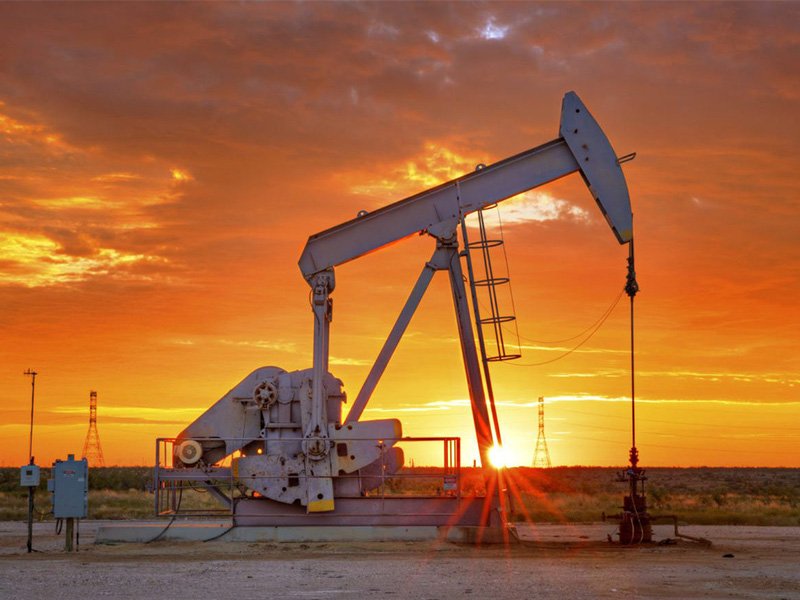
Global crude benchmarks surged to a three-week high on Wednesday as escalating transit uncertainty through the Strait of Hormuz and persistent production outages triggered renewed geopolitical risk premiums across international energy markets. Brent crude rose 77 cents, or 0.85%, to $91.79 a barrel, while U.S. West Texas Intermediate (WTI) gained 85 cents, or 1%, reaching $85.79 a barrel, recording a fourth consecutive session of price gains. The market rally reflects conflicting statements from Washington and Tehran regarding vessel safety along the crucial maritime corridor, through which approximately 20% of the world’s daily petroleum supply typically transits. Tensions escalated sharply following the expiration of a two-month diplomatic negotiation window, alongside reported attacks on regional commercial vessels and Chinese shipping conglomerates rerouting tankers away from Persian Gulf chokepoints. Bullish momentum was further sustained by tightening fundamentals, supported by unexpected drawdowns in U.S. crude and distillate inventories alongside persistent supply disruptions across key producer nations.
Brent Crude Tops $91 per barrel as Middle East Friction Drives Oil Rally
Global crude oil benchmarks extended their multi-day rally on Tuesday, driven by persistent supply disruption fears and escalating geopolitical friction in key producing regions. Brent crude futures rose 0.4% to $91.20 a barrel, marking a third consecutive daily gain. Concurrently, West Texas Intermediate (WTI) crude futures gained 0.5% to trade near $84.20 a barrel. The price surge comes as market participants price in heightened geopolitical risks following the expiration of critical diplomatic frameworks in the Middle East. The resulting uncertainty has raised global supply constraints. Adding momentum to the rally, lingering risks around critical maritime transit routes—notably draft transit restrictions surrounding the Strait of Hormuz—have kept energy markets on edge. Traders remain focused on supply vulnerabilities, balancing geopolitical risk premiums against broader macroeconomic indicators, including multi-decade highs in global bond yields that continue to weigh on wider financial market stability.
Global Oil Benchmarks Pause After Weekly Surges Near Multi-Month Highs
Global crude oil prices stabilized early Monday following robust weekly gains, with Brent crude holding flat at $88.50 per barrel after posting a 6.0% rally in the previous week. According to market data, U.S. West Texas Intermediate (WTI) crude slipped 0.3% to $82.12 per barrel after advancing 5.4% last week. The consolidation follows significant upward momentum driven by tightening physical supplies, heightened geopolitical risk premiums in energy-producing regions, and strong seasonal fuel demand during peak summer travel. Traders are taking profits after Brent tested multi-week highs, while keeping a close watch on potential supply disruption threats and OPEC+ production output strategies. Despite the modest intraday retreat in U.S. crude, the Brent-WTI spread remains wide at $6.38 per barrel, signaling sustained international demand for non-U.S. heavy grades. Market focus now shifts to upcoming macroeconomic indicators and inventory reports from the U.S. Energy Information Administration for direction on global demand trajectory.
Oil Steadies near $87 as U.S. Threatens Indefinite Blockade on Iran
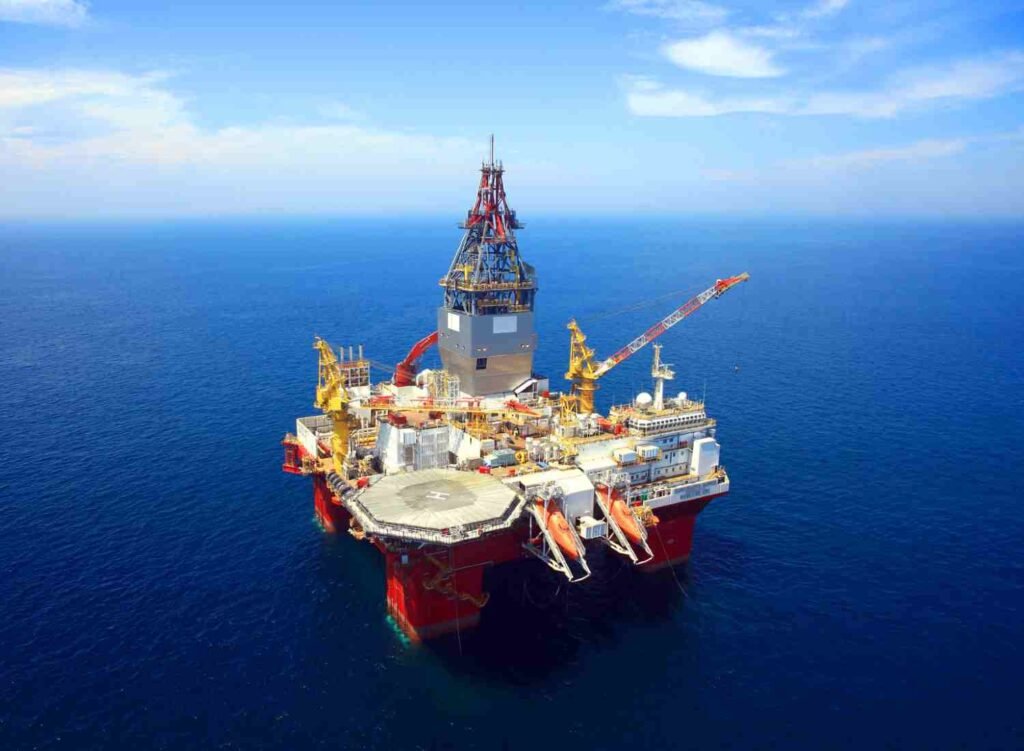
Global crude benchmarks stabilized Friday, with Brent crude holding at $87.03 per barrel and U.S. West Texas Intermediate hovering at $81.29, positioning both contracts for a 4% weekly gain that breaks a two-week losing streak. The price recovery followed Washington’s threat to maintain an indefinite naval blockade on Iran and escalate economic sanctions after diplomatic ceasefire negotiations stalled. The escalating geopolitical confrontation has severely disrupted maritime traffic through the Strait of Hormuz—a transit bottleneck for 20% of world oil consumption—re-injecting a risk premium into global energy markets. However, price rallies remain constrained as traders weigh Middle East supply risks against weakening fundamentals. Both OPEC and the International Energy Agency recently lowered their global demand growth forecasts. Adding further downside pressure, U.S. Energy Information Administration data revealed a 17.4 million barrel domestic crude stock build—the largest weekly accumulation in three and a half years.
Global Crude Eases as U.S. Inflation Data Shifts Rate Expectations
Crude oil prices pulled back on Thursday as investors digested fresh U.S. Consumer Price Index data, tempering near-term demand projections despite persistent Middle East geopolitical risk premiums. U.S. West Texas Intermediate crude fell 0.83% to $82.58 a barrel, while Brent crude dropped 0.71% to $88.35 per barrel. Official U.S. Labor Department data showed headline consumer inflation slowed to 3.4% year-over-year in July, while core inflation, which excludes volatile food and energy costs, moderated to 2.5%. “This CPI report gives the market and the Fed the chance to take a big sigh of relief,” said Adam Sarhan, chief executive officer at 50 Park Investments, following the inflation release. The latest U.S. inflation metrics cooled expectations of aggressive Federal Reserve interest rate hikes, reassuring energy traders who feared higher borrowing costs could further dampen global macroeconomic consumption. The price pullback follows recent demand forecast reductions from OPEC and the International Energy Agency, which lowered global oil demand growth expectations amid softer industrial consumption metrics. However, crude prices remain elevated as ongoing shipping disruptions through the Strait of Hormuz and broader Middle East supply uncertainties continue to maintain a firm structural price floor.