

Jobless Surge Threatens Africa’s Most Industrialised Economy as Unemployment Hits 33.6%
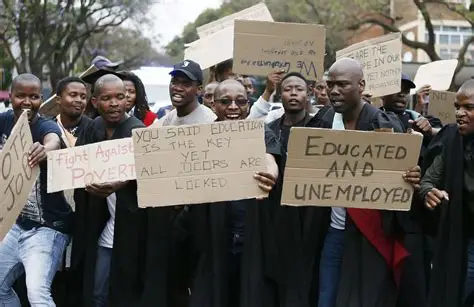
South Africa’s official unemployment rate climbed to 33.6% in the second quarter of 2026, up 0.9 percentage points from 32.7% in the previous quarter, underlining worsening structural weakness in Africa’s most industrialised economy. Data released Tuesday by Statistics South Africa in its Quarterly Labour Force Survey revealed that the number of unemployed citizens jumped by 345,000 to reach 8.5 million. Meanwhile, total employment shrank by 16,000 to 16.7 million. The divergence between an expanding workforce and contracting payrolls drove the headline spike. Over 329,000 job seekers entered the labor market during the three-month period, rapidly outstripping new opportunities across both formal and informal sectors. Sectoral contractions dragged overall employment down. Community and social services recorded the heaviest losses, shedding 57,000 jobs, followed by mining (-26,000), agriculture (-15,000), and manufacturing (-15,000), offsetting modest gains in trade (+70,000) and construction (+39,000). Youth remained hardest hit by the downturn. Joblessness among young workers aged 15 to 34 increased by 1.5 percentage points to 47.4%, leaving five million young South Africans out of work. The persistent labor crunch coincides with intensified anti-immigrant sentiment and vigilante pressure targeting foreign nationals over scarce jobs, driving thousands of African migrants out of informal, trade, and domestic sectors. Metric Q1 2026 Q2 2026 Net Change Official Unemployment Rate 32.7% 33.6% +0.9 percentage points Expanded Unemployment Rate 43.7% 43.8% +0.1 percentage points Unemployed Population 8.137 million 8.481 million +345,000 (+4.2%) Employed Population 16.755 million 16.739 million -16,000 (-0.1%) Total Labour Force 24.891 million 25.220 million +329,000 (+1.3%) Source: Statistics South Africa
MTN Leads Top 10 Brands in South Africa as National Corporate Equity Hits $43.8 Billion
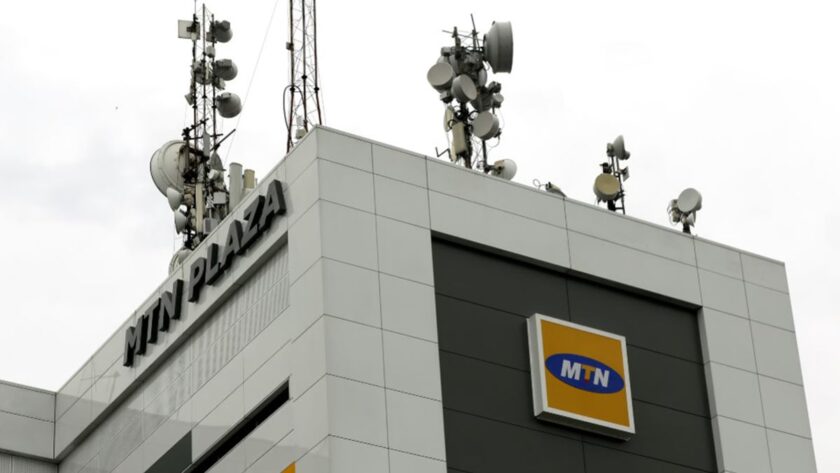
Telecommunications giant MTN has surged back to become South Africa’s most valuable brand, scaling its valuation by 124% over two years to reach $5.35 billion. According to data published in the 2026 Kantar BrandZ Most Valuable South African Brands report, the total collective value of the nation’s top 30 corporate entities expanded 47% since 2024 to $43.8 billion. The latest valuation study integrated dynamic financial metrics with survey data from over 49,000 South African consumers across 890 individual brands, highlighting strong post-2024 growth trajectories. MTN’s rapid valuation rebound from $2.39 billion in 2024 follows aggressive expansion under its strategic framework, driving service revenues higher as subscriber bases surpassed 300 million across African markets. The telecommunications sector and financial services institutions collectively account for nearly three-quarters of the country’s total corporate brand equity, occupying all top five growth spots in the bi-annual valuation index. Capitec Bank recorded the highest overall growth percentage, surging 158% to $3.29 billion, while Standard Bank and First National Bank secured second and third positions respectively. Rank Brand Sector Brand Value ($) 1 MTN Telecom Providers $5.35 billion 2 Standard Bank Financial Services $4.72 billion 3 First National Bank Financial Services $4.46 billion 4 Vodacom Telecom Providers $4.40 billion 5 Capitec Bank Financial Services $3.29 billion 6 Discovery Financial Services $2.00 billion 7 Nando’s Fast Food $1.82 billion 8 Castle Alcohol $1.79 billion 9 Absa Financial Services $1.76 billion 10 Sanlam Financial Services $1.17 billion Source: Kantar BrandZ
Hooked on Credit: How Daily Survival Is Trapping South Africa’s Middle Class
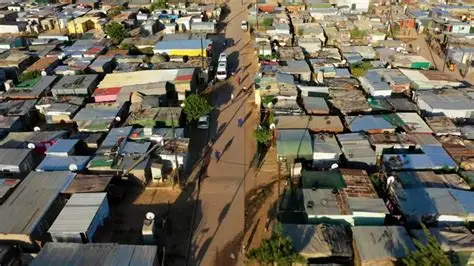
South African households are sliding deeper into a structural debt trap as working citizens increasingly rely on unsecured credit lines to cover basic daily survival costs rather than long-term asset acquisition. Analysis published by University of Pretoria and researched by Professor Conrad Beyers, Head of the Department of Actuarial Science warns that borrowing for routine expenses threatens household stability and risks destabilizing the broader national financial ecosystem if commercial lenders fail to intervene immediately. Latest South African Reserve Bank data reveals household debt reached 61.8% of nominal disposable income, reflecting escalating pressure from prolonged elevated interest rates and persistent living cost inflation across major urban centers. Instead of building wealth through homeownership or capital investments, consumers are using credit cards and short-term loans for groceries and utilities, triggering a compounding cycle of debt servicing costs and severe insolvency risks. “Credit is increasingly being used not to buy homes or build businesses, but to pay for food, electricity and existing debt. The individual borrows again to service earlier debt. Interest and penalties leave them even more dependent on credit,” Beyers warned. “The true position may be considerably worse – debt owed to family, stokvels, and unregistered lenders remains invisible to credit bureaus. Some households remain technically up to date only by taking new credit or postponing other payments. Financial collapse is often recorded only at the end of the debt spiral, long after the household has become trapped,” Beyers said. v Although central bank repo rate adjustments have provided modest interest rate relief, debt service costs absorb a significant share of household income, leaving minimal buffer against unexpected economic shocks or employment disruptions. Financial analysts emphasize that unmanaged consumer credit expansion could raise bank non-performing loan ratios, force credit tightening, and weaken long-term consumer spending across Africa’s most industrialized economy.
South African Court Overturns Suspension of $183 Billion State Asset Manager Chief Executive

A South African high court has declared the precautionary suspension of Public Investment Corporation (PIC) Chief Executive Officer Patrick Dlamini unlawful and invalid, ordering his immediate reinstatement to lead the state asset manager. According to a Gauteng High Court judgment, the board acted beyond its powers (ultra vires) by bypassing mandatory statutory procedures and failing to obtain required ministerial approval. Handing down the ruling, Judge Mandla Mbongwe stated, “None of these prerequisites were met. The board acted unilaterally, without ministerial approval, and in disregard of its own policies.” The judge added that while whistleblower protections safeguard informants, they do not confer suspension powers on the board, nor can internal guidelines override binding statutory and contractual provisions. The court also dismissed intervention applications by third parties and ordered the board to pay Dlamini’s legal expenses, including the costs of two counsel on Scale C. The ruling resolves weeks of leadership turmoil at the state-owned institution, which manages over R3 trillion ($183 billion) in government pension funds and public assets across key economic sectors. Dlamini was suspended on July 13 following whistleblower allegations. However, the court warned that executive disruption risked profound harm to the national economy, creating potential sovereign rating risks. Despite his legal victory, Dlamini returns as the Financial Sector Conduct Authority conducts regulatory inquiries, while separate litigation involving a R900-million damages claim remains pending against him.
Angolan Kwanza Joins SADC Payment System to End Rand Monopoly
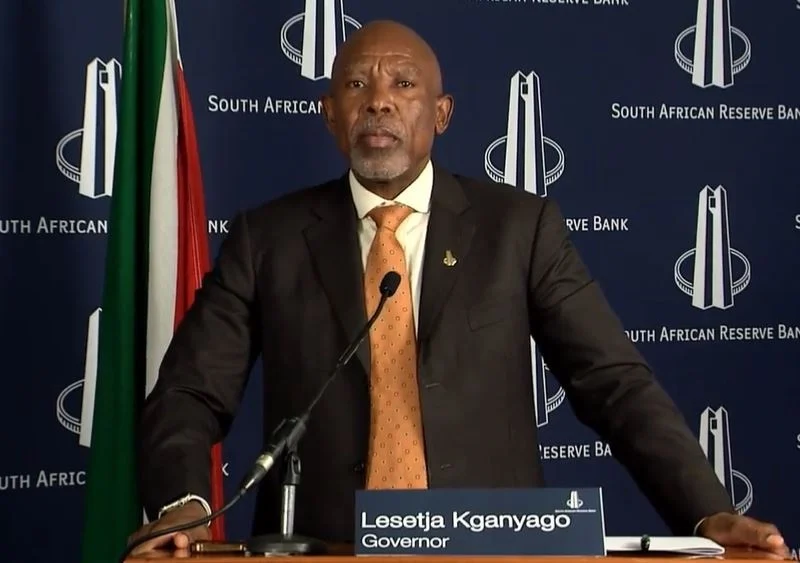
The Angolan kwanza has become the first new settlement currency added to the Southern African regional payment system since its 2013 launch, marking a historic expansion beyond the South African rand. Speaking in Pretoria alongside Banco Nacional de Angola Governor Manuel Tiago Dias on Monday, South African Reserve Bank Governor Lesetja Kganyago hailed the milestone for regional financial integration. “This is not simply the addition of another settlement currency,” Kganyago said. “It is a practical step towards a Southern Africa that is more integrated, more connected and better able to support trade.” By enabling direct settlement in kwanza, the platform eliminates foreign exchange conversion steps through third-party hard currencies, lowering transaction costs, correspondent banking fees, and settlement delays for cross-border businesses. SADC-RTGS data reveals trade and interbank flows between Angola and 14 member states reached $3.77 billion across nine currencies in 2025, underscoring significant commercial demand for localized settlement channels. South Africa accounted for nearly $2.99 billion of those total flows, representing 60% of overall transaction volume and 79% of total monetary value within the regional corridor. The platform currently serves 15 member states and 89 participating banks, aligning with G20 cross-border payment goals and broader continental initiatives like the Pan-African Payment and Settlement System (PAPSS). Central bank governors intend to onboard additional regional currencies in due course, starting with the Botswana pula, to further reduce reliance on non-SADC currencies and lower remittance costs.
South Africa Central Bank Holds Repo Rate at 7.0% in Surprise Pause
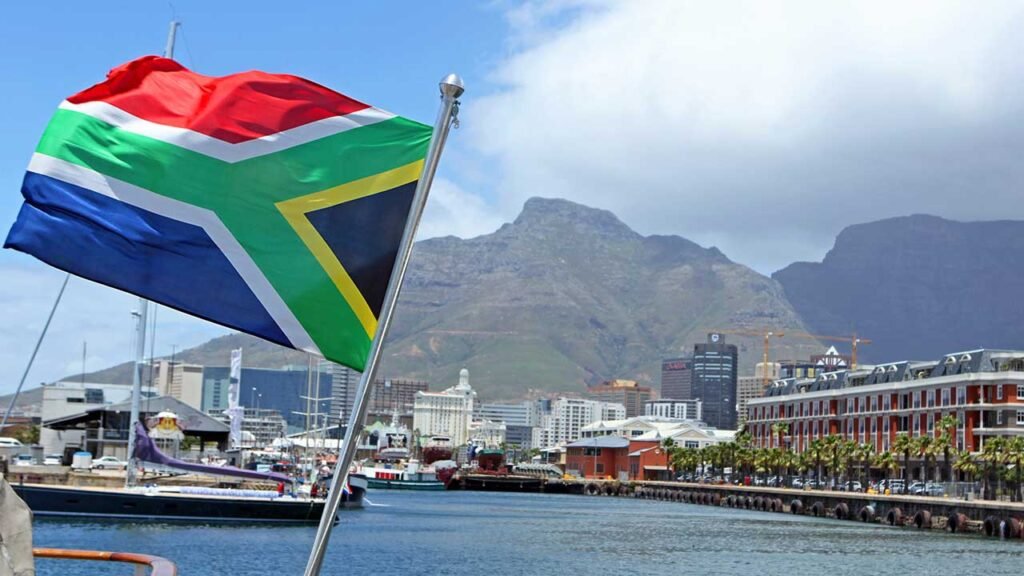
The South African Reserve Bank unexpectedly left its benchmark repo rate unchanged at 7.00% on Thursday, defying market expectations of a 25-basis-point increase despite headline inflation hitting a two-year high of 5.0% in June. The Monetary Policy Committee voted 4–2 to maintain borrowing costs, keeping the prime lending rate at 10.50%. Only three of 20 economists surveyed by Bloomberg had correctly predicted the interest rate pause. Governor Lesetja Kganyago stated the current stance remains sufficiently restrictive. He emphasized that central bank policy aims to stabilize domestic price expectations without exacerbating weak economic growth amid recent severe global shocks. The central bank revised its 2026 inflation forecast downward to 4.0% from 4.4%, while slightly raising full-year gross domestic product growth projections to 1.4% from 1.2% as second-half recovery prospects improve. Following the unexpected hold, the rand tumbled as much as 2.5% to 16.76 against the U.S. dollar, while benchmark 10-year government bond yields surged 16 basis points to 8.96% in volatile trading. The pause follows a May rate hike triggered by escalating Middle East conflict and spiking energy prices. Policymakers remain committed to anchoring inflation at their strict 3.0% target long-term.
South Africa Inflation Jumps to 5.0%, Heightening Pressure for Rate Hike
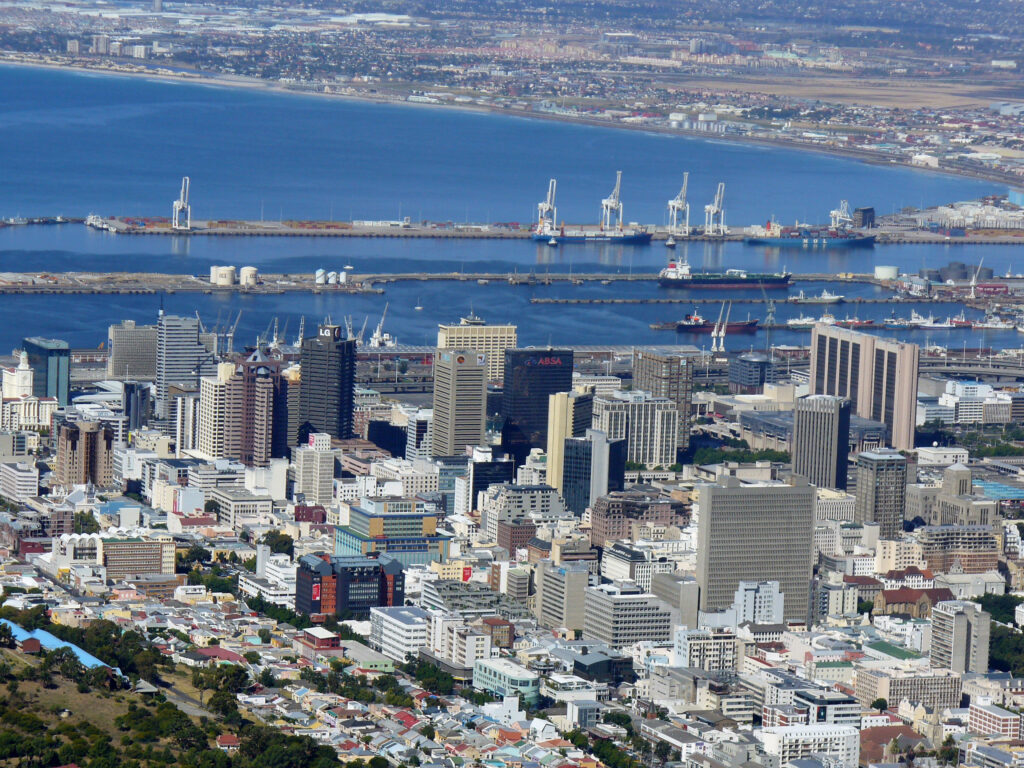
South Africa’s annual consumer inflation accelerated to 5.0% in June from 4.5% in May, breaching market expectations and stoking forecasts of an immediate interest rate increase. Data released Wednesday by Statistics South Africa showed consumer prices rising 0.7% month-on-month, marking the highest annual headline reading since mid-2024. The sharper-than-expected rise widens the distance between actual inflation and the South African Reserve Bank’s 3.0% target mid-point, pushing market expectations toward further monetary tightening. Surging transport costs served as the primary catalyst, soaring 12.7% year-on-year behind a 34.3% jump in fuel prices following geopolitical conflict in the Middle East. Higher global oil prices drove local diesel costs up 50.8% and petrol up 31.7%, triggering an 8.1% monthly surge in public passenger transport fares. Conversely, food and non-alcoholic beverage inflation slowed to 1.6% in June from 1.9% in May, supported by a 15% drop in cereal prices and lower meat inflation. Core inflation, excluding volatile food and energy, rose to 4.1% from 3.8% in May, signaling broader underlying price pressures within the domestic economy. The data heavily pressures the Reserve Bank’s Monetary Policy Committee, which convenes Thursday for its benchmark interest rate decision. Economists widely project a 25 basis point hike, which would lift the repo rate to 7.25% and push the prime lending rate to 11.75%. This follows a 25 basis point rate increase in May, when policymakers raised the benchmark rate to 7.0% after inflation risks intensified.
South Africa Secures $1.5B World Bank Loan to Fast-Track Infrastructure Reforms
South Africa has secured a $1.5 billion Development Policy Loan from the World Bank to tackle severe infrastructure bottlenecks, accelerate growth, and generate nearly 600,000 jobs by 2032, the National Treasury announced on Tuesday. The concessional facility, issued through the International Bank for Reconstruction and Development, carries a 15-year maturity and a three-year grace period at SOFR plus 1.35%, helping manage rising national debt-service costs. Together with parallel development partner funding, the loan enables the government to complete its $3.2 billion foreign currency borrowing requirement for the 2026/27 financial year, expanding structural interventions across critical network sectors. The package targets electricity market competition, private rail operation, port concessions in Durban, and for the first time in this loan series major regulatory and investment reforms in municipal water and sanitation services. These initiatives are driven by Operation Vulindlela, a joint program by the Presidency and Treasury aimed at elevating annual gross domestic product growth above 3% after a decade of averaging under 1%. Recently, power grid stability has prevented scheduled blackouts for 18 months, private renewable energy investment has surged sixfold, and freight volumes through key rail corridors are up 50%. Finance Minister Enoch Godongwana emphasized that the package reflects Pretoria’s resolve to remove structural barriers that have long stymied private sector investment, economic expansion, and sustainable employment creation. World Bank estimates indicate the targeted interventions will support approximately 280,000 direct and indirect jobs by 2027, rising to more than 560,000 over the next six years.
Nigeria Urges ECOWAS Unity Against Xenophobia in South Africa
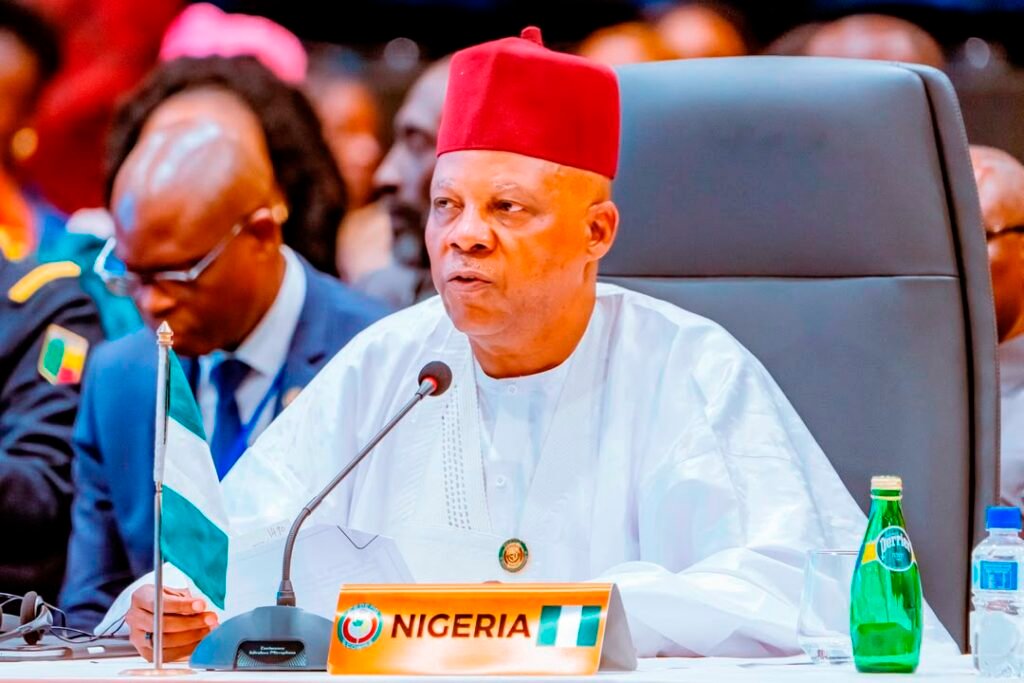
Nigerian President, Bola Ahmed Tinubu has demanded a united West African front to condemn xenophobic attacks on Africans in South Africa, calling the violence unacceptable. Vice President Kashim Shettima represented Nigeria at the 69th ECOWAS summit on Sunday. Nigeria has evacuated over 1,490 citizens in seven batches amid recent attacks that killed at least two Nigerians. Protests and violence surged in June and July 2026, fueled by high unemployment and anti-immigrant sentiment. “Nigeria condemns, in the strongest terms, the recent attacks on its citizens and other Africans in the Republic of South Africa,” president Tinubu said in a statement. “ECOWAS should present a united voice in this condemnation.” Tinubu, via Shettima, urged leaders to table the matter at the African Union. He reminded South Africa that its freedom resulted from sacrifices by African nations, including Nigeria. The summit at the Julius Maada Bio International Conference Centre focused on the new ECOWAS Compact for regional integration. Leaders discussed security, trade, and democratic governance amid ongoing challenges. thenationonlineng.net “As the largest economy… Nigeria remains steadfast in its historic responsibility to continue the promotion of regional unity, peace, economic integration, and democratic governance,” Tinubu said. Nigeria backs stronger counter-terrorism efforts, a digital single market, and free movement of goods and people. The Compact aims to create a resilient community for over 400 million citizens. Sierra Leone’s President Julius Maada Bio, ECOWAS Chairman, stressed adapting to new realities for a peaceful, integrated West Africa. UN Deputy Secretary-General Amina Mohammed pledged support against terrorism. Highpoint of the meeting included signing an agreement for the African Atlantic Gas Pipeline project. The renewed xenophobia has strained relations, with Nigeria and Ghana pushing for AU action. South African authorities face criticism for inadequate protection of migrants.
Toyota Launches Ninth-Gen Hilux Production With R10.4bn South Africa Investment

Toyota South Africa Motors has completed over 77 percent of its 10.4 billion rand ($634 million) investment program, officially launching pilot production of the ninth-generation Hilux pickup truck at its Durban plant. The milestone was marked Thursday by an official line-off ceremony at the Prospecton facility in eThekwini, with President Cyril Ramaphosa hailing the project as a major boost for the domestic economy. Once production fully ramps up ahead of the scheduled project completion in June 2027, the upgraded plant is expected to manufacture approximately 140,000 Hilux units annually for local and export markets. The automaker allocated 7.2 billion rands toward advanced robotics and tooling to prepare for the ninth-generation model, alongside 3.2 billion rands for a new parts logistics center and chassis facilities. An additional 2 billion rands was invested by local component suppliers to expand localization, reinforcing South Africa’s domestic automotive supply chain amid intensifying competition from emerging Chinese automotive brands. This massive capital injection future-proofs the Durban facility against tightening European emissions standards, safeguarding critical manufacturing capabilities as the global automotive market transitions toward cleaner mobility technologies. The investment also marks a major recovery milestone for the Prospecton plant, which previously suffered severe disruptions from the COVID-19 pandemic, July 2021 civil unrest, and devastating 2022 floods. South Africa’s automotive sector remains a critical economic pillar, contributing roughly 5 percent of national gross domestic product and supporting over 115,000 direct manufacturing jobs across the country.