
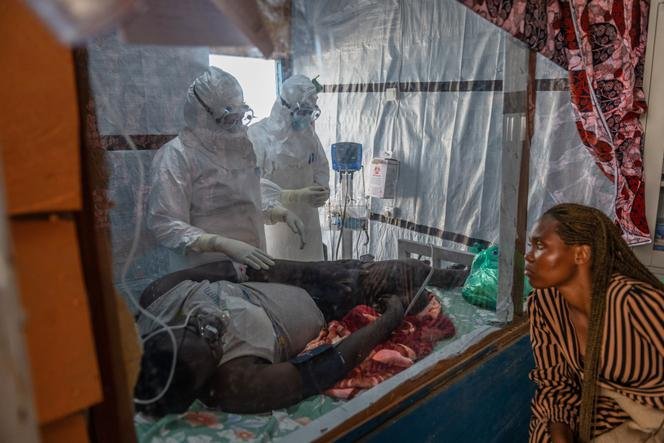
It is now almost a month since October 3, when a female traveller, later confirmed to have contracted Ebola, arrived in Abuja, Nigeria. A Ugandan national married to a Swiss diplomat, she began experiencing symptoms four days later, on October 7. By October 11, she had sought medical care at Nizamiye Hospital, but Ebola was not confirmed until October 20.
A few days later, Nigerian health authorities were monitoring 44 identified contacts, a figure that subsequently rose to 53. As at the time of writing, the Nigeria Centre for Disease Control (NCDC) has not confirmed another case in the country.
In Kenya, nine cases have been confirmed, with two deaths. The index case was a Kenyan citizen who travelled from the Democratic Republic of Congo (DRC), through Uganda, to Nairobi in early October. The patient subsequently died. Additional cases have been linked to the same index patient, while 98 contacts remain under active monitoring.
Before the cases reported in Nigeria and Kenya in October, Uganda had recorded nine cases and one death. The East African nation currently has no active cases. Outside Africa, individual imported or medically evaluated cases linked to the DRC outbreak have also been reported in Germany, the Netherlands, France and the United Kingdom.
These developments, including the gap between symptom onset and confirmation, international travel within and beyond the region, and the race to develop effective countermeasures against the Bundibugyo variant, first identified in Uganda in 2007, are making the 2026 outbreak particularly challenging.
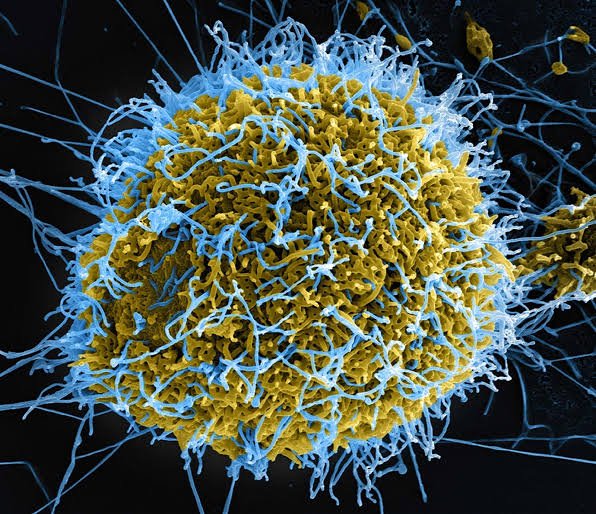
About a decade after the 2014–2016 West African epidemic, described as the worst Ebola outbreak in history, devastated Guinea, Liberia and Sierra Leone, the DRC is battling what has been described as its 17th outbreak. The current crisis has also been reported as the country’s most severe in recent years.
The outbreak began in early May and has recorded more than 10,000 confirmed cases and nearly 5,000 deaths, according to the European Centre for Disease Prevention and Control (ECDC). Starting in the Mongbwalu Health Zone in Ituri province, in the country’s northeast, the outbreak has spread to seven other provinces.
The most challenging aspect of the current outbreak is the absence of an approved vaccine or specific antiviral treatment for the Bundibugyo virus species. The DRC previously recorded an outbreak of this species in 2012. While the virus has spread across 66 health zones in eight provinces, Ituri remains the epicentre, accounting for more than 7,000 cases.
Before the outbreak, 17 countries had direct flights to the DRC, including 13 African countries, two European nations and two Middle Eastern countries. Following the outbreak, Uganda halted direct flights to and from the DRC, while the United States, Canada, the Bahamas, Jordan and Bahrain reportedly introduced restrictions affecting travellers arriving from or transiting through the country.
Although some international flights continue to operate, the outbreak has prompted heightened screening and travel restrictions in several jurisdictions.
The DRC shares land borders with nine countries: Angola, Burundi, the Central African Republic, the Republic of Congo, Rwanda, South Sudan, Tanzania, Uganda and Zambia. The scale of these cross-border connections makes containment more complicated, as the movement of people and goods continues alongside heightened health screening at land borders.
The challenge is not simply to prevent infected individuals from travelling. It is to identify potential cases quickly without unnecessarily disrupting trade, regional mobility and economic activity.
The DRC’s economy grew by 5.5% in 2025, with growth projected at between 5.2% and 5.6% in 2026 before the outbreak. These projections are now under considerable pressure.
During the 2014–2016 West African Ebola epidemic, it took approximately 10 months for the outbreak to reach 10,000 cases. The current DRC outbreak has reportedly reached that milestone in just five months. The comparison raises serious questions about the speed of transmission, the capacity of response systems and the economic consequences of a prolonged crisis.
According to the US Centers for Disease Control and Prevention (CDC), the DRC has developed considerable expertise in containing Ebola since the disease was first identified in the country in 1976. However, two structural challenges make the current outbreak particularly difficult to contain.
First, the epicentre of the outbreak overlaps with areas affected by armed conflict in the country’s northeast. Insecurity restricts access to infected communities, making it harder for medical workers to identify cases, trace contacts and deliver treatment.
Second, the DRC has primarily battled the Zaire species of Ebola, against which the Ervebo vaccine is effective. The Bundibugyo species presents a different challenge because there are no approved vaccines or specific antiviral treatments for it. These two constraints—conflict and the absence of approved, species-specific medical countermeasures—complicate an already difficult containment effort.
The Cost of Ebola in Africa: Lessons from 2014–2016
As COVID-19 and previous Ebola outbreaks have taught us, the cost of an epidemic or pandemic cannot be measured by the number of deaths alone. For the DRC and its neighbours, already facing tight fiscal conditions, rising costs and development-financing gaps, a prolonged epidemic could deepen economic pressures through disrupted trade, reduced business activity, restricted movement and higher public spending on emergency response.
The 2014–2016 West African Ebola epidemic illustrates the scale of these potential losses. Guinea, Liberia and Sierra Leone recorded an estimated US$2.2 billion in cumulative GDP losses through 2015 as the outbreak disrupted economic activity across the three countries. Sierra Leone’s GDP growth fell from 20.1% in 2013 to -23.5% in 2015, while Guinea’s declined from 3.9% to -0.2% and Liberia’s from 8.7% to 3.0%.
Epidemics disrupt macroeconomic stability through four interconnected channels: human-capital losses, behavioural responses, cross-border trade disruptions and fiscal pressure. These effects rarely occur in isolation. As an outbreak spreads, disruption in one part of the economy can intensify pressures elsewhere.
The immediate cost is often felt in the labour market. Illness and mortality reduce workforce availability, while caregiving responsibilities and quarantine measures keep otherwise healthy people away from work. For informal workers and smallholder farmers who depend on daily earnings, even short interruptions can threaten household incomes and food security.
During the 2014–2016 West African epidemic, movement restrictions disrupted farming and market access in Guinea, Liberia and Sierra Leone, leaving some crops unharvested and rural households with lower earnings. Commercial retail turnover reportedly fell by 50–75% in designated containment zones. Such responses can depress economic activity even in areas where infection rates remain relatively low.
These disruptions become more costly when they affect the movement of goods across borders. Heightened screening and movement restrictions can delay shipments, increase freight costs and interrupt the supply of essential goods and industrial inputs. During the COVID-19 pandemic, testing requirements for truck drivers caused severe congestion at the Kenya–Uganda border, exposing the vulnerability of regional supply chains to disruptions along major trade corridors.
The West African Ebola epidemic also illustrates the wider economic consequences of disease outbreaks, particularly in economies with limited fiscal and institutional capacity. According to the World Bank, behavioural responses—including market avoidance, travel cancellations and investment uncertainty—accounted for approximately 85% of aggregate economic losses.
This suggests that the economic cost of an epidemic extends beyond areas directly affected by infection. Fear and uncertainty can reduce economic activity even where transmission remains limited, making early detection, effective public communication and rapid containment critical to limiting wider losses.
For the DRC and the wider region, the stakes extend beyond the immediate public-health emergency. The longer the outbreak persists, the greater the risk that a health crisis will become a broader economic one. The race to contain Ebola is therefore not only a race to save lives. It is also a race to protect livelihoods, preserve economic activity and prevent an already difficult development challenge from becoming significantly worse.