
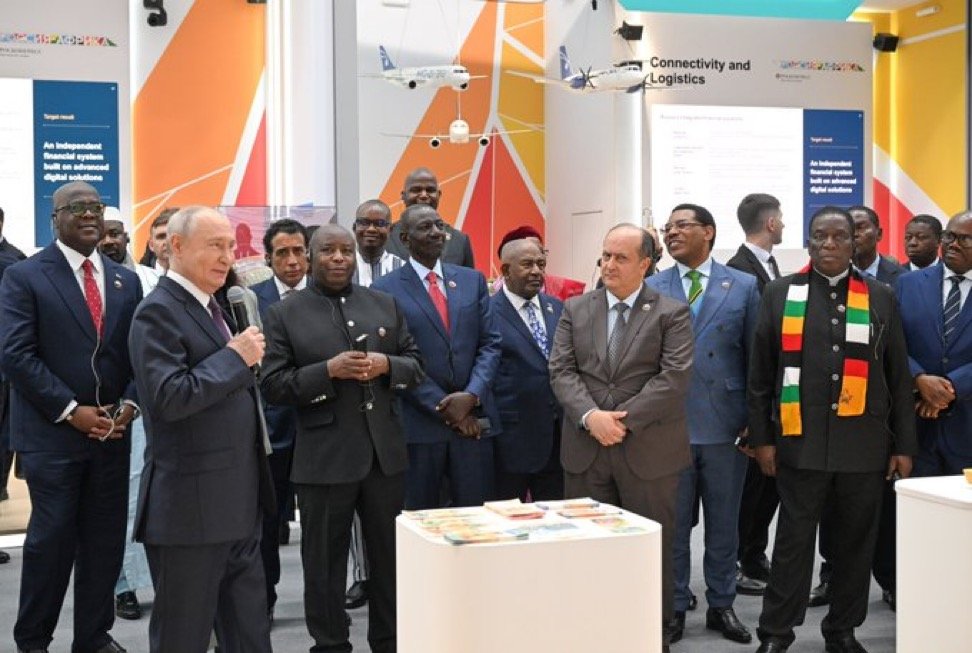
Delegations from 48 African countries, including 22 heads of state or government, gathered in Moscow this week for the third Russia-Africa Summit as President Vladimir Putin pitched Russia as a non-colonial partner against Western debt and resource exploitation.
President Putin told the Economic and Humanitarian Forum that Russia-Africa trade already exceeded $27 billion last year and could at least double to pass the $50 billion mark soon.
He highlighted 13 million tonnes of agricultural products shipped to Africa in the first nine months of 2026, with grain and fertiliser reaching more than 40 countries, while noting roughly 40,000 African students now study at Russian universities.
Putin in his speech accused the West of using debt as “financial bondage” and neo-colonial extraction, quoting Thomas Sankara, and offered localisation of production, technology sharing, energy projects and greater African influence in the IMF and World Bank.
African Union chair and Burundi President Évariste Ndayishimiye co-chaired proceedings and stressed that the continent seeks to process resources at home rather than export raw materials and import finished goods.
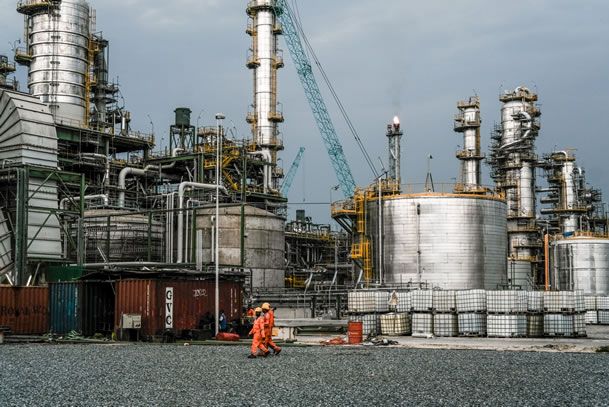
More than 30 joint energy projects are already under way across 16 African countries, Putin said, while the summit is expected to adopt a 2027-2029 partnership action plan and sign around 33 intergovernmental and commercial documents.
The gathering continues a series that began in Sochi in 2019 with 43 leaders and continued in St Petersburg in 2023 with 17, amid Western sanctions on Russia over Ukraine and competition from China, Europe and the United States for African markets, minerals and votes.
Russia’s overall share of Africa’s foreign economic interaction remains small at about 0.5%, far behind Europe and China, with trade still heavily skewed toward Russian exports of grain, fertiliser and energy equipment.
For many African governments the summit offers a route to diversify partners, secure food and energy supplies, attract technology transfer and reduce reliance on Western finance, even as delivery on earlier trade targets has lagged.
US policymakers are watching closely as Russian security assistance via Africa Corps expands in the Sahel and Moscow seeks minerals access, testing American efforts to maintain influence and counterbalance both Russian and Chinese engagement on the continent.
Attendance of 22 leaders marks a modest recovery from 2023 yet remains well below the inaugural summit, reflecting both Russian outreach and the constraints of sanctions, logistics and competing African priorities in a multipolar landscape.
The two-day event is set to conclude on October 29 with a final declaration, bilateral talks and concrete agreements intended to translate rhetorical partnership into measurable economic and technological gains for both sides.