

South Africa’s Q1 2026 Jobless Rate Climbs to 32.7% Amid Mounting Economic Pressure

Despite hostility towards black foreigners, South Africa’s unemployment rate rose to 32.7% in the first quarter of 2026, up from 31.4% in late 2025, according to official data released Tuesday by Statistics South Africa. The 1.3 percentage point increase means the number of unemployed individuals rose by 301,000 to reach 8.1 million. Total employment fell by 345,000 to 16.8 million during the first three months of the year. The report highlights a deepening labor crisis, with youth unemployment for those aged 15 to 34 surging by 2.0 percentage points. Nearly half of the country’s young people are now officially without work. Sectoral data showed heavy losses in community and social services, which shed 206,000 jobs. The construction industry followed with a loss of 110,000 positions, while manufacturing and mining saw modest gains. The quarterly decline was most severe in the North West and Gauteng provinces. KwaZulu-Natal was the only region to report a slight increase in employment, adding 6,000 jobs during the period. This spike in joblessness follows recent anti-immigrant marches and “worker audits” by groups like Operation Dudula. These tensions have drawn condemnation from the United Nations and the African Commission on Human Rights. Ghana and Nigeria have recently expressed grave concerns over the safety of their nationals. Protesters in Johannesburg and Durban continue to blame foreign workers for the scarcity of business and employment opportunities. The data arrives as the Reserve Bank navigates sticky inflation and high fuel costs. Analysts suggest that the rising unemployment rate may complicate fiscal efforts to stabilize the economy through the remainder of 2026.
MTN Group Earnings Surge 27.9% as Nigeria and Ghana Drive Q1 Growth
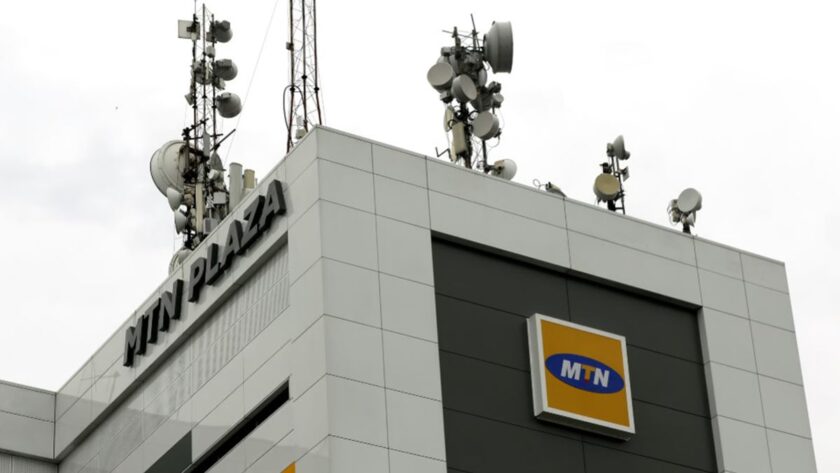
MTN Group reported a 27.9% rise in first-quarter core earnings to R27.6 billion ($1.67 billion) on Tuesday, bolstered by a significant operational recovery and surging data demand in its key West African markets. The South African telecommunications giant saw constant-currency service revenue climb 21.1%, while its earnings before interest, tax, depreciation and amortization (EBITDA) for the three months ended March 31 expanded to 47.6%. This performance was primarily anchored by a 165.9% jump in profit from its Nigerian subsidiary. Strong results in Nigeria and Ghana offset a flatter trajectory in South Africa, where service revenue grew by just 1.2% amid intense prepaid competition and a challenging domestic macroeconomic environment. In Nigeria, the stabilization of the Naira and a net foreign exchange gain of N33.3 billion marked a sharp turnaround from the currency volatility that hampered the group’s 2025 fiscal performance. Data consumption remains the group’s primary engine, with average monthly usage per subscriber in Nigeria hitting 14.3 GB. Consequently, the company has nearly doubled its network investment in the region this year. This growth follows a strategic period of recapitalization for MTN Nigeria. Recent central bank policies and infrastructure master plans in major hubs like Abuja have further supported the digital economy’s expansion. “A more supportive macroeconomic and foreign exchange backdrop in key markets like Ghana, Nigeria and Uganda supported accelerated investment to meet robust demand and to capture the future opportunities we have identified,”Group President and CEO Ralph Mupita commented. Management confirmed it remains on track with its “Ambition 2025” strategy. This includes the structural separation of its fintech business and ongoing efforts to deleverage the group’s balance sheet.
Dangote Refinery Targets $50 Billion Valuation in Landmark 2026 IPO

LAGOS – Africa’s Foremost industrialist, Aliko Dangote is targeting a $50 billion valuation for his 650,000-barrel-per-day refinery in a planned 2026 listing, as high global oil prices and increased refining margins significantly bolster the facility’s financial outlook, Bloomberg reported on Monday citing source familiar with the matter. The IPO, expected to be Africa’s largest, involves selling a 10% stake to raise $5 billion. The refinery plans to list on the Nigerian Exchange with secondary listings in Johannesburg, Nairobi, and Accra. Market analysts suggest the valuation reflects the refinery’s strategic importance. Following its shift to full capacity in February 2026, the facility now generates an estimated $6.4 billion in annual export revenue for Nigeria. The move comes as the refinery negotiates dollar-denominated dividend payments to attract foreign investors. This strategy aims to mitigate currency volatility risks associated with the Nigerian Naira while rewarding high-net-worth institutional backers. Recently the refinery has successfully displaced European fuel imports in West Africa. By May 2026, the facility achieved 100% self-sufficiency for Nigeria’s petrol needs, drastically altering regional energy trade flows. The group has appointed Stanbic IBTC and Vetiva Capital to manage the offering. If successful, the $50 billion market cap would represent nearly half of the total value of the Nigerian Exchange. The IPO follows a period of robust growth. In early 2026, the refinery expanded its crude slate to include Brazilian and American grades, optimizing production costs despite fluctuations in local Nigerian crude supply. Proceeds from the listing will reportedly fund a second phase of expansion. Dangote intends to increase capacity to 1.4 million barrels per day, potentially creating the world’s largest single-train refining hub.
Ex-IMF Economist Lamido Yuguda Assumes Role as Nigeria Central Bank Deputy Governor
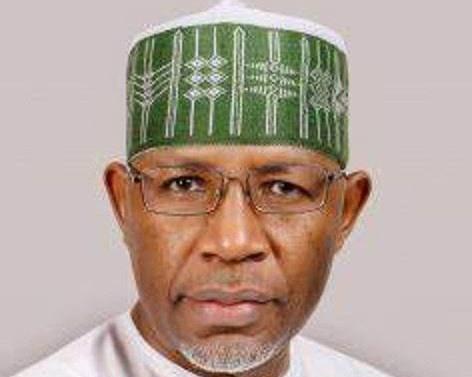
LAGOS — Nigeria Central bank announces the assumption of Lamido Yuguda as new CBN deputy governor, effective on Monday. The move signals a push for greater technical depth within the apex bank’s executive leadership team. Yuguda, a former IMF economist, transitions from his recent role as Director-General of the Securities and Exchange Commission. He replaces Bala Bello, who recently moved to the Presidency as a political economy advisor. The appointment follows Yuguda’s confirmation by the Nigerian Senate on April 29, 2026. Lawmakers fast-tracked his clearance, citing his thirty-year career at the bank where he previously managed external reserve portfolios.
African Leaders Demand Credit Rating Overhaul at Nairobi Summit
African heads of state and French President Emmanuel Macron launched a high-stakes summit in Nairobi on to demand an immediate readjustment of how international agencies assign credit ratings to African sovereign debt. Kenya’s Foreign Minister Musalia Mudavadi confirmed that the two-day African Forward Summit centers on “risk mispricing,” arguing that biased ratings artificially inflate interest rates and drain billions from the continent’s development budgets. The push for financial sovereignty comes as African nations seek to establish a continental credit ratings agency. This body would provide alternative assessments to the “Big Three” agencies based in the West. President William Ruto and President Macron are framing the dialogue as a necessary evolution of the global financial architecture, aimed at unlocking capital for critical infrastructure and the green energy transition. The summit follows recent shifts in the geopolitical landscape, where African leaders have become increasingly vocal about the “poverty trap” created by high-cost debt and the need for more equitable IMF reforms. In January, African Export-Import Bank (Afreximbank), terminated its relationship with Fitch credit Rating agency after a long-simmering dispute, were the continental lender accused Fitch agency of miscalculating its Non-performing-Loans (NPLs). However, the big three have always maintained natural stance stating that all rating methodology were public and according to global standard. Beyond policy, the meeting has already catalyzed commercial action. French logistics giant CMA CGM announced a major investment in the Port of Mombasa, signaling a shift toward direct industrial partnership over aid. Leaders expect to conclude the summit with a unified Nairobi Declaration. The document will formalize the demand for G7 support in restructuring the global risk assessment framework before the next fiscal cycle.
How Nigeria’s New Refinery Partnership deal Will Redraw the African Energy Market
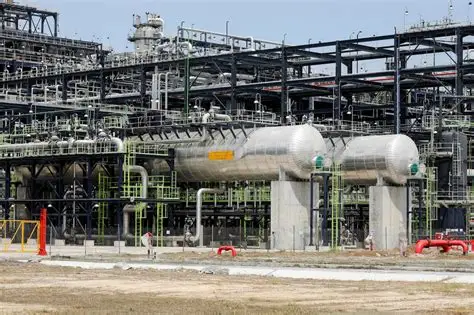
For many years, West Africa has been trapped in a circular trade: exporting high-quality crude oil to Europe only to buy it back as expensive, refined gasoline. This dependency has drained foreign exchange reserves and left the region vulnerable to global price shocks. However, the recent technical equity partnership between Nigerian National Petroleum Company Limited (NNPCL) and Chinese firms Sanjiang Chemical and Xinganchen Industrial Park is an opportunity to break this cycle, creating a massive refining corridor in Nigeria that will likely alter energy flows across the continent. Dangote monopoly The most immediate impact is the end of the single-source era. While the Dangote Refinery reached full capacity in early 2026, its position as Nigeria’s sole gasoline provider —though currently supporting the economy measurably—has created a fragile market equilibrium. The March 2026 price hikes by Dangote, attributed to global crude volatility, underscored the risks of a private-sector monopoly. The phased return of the Port Harcourt Refinery, reaching 30% of its capacity —60,000 barrels per day (bpd)—in early 2026 and the expected restart of Warri and Kaduna by late 2027 introduce vital competition. Analyst noted that if the NNPCL deal with the Chinese technical management succeeds it’ll create: • Drive Down Ex-Depot Prices: Competition for market share among local refiners will likely force more aggressive pricing. • Stabilize the Naira: Domestic refining has already slashed Nigeria’s fuel import bill from $8.2 billion to $4.7 billion in just two years, providing a floor for the currency to recover. Nigeria as Africa’s “Gas Station” The newly signed Technical Equity Partnership targets the rehabilitation and restart of the Port Harcourt (210,000 bpd) and Warri (125,000 bpd) plants. These two together with the Dangote (650,000bpd) plant will increase Nigeria’s refining capacity to approximately 1million bpd by 2027. Meanwhile, the Dangote refinery plans expansion to 1.4 million bpd by 2028, making it the world’s largest single-train refinery, and potentially making Nigeria a net exporter of refined petroleum products. The ripples of this capacity surge will cross borders. Nigeria will no longer just solve its own fuel queues; it is positioning itself to be the energy hub for the ECOWAS region and beyond. Countries like South Africa, Ghana, and Senegal are already pivoting their procurement strategies toward Lagos. For West Africa, this means: • Shorter Supply Chains: Replacing a 20-day voyage from Europe with a 3-day transit from Lekki or Port Harcourt. • Regional Price Parity: As Nigeria exports its surplus, the “Nigeria Price” will become the benchmark for the African continent, potentially lowering energy costs for manufacturing across West Africa. The Modular Surge and Regional Competitors Nigeria isn’t alone in this race, though it is the undisputed leader. Smaller, agile modular refineries like Aradel (11,000 bpd), Edo refinery (6,000 bpd) and Waltersmith (10,000 bpd) are already in local diesel, petrochemical and kerosene markets, providing a shadow blueprint for decentralized energy security. Meanwhile, Ghana’s Tema Oil Refinery (TOR) and Senegal’s SAR refinery are watching closely. While Nigeria’s sheer scale threatens to overshadow these smaller national plants, the overall effect is a continent-wide shift toward self-sufficiency. Analyst expressed that If the NNPCL and its Chinese partners succeed in rehabilitating the Portharcourt and Warri plants, Africa will be moving away from being a mere exporter of raw materials to becoming a high-value industrial processor, fundamentally altering its trade balance with the rest of the world.
Nigeria’s Endless Refinery Repairs Continue After $5.3 Billion Spent in 27 Years
For nearly three decades, Nigeria’s state refineries have been less of an industrial asset and more of a financial sinkhole. Since 1999, successive administrations have poured over $5.3 billion into “Turnaround Maintenance” (TAM), yet the taps remain dry. The legacy of waste is staggering. Under the Obasanjo era, $800 million vanished with little impact. The Yar’Adua and Jonathan years saw another $1.6 billion committed, while the Buhari administration approved a massive $2.9 billion. Despite these injections, the Port Harcourt refinery—declared operational in late 2024—shuttered again within six months. This history of failure is currently under the microscope of the Economic and Financial Crimes Commission (EFCC). The agency is probing an alleged $7.2 billion fraud linked to these failed rehabilitations. High-ranking former officials, including ex-Group CEO Mele Kyari, former Chief Financial Officer Umar Ajiya Isa, and past refinery MDs like Ahmed Adamu Dikko and Ibrahim Onoja, have faced questioning over the disbursement of funds that produced no fuel. Current NNPC GCEO, Bashir Bayo Ojulari, is now attempting to pivot away from this culture of contractor-led waste. On April 30th, The NNPC signed a Memorandum of Understanding with Chinese giants Sanjiang Chemical Company and Xinganchen Industrial Park to introduce a Technical Equity Partnership. Unlike the old “fix-and-fail” contracts, this model requires the Chinese partners to hold equity. Their profits are tied to actual production, not just showing up for repairs. By transferring operational risk to private hands, Ojulari hopes to transform the NNPC from a “refinery racket” into a commercial entity. For a nation that has spent 27 years importing its own prosperity at a high cost to the Naira, this shift is more than a policy change—it is a desperate attempt to plug a multi-billion dollar drainpipe that has bled the treasury for a long time. However, recent assessments of the MoU shows both Chinese companies lack the capacity to revive a refinery, as their past records shows they’ve never actually rehabilitated any crude oil refinery—such as the Warri, portharcourt refinery. The first partner in the MoU, Sanjiang Chemical Company limited, is a privately owned manufacturer in the chemical sector, with core expertise in downstream petrochemical derivatives rather than upstream crude oil refining. Conversely, Xingcheng industrial park and management co. Ltd, operates as a real estate and facility management firm; with no records in petroleum engineering or crude oil refining. Whether the flares at Port Harcourt and Warri will finally stay lit remains the ultimate test of this new strategy.
Airtel Africa Delays $10 Billion Mobile Money IPO Over Middle East Conflict
Airtel Africa has postponed the $1.5 billion to $2 billion anticipated public offering of its mobile money business to the second half of 2026. The company cited market volatility linked to the ongoing Middle East war. The London-listed telecom giant had originally planned to list the fintech unit by June 2026. However, rising energy costs and inflationary pressures from regional tensions have forced a strategic timeline shift. This delay comes despite record financial performance. Airtel Africa reported a 147% surge in annual profit to $813 million, driven by a mobile money user base that has grown to 54 million customers. However, Bloomberg cited last month that sources familiar with the matter stated that Airtel is targeting a fundraise of $1.5 billion to $2 billion, which would peg the unit’s total valuation at approximately $10 billion. Geopolitical risks in Iran and the broader Middle East have clouded investor sentiment for emerging market assets. Airtel’s management noted that waiting ensures a more stable environment to reflect the business’s true valuation. The company remains committed to the listing, likely in London or the UAE. In the interim, Airtel continues to scale its digital services, capitalizing on a 21% increase in mobile money engagement.
Investors Bet on Nigeria’s Long-Term Reforms as Central Bank T-Bill Demand Surges
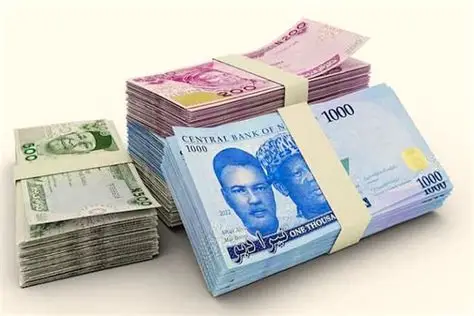
LAGOS — Investors are ramping up bets on Nigeria’s long-term economic reforms, staking heavily on long-tenor debt instruments as the Central Bank of Nigeria (CBN) continues its aggressive push to mop up excess liquidity. The CBN allotted ₦731.75 billion at its Treasury Bills Primary Market Auction on Wednesday, May 6, 2026. The move followed a massive ₦2.41 trillion subscription, reflecting robust confidence in the nation’s fiscal trajectory. Investor demand remained overwhelmingly skewed toward the 364-day instrument. This preference highlights a strategic shift among institutional players to lock in double-digit yields amid expectations of a stable macroeconomic environment. Despite the heavy demand, stop rates across all maturities witnessed marginal declines. The apex bank capitalized on the high subscription levels to lower borrowing costs while effectively managing money supply. The 364-day bill saw its rate drop to 16.15 percent, down from 16.20 percent in the previous auction. The 182-day and 91-day papers also trended lower, signaling a gradual easing of interest rate pressure. Market analysts say the oversubscription, particularly in the one-year paper, underscores trust in Governor Olayemi Cardoso’s orthodox monetary policies. These measures aim to curb inflation and stabilize the naira through consistent market transparency. The successful auction also coincides with positive sentiment following the IMF/World Bank Spring Meetings. International observers have praised Nigeria’s commitment to painful but necessary structural reforms, further boosting the appeal of domestic debt. With total subscriptions exceeding the initial ₦700 billion offer by over 240 percent, the Nigerian capital market remains a primary destination for both local and foreign portfolio investors seeking high-yield opportunities.
Nigeria’s Cement Giant Rebrands to HBM After $1B Sale and CEO Terrorism Conviction
Africa Cement producer, Lafarge Africa PLC has officially rebranded as HBM Nigeria PLC following shareholder approval on Tuesday, marking the end of the iconic “Lafarge” name in the Nigerian market. The change to HBM Nigeria, short for Huaxin Building Materials, aligns the subsidiary with its new owner, China’s Huaxin Cement Co. Ltd, following its massive $1 billion takeover. The transition follows the 2025 exit of Swiss giant Holcim Group. The rebranding efforts come as the company seeks to distance itself from a global scandal involving former leadership. Last month, a French court sentenced former global CEO Bruno Lafont to six years in prison for financing terrorism. The court discovered €5.6 million were paid to armed groups (ISIS) between 2013 and 2014 to keep Lafarge Syrian plants running. The court also fined the firm $1.2 million. While the Nigerian subsidiary was not directly involved in the Syrian activities, the brand damage prompted a swift corporate identity shift. Despite the legal turmoil in Europe, the Nigerian operations remain highly profitable. The company reported a record-breaking revenue of N1.1 trillion for the 2025 financial year. Net profits surged by 173% to N273 billion, demonstrating that local demand for construction materials remains insulated from the parent company’s legal battles and executive sentencing. The new entity, HBM Nigeria, will continue trading on the Nigerian Exchange. Management stated the “clean slate” allows the company to focus on aggressive expansion across West Africa.
